
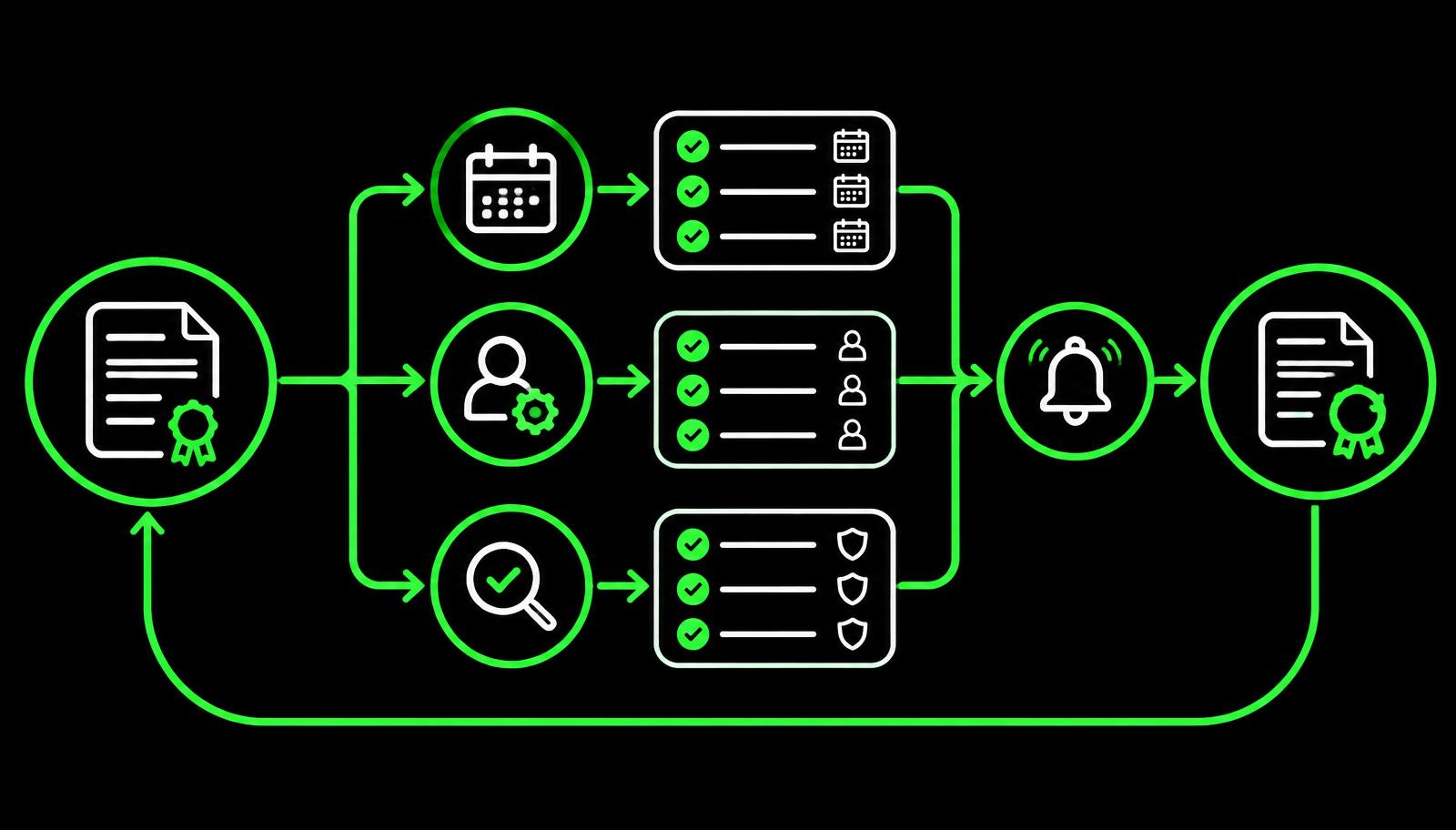
Signing a contract is not the end of the contract lifecycle. Once an agreement is live, the business still needs to know what has to happen, who is responsible, when important dates are approaching and whether the relationship should continue. That is the job of renewal management and obligation tracking.
A contract might contain a renewal deadline, a notice period, service-level commitments, reporting requirements, payment terms or other obligations that run throughout the agreement. If those details stay buried in documents, teams tend to discover important deadlines only when they are about to pass.
ServiceNow Contract Management Pro is designed to manage contracts across their lifecycle, including obligations, renewals and amendments. ServiceNow describes obligation management as tracking ongoing obligations, milestones and expiry dates, with workflows and automated notifications helping teams act at the right time. The post-signature stage becomes far more than storing a PDF in a repository. For the wider picture of how contracts are authored, negotiated and approved, see our guide to contract lifecycle management in ServiceNow.
Why do renewals need active management?
Renewals are easy to overlook. A mid-market or large organisation can hold hundreds or thousands of customer, supplier, software, maintenance and service contracts, each with its own:
- Start and end dates
- Renewal periods and notice periods
- Pricing changes
- Approval requirements
- Termination conditions
- Business owners
A spreadsheet or calendar reminder can cope with a handful of agreements. It does not scale. A supplier contract might roll over automatically when the business meant to renegotiate. A software agreement might lapse before its replacement is ready. A customer renewal might not get attention early enough to protect the revenue.
The problem is rarely missing contract data. It is the lack of a structured renewal process. ServiceNow's contract management capabilities track renewal and expiry milestones and raise proactive alerts so teams can act before key dates pass.
What is a renewal pipeline?
A renewal pipeline is a structured view of contracts approaching renewal or expiry. Rather than relying on individual teams to remember dates, the business can see upcoming renewals and organise the work needed to decide on each one.
| Contract | Renewal date | Owner | Status | Next action |
|---|---|---|---|---|
| Software agreement | 15 June | IT Procurement | Under review | Review usage |
| Maintenance agreement | 1 July | Operations | Pending decision | Confirm requirements |
| Customer subscription | 20 July | Account team | Commercial review | Prepare renewal quote |
The value is not in seeing the dates. It is in deciding which contracts need action and what that action should be. A renewal might need business owner confirmation, a usage or performance review, pricing analysis, negotiation, legal review, budget approval, updated terms or new purchase or sales documentation. Managed this way, renewals stop being a pile of reminders and become a business process.
How does renewal management work in ServiceNow?
ServiceNow keeps the relevant contract data inside the contract lifecycle and uses workflows and notifications to prompt stakeholders as milestones approach. The process starts with the contract's key dates and terms. As a renewal nears, the right people are notified, review the agreement and decide whether to renew, renegotiate, amend or let it expire.
Take a three-year supplier contract. Several months before expiry, procurement receives a renewal notification. The team reviews supplier performance, current pricing, business requirements and the contractual notice period. The outcome might be to:
- Renew on existing terms
- Renegotiate pricing or conditions
- Amend the agreement
- Replace the supplier
- Let the contract expire
The exact flow depends on how each organisation configures it. The principle is the same everywhere: the renewal becomes actionable work rather than a date sitting unnoticed in a document. On the sell side, a renewal decision often ends in a new quote, which is where ServiceNow CPQ picks up the thread.
What are contractual obligations?
A contract holds more than commercial terms. It also contains commitments one or both parties must fulfil. These are obligations, for example:
- Delivering a service by a specific date
- Providing periodic reports
- Meeting an SLA
- Making payments
- Completing audits or security reviews
- Providing certifications or maintaining insurance
- Giving notice before termination or renewal
Some obligations happen once; others recur. One contract may require a quarterly performance report, another an annual certification. If those requirements live only in the document, someone has to remember to find them and act. Obligation management takes that memory test away.
How does obligation tracking work in ServiceNow?
ServiceNow treats obligation management as a distinct stage of the contract lifecycle, in which organisations track ongoing obligations, key milestones and expiry dates, and use workflows to manage compliance. Contract Management Pro records obligations alongside the contract itself. ServiceNow's own material covers obligations such as expiry and renewal dates, invoicing and payment terms, SLA requirements and reporting commitments, configured as one-off or recurring activities with schedule-based reminders.
An obligation is not just information about a contract. It is a commitment that needs an owner and an action. Where that commitment is a service promise to a customer, it usually also needs to become an entitlement in ServiceNow CSM so agents can see what the customer is covered for.
From contract language to actionable work
Consider this clause:
The supplier must provide a quarterly performance report within 10 business days after the end of each quarter.
The document states the requirement. Obligation management turns it into a recurring activity with an assigned owner, a defined frequency, a due date, a description, the relevant contract context, reminders and completion tracking. That is the bridge between legal language and operational work.
ServiceNow's recent Contract Management Pro releases also describe AI-assisted obligation extraction, which identifies obligations in contract text and surfaces them for review before they become tracked records. It reduces the manual effort of finding commitments while keeping a person in the loop to confirm them.
What are milestone alerts?
A milestone alert is a notification tied to an important contract event or deadline: a renewal date, expiry date, notice deadline, obligation due date, review date, escalation point or reporting deadline. ServiceNow specifically supports alerts for key contract milestones, including escalation points, renewal dates and expiry dates.
The purpose is simple: give people enough time to act. If a contract requires 90 days' notice before termination, finding that out five days before the deadline is no help. An alert well before the notice window gives the owner time to review and decide.
Why milestone alerts are more than reminders
A basic reminder says "something is due". A useful contract workflow answers a fuller question: what is due, who owns it, why it matters and what needs to happen next. When a contract approaches renewal, the notification should take the owner straight to the agreement with the context needed to start the process, so they can bring in procurement, sales, legal or finance as required. The alert becomes part of a workflow rather than an isolated calendar entry.
What are surviving terms?
Surviving terms are one of the most easily overlooked ideas in contract management. Not every obligation ends when the main term expires. Provisions covering confidentiality, intellectual property, data protection, audit rights, indemnities, dispute resolution or records retention are often written to survive termination or expiry.
So a contract can reach its end date while some responsibilities still matter. Setting its status to Expired does not mean every contractual duty has gone away.
Why surviving terms matter for obligation tracking
Picture a five-year supplier agreement that expires on 31 December. The commercial relationship ends, but the contract requires certain information to stay confidential for another three years. If the business treats the contract as completely finished on 31 December, that surviving obligation is easily forgotten. A mature CLM process separates two things: the expiry of the contract, and the end of every responsibility within it.
How do renewals and obligations work together?
Before deciding whether to renew, the business usually wants to know how well the current agreement performed. For a supplier contract that might mean asking whether SLAs were met, reports arrived on time, invoices were accurate, compliance issues recurred and performance commitments were honoured. For a customer contract, it might mean checking whether commitments were fulfilled, service levels achieved, amendments needed, obligations left open and what commercial changes are required.
That evidence gives stakeholders a far better basis for the decision. A renewal is not simply "the contract ends, so create another one". It is a decision point grounded in how the existing relationship has actually performed.
A practical ServiceNow example
A company has a two-year managed services agreement with a supplier. The contract includes monthly service reporting, quarterly performance reviews, an annual security certification, a 90-day renewal notice period, a renewal date and confidentiality obligations that survive expiry.
Once the contract is active, each obligation is tracked. Monthly reporting generates recurring activities, quarterly reviews have their own milestones and the annual certification creates another deadline. As the renewal window opens, the contract owner is alerted and the agreement enters the renewal workflow. The team reviews supplier performance and any outstanding obligations before deciding. If the contract then expires, the surviving confidentiality requirement continues to be tracked.
That is the difference between storing a contract and managing its lifecycle.
What does this mean for contract managers?
For contract managers the goal is visibility. Instead of only asking which contracts expire soon, they should be able to answer:
- Which contracts need renewal action?
- Which obligations are due this month, and who owns each one?
- Which contracts have missed milestones?
- Which agreements have notice periods coming up?
- Which contracts carry obligations that continue after expiry?
A structured CLM system answers those questions across the whole portfolio. ServiceNow also positions analytics and reporting as part of CLM, so organisations can monitor contract performance, compliance, risk and opportunity in one place, on the same CRM data model that holds accounts, products and service records. When budgeting for this capability, check how contract management is packaged in your ServiceNow CRM licences.
The bottom line
Renewal management helps organisations act before contracts expire or roll over automatically. Obligation management makes sure the commitments inside those contracts are actually met. ServiceNow brings both into the wider contract lifecycle, using contract data, workflows, assigned owners and milestone alerts to make post-signature management proactive rather than reactive. Together they move CLM beyond document storage towards active management of contractual relationships.
Frequently asked questions
What is a renewal pipeline?
A structured view of contracts approaching renewal or expiry, showing their owners, status, dates and the actions required to reach a decision.
What is obligation tracking?
Obligation tracking records contractual commitments, assigns an owner to each, monitors due dates and helps make sure required actions are completed, whether they happen once or recur.
What are surviving terms?
Contractual provisions, such as confidentiality, audit rights or data protection, that continue to apply after the main contract period ends, as specified in the agreement.
What are milestone alerts in ServiceNow?
Notifications that warn stakeholders about important contract events such as renewal dates, expiry dates, escalation points and obligation deadlines.
Why are renewal alerts important?
They give contract owners enough time to review the agreement, assess performance, negotiate changes, secure approvals and decide whether to renew, amend, replace or end the relationship.