
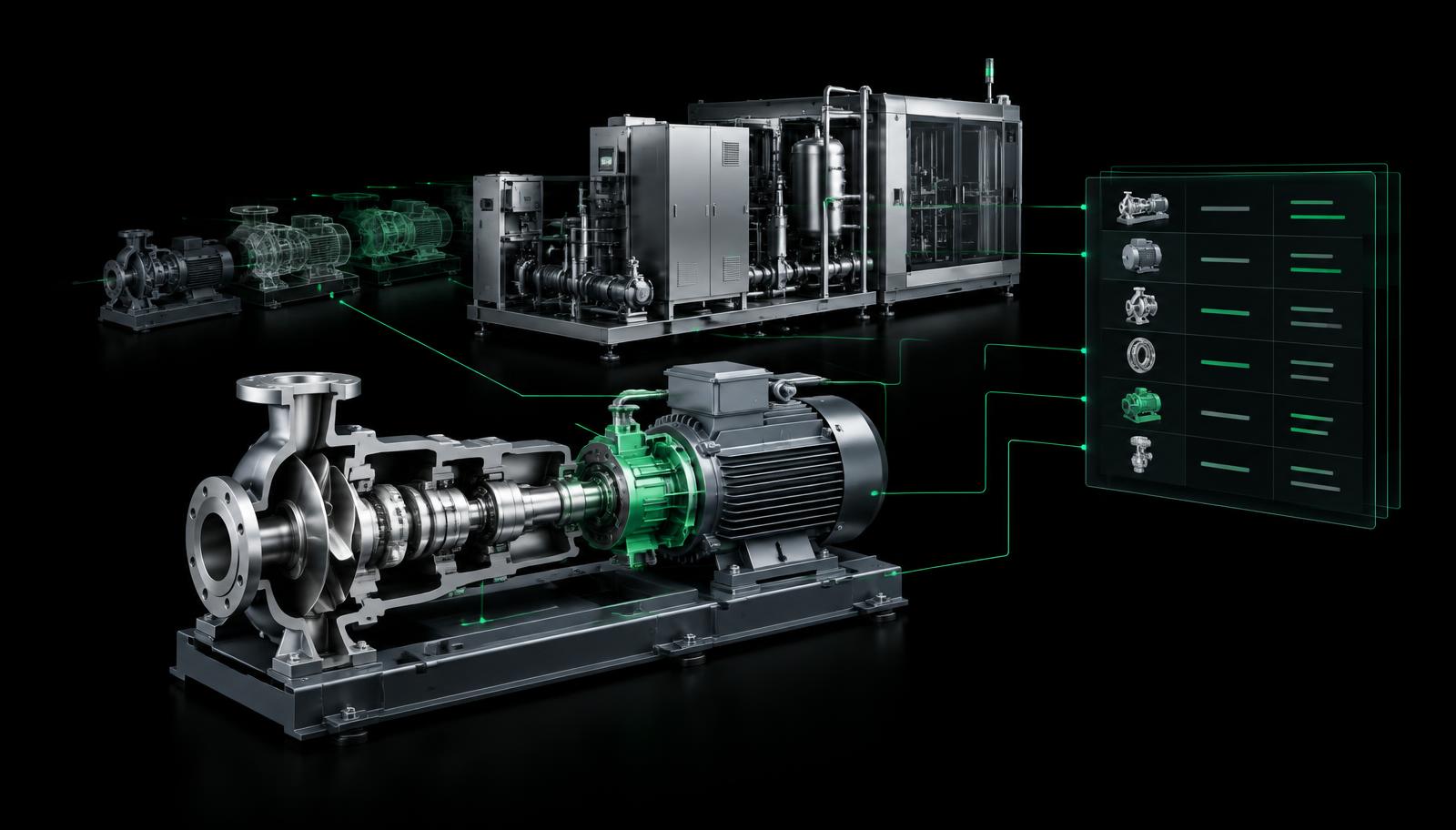
ServiceNow Install Base Management records what customers actually have, where it is deployed, how it is configured and how it changes throughout its service life. For manufacturers and equipment businesses, that operational view supports accurate entitlements, first-time fixes, contract renewals, spare-parts sales and aftermarket growth.
Most manufacturers understand that aftermarket service can be more profitable and resilient than selling new equipment. The difficult part is less glamorous: an organisation cannot quote maintenance for a machine it cannot identify, price the correct spare part for a configuration it does not know, or assess warranty responsibility without a trustworthy record of what changed after shipment.
That record is the install base. Install base management is the discipline of maintaining a current view of customer-owned products and services, not simply loading serial numbers into a table once.
What is ServiceNow Install Base Management?
ServiceNow Install Base Management provides a structured record of products and services sold to a customer and the specific instances currently deployed for them. It connects the commercial fact of a sale to the operational reality that customer service agents and field technicians need.
A reliable install base can answer practical questions quickly: which model and serial number is at this site, what components are fitted, which firmware is running, what changed during the last visit, whether the unit is active, and which contract or entitlement covers it.
How is an install base different from a CMDB or asset register?
A CMDB normally describes configuration items the organisation operates. An asset register records items it owns and accounts for. An install base records products and services deployed for customers, including equipment the manufacturer sold and no longer owns.
| Record | Primary question | Typical ownership |
|---|---|---|
| CMDB | What technology do we operate and how is it related? | IT operations |
| Asset register | What do we own, control and depreciate? | Finance and asset management |
| Install base | What does each customer have in service now? | Customer service and field service |
The difference changes how data is acquired. Internal infrastructure may be discovered on a controlled network. A compressor in a customer's plant cannot. Its record exists because an order created it, a technician updated it, connected equipment reported it, or a customer or partner registered it.
Which ServiceNow records make up the install base?
Three records answer three different questions.
| Record | Question answered | Example |
|---|---|---|
| Sold Product | What did this customer buy? | Twelve Model X pumps and a Gold service agreement |
| Install Base Item | What is running for the customer now? | Serial 88421 at the Leeds plant |
| Installed Product | Which purchase maps to which deployment? | The relationship between the sale and deployed unit |
The Sold Product is the commercial fact and can exist before installation. The Install Base Item is the operational instance at a specific account or location. Installed Product connects the two and supports more complex relationships, such as one software purchase deployed across several environments or several upgrades connected to one long-lived machine.
Removing that relationship to simplify the model can create future problems. The test is whether the organisation can ask “what did the customer buy?” and “what do they have now?” as separate questions, then investigate where those answers differ.
Why does as-maintained configuration matter?
A machine's configuration appears in at least three forms during its life:
- As-built: what left the production line.
- As-sold: what was shipped with the customer's selected options.
- As-maintained: what the unit contains today after repairs, upgrades and third-party changes.
As-sold data is often available from order and ERP systems. As-maintained data is harder and more valuable. If a technician selects a spare against the original configuration rather than the current one, the result may be a failed visit, another journey and longer customer downtime. The same gap can distort warranty decisions, entitlement matching, product-quality analysis and upgrade recommendations.
This is also why install-base accuracy affects first-time fix rate. The technician must arrive with parts and skills that match the equipment as it exists now.
How should equipment hierarchies be modelled?
Real equipment is nested. A packaging line contains a filler, capper, labeller and conveyor. The filler may contain a pump, control module and valve manifold. Some subassemblies have their own serial numbers, warranty terms, failure patterns and replacement cycles.
Install Base Items can represent parent-child relationships, but maximum detail is not the goal. A deep hierarchy that nobody maintains becomes convincing fiction. Model a child item when it changes service coverage, parts selection, failure analysis or lifecycle decisions. Two reliable levels are better than six stale ones.
How should product characteristics be stored?
Different product families need different attributes. A refrigeration product may need refrigerant type; a pump may need pressure rating; software may need edition and version. Adding every possible attribute as a new column creates a wide, brittle record with many irrelevant fields.
ServiceNow supports characteristics as related data on the install base item. This flexible pattern accommodates product-specific values without redesigning the core table for every new product family. It also gives preventive and predictive maintenance a home for operational readings such as hours run, cycles completed or firmware version.
How do you keep install-base data current?
Install-base quality is an operating model, not a one-off migration. Four sources usually contribute.
- Order and fulfilment systems: create the as-sold foundation at scale.
- Field service: capture parts fitted, serial numbers replaced, firmware changes and operating readings during work-order closure.
- Connected equipment: supply telemetry and configuration evidence without manual entry where the fleet supports it.
- Customers and channel partners: register products or confirm ownership where distributors obscure the final deployment.
Field service is often the highest-value feedback loop. A technician standing beside the machine has better evidence than any central team. The close flow should capture a small number of essential updates and write them back to the install base. A short, reliable form is more valuable than a comprehensive form completed poorly.
How should install-base lifecycle be governed?
Equipment is commissioned, moved, returned, sold on, replaced, decommissioned and scrapped. If records only enter the install base and never leave active reporting, the fleet count grows while accuracy falls. That can produce renewal offers for retired machines and misleading coverage rates.
Define valid lifecycle stages and statuses, assign ownership for each transition and monitor records whose lifecycle cannot be determined. Any custom state must be included in the organisation's mapping and reporting logic. Platform fields and behaviour can vary by release and enabled capability, so validate the final lifecycle design in the target ServiceNow environment.
How does install-base management increase service revenue?
The value appears in four connected areas.
- Entitlement precision: support rights can match the specific installed item instead of falling back to broad account coverage.
- Coverage gaps: active units without a contract or entitlement become a qualified service opportunity.
- Renewals: account teams can discuss the covered fleet, service history, configuration risk and avoided downtime rather than only the expiry date.
- Parts and upgrades: the current configuration reveals compatible spares and meaningful upgrade opportunities.
The most useful first report is often simple: active Install Base Items with no active contract or entitlement. It turns an abstract data-quality programme into a list of equipment the organisation could be paid to support. Read alongside CSM entitlements and service contracts, it also reveals where service is being delivered without commercial coverage.
Where should an enterprise start?
- Load genuine as-sold data from order and fulfilment systems, even if the first version is incomplete.
- Model hierarchy only where service, parts or coverage decisions require it.
- Connect field-service closure to essential as-maintained updates.
- Define lifecycle ownership, including retirement and replacement.
- Measure records with unknown lifecycle or missing customer and site data.
- Publish the coverage-gap report early and give it a commercial owner.
Install Base Management never reaches a permanent finished state because the real fleet keeps changing. The sustainable approach is to connect data maintenance to the transactions and service work people already perform, then fund improvement through the commercial outcomes it enables.
Frequently asked questions
What is an install base in ServiceNow?
An install base is the structured record of products and services deployed for customers, including their location, configuration, lifecycle and relationships to what was sold.
Is an Install Base Item the same as a Sold Product?
No. A Sold Product records the commercial purchase. An Install Base Item represents the deployed instance as it exists operationally. Installed Product links the two.
Is ServiceNow Install Base Management part of the CMDB?
It can reference configuration data, but its purpose is different. The CMDB focuses on configuration items an organisation operates. The install base focuses on products and services deployed for customers.
What is the difference between as-built, as-sold and as-maintained?
As-built describes the original manufactured configuration. As-sold reflects the customer's ordered options. As-maintained reflects the current unit after repairs, upgrades and component changes.
What data should field technicians update?
Capture only changes that affect future service decisions, such as serialised parts fitted, components removed, firmware, key readings, location and lifecycle status.
Which install-base metric should a business track first?
Start with coverage gap: active customer equipment without an active contract or entitlement. It is easy to understand and directly connects data quality to potential service revenue.