
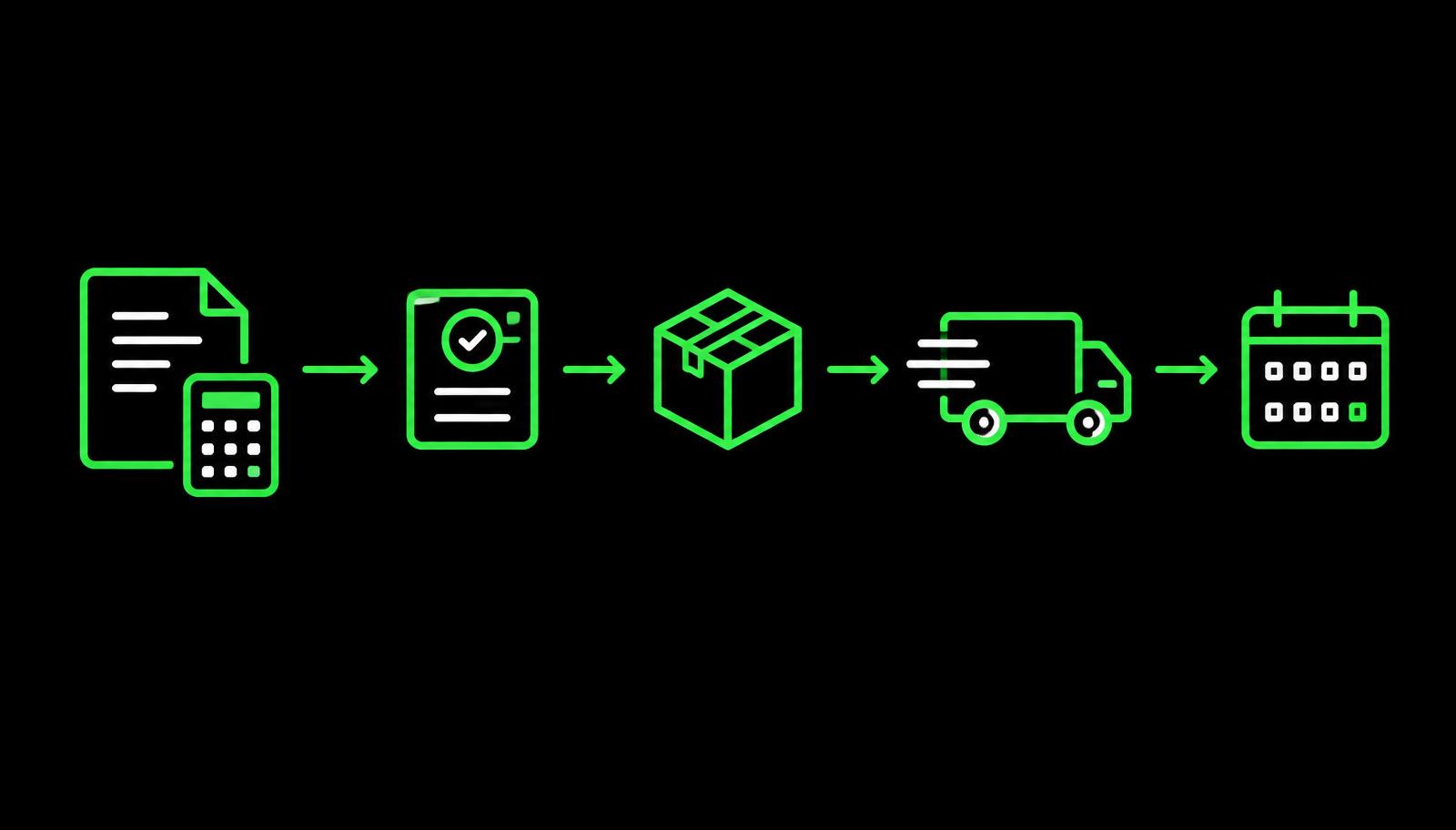
If you have spent any time researching ServiceNow's sales and revenue tools, you have likely run into two names that sound like they should do the same thing: ServiceNow CPQ and ServiceNow Sales and Order Management (SOM). Vendors and consultants often use them almost interchangeably in conversation, which makes it genuinely confusing to work out which one your organisation actually needs.
The short answer: CPQ is a component, while Sales and Order Management is the whole system that CPQ lives inside. But that one-line explanation glosses over a lot of nuance that matters when you are evaluating licences, planning an implementation, or simply trying to explain the difference to your leadership team. Let us break both down properly.
The problem both products are trying to solve
Before comparing features, it helps to understand the pain point. For many B2B organisations, especially those selling complex, configurable or subscription-based products, generating an accurate sales quote can take days. Sales reps bounce between spreadsheets, price lists, email threads and approval chains, manually checking whether a product combination is even valid. A single wrong number or incompatible bundle can put an entire deal at risk.
And that is just the quoting stage. Once a deal closes, someone still has to turn that quote into an actual order, route it through fulfilment, keep the customer updated, and eventually manage renewals, upgrades or cancellations. That entire journey, from a rep's first conversation with a prospect to the invoice for a renewed contract, is what ServiceNow's revenue tools are built to streamline. CPQ and SOM both address pieces of this journey, but at very different scopes.
What is ServiceNow CPQ?
CPQ stands for Configure, Price, Quote. As a standalone concept, and as a product ServiceNow offers, it automates and optimises the development of customer quotes and the capture of orders. It is the engine that answers three specific questions every sales rep needs answered quickly:
- Configure. What product or service combinations are actually valid for this customer?
- Price. What should this configuration cost, accounting for discounts, bundles, currencies and approval thresholds?
- Quote. How do we turn that into a professional, accurate document the customer can review and sign?
ServiceNow markets CPQ as an AI-powered engine that drives omnichannel revenue and eliminates quoting inefficiencies, and positions it as something that solves complex product and pricing rules fast, without requiring complex code to plug into other systems. For a fuller introduction, read our guide to what ServiceNow CPQ is and how it works.
A few things stand out about how ServiceNow has built this specifically:
- Attribute-based configuration. Rather than forcing customers to pick from a fixed, predefined list of SKUs, the ServiceNow CPQ Configurator uses an attribute-based model that guides users through selections, automatically enforces business rules and only ever generates valid outcomes. This matters enormously for industries like telecoms, manufacturing or technology, where a single product might have dozens of valid variations and thousands of invalid ones.
- Omnichannel quoting. The same configuration and pricing logic can power every sales channel, field reps, partners and e-commerce, from a single engine, rather than maintaining separate logic for each.
- Subscription and ramp pricing. For SaaS and subscription-heavy businesses, CPQ supports subscriptions, renewals and ramped pricing, so sellers can quote recurring revenue models alongside one-time products and services. For multi-year deals, it manages ramped pricing where costs change over time and keeps terms consistent from the original quote through the final contract.
- Built-in governance. When a quote needs approval, for a large discount or an unusual deal structure, CPQ automatically triggers approval workflows and notifies the right people, so nothing stalls waiting on a manual follow-up. And because the platform lets reps create and compare multiple quote versions with every revision captured in a full audit trail, there is a clean paper trail if a deal is ever disputed or reviewed.
- The handoff. Once a customer accepts a quote, CPQ converts it into structured data ready for downstream fulfilment and billing, which is exactly where Sales and Order Management picks up the baton.
In short: CPQ is laser-focused on the moment between "what does the customer want" and "here is a quote they can sign". Our article on guided selling in ServiceNow CPQ shows how that moment is changing with the Logik.ai engine.
What is ServiceNow Sales and Order Management (SOM)?
Sales and Order Management is a much bigger tent. SOM is a comprehensive suite of applications built on the Now Platform that manages the entire product sales lifecycle, from initial lead capture all the way through order fulfilment and post-sale service. Where CPQ owns one critical stage of the sales motion, SOM owns the whole lead-to-cash journey and everything that comes after it.
ServiceNow describes SOM as something that goes beyond a traditional CRM: an integrated platform that automates and connects the end-to-end lead-to-cash process, with a built-in configure, price, quote engine for real-time pricing and configuration as one of its core capabilities, alongside product catalogue management for complex bundles, comprehensive multi-currency and subscription pricing management, and sophisticated order management with cross-department workflow orchestration.
CPQ functionality is embedded inside SOM. You are not choosing between two unrelated products, but between the quoting engine on its own and the quoting engine as part of a much larger operational system.
SOM's scope typically spans these building blocks:
- Lead management: capturing and nurturing leads from multiple channels, including website forms, social media and events.
- Opportunity management: tracking pre-sales opportunities as they move towards a deal.
- Product catalogue management: maintaining the master data behind every sellable product and bundle.
- Pricing management: the pricing logic and matrices that feed quoting.
- Quote management: the CPQ layer itself.
- Order management: order capture and order fulfilment once a deal is won, which our guide to ServiceNow order orchestration covers in depth.
- Customer lifecycle workflows: post-sale order changes and contract renewals, often referred to as MACD (Move, Add, Change, Disconnect) processes.
- Customer contracts and entitlements: tracking what a customer is actually owed under their agreement.
The stated benefit of bundling all of this together is that organisations can manage the full lead-to-renewal lifecycle on one platform, uniting front, middle and back-office teams around a single system of engagement, rather than stitching together a CRM, a separate CPQ tool, an order management system and a billing platform that do not talk to each other cleanly. The ServiceNow CRM data model is what makes that joined-up view possible.
The operational upside can be significant. According to ServiceNow's own materials, organisations using SOM have seen order accuracy improve dramatically, with fallout rates dropping from around 7% to under 1% in some implementations, on top of reduced manual workload and AI-powered recommendations for cross-sell and upsell opportunities.
So what is actually different?
Here is the cleanest way to frame it:
If your organisation's core problem is that quoting is slow, error-prone or inconsistent across channels, but your lead capture, order fulfilment and contract management already work reasonably well (perhaps handled by a separate CRM or ERP), CPQ alone may be the right scope. It solves a specific, painful bottleneck without requiring you to re-platform your entire sales operation.
If, on the other hand, you are dealing with disconnected systems across the whole revenue chain, leads sitting in one tool, quotes built in another, orders tracked in spreadsheets and renewals falling through the cracks because nobody has a unified view, SOM is the more appropriate investment. It is designed to unify all of those stages under one workflow engine and one data model, with CPQ simply along for the ride as part of that bigger picture.
A note on how ServiceNow frames this itself
It is worth calling out that ServiceNow's own documentation and marketing sometimes blur these lines, and for good reason: the products are genuinely interconnected, not competitive alternatives. You will not typically find organisations debating "should we buy CPQ or SOM" as if they were rival vendors. The more common decision is "do we need just the quoting piece, or the full sales-to-fulfilment suite". ServiceNow has also used the term Sales CRM in some materials to describe an expanded version of this same lead-to-cash concept, reflecting that this part of the platform continues to evolve as new capabilities are folded in.
This is also why implementation partners often recommend starting with a clear-eyed audit of your current sales technology stack before deciding. If you already run a mature CRM and just need better quoting, layering in ServiceNow CPQ (or even syncing it with an existing CRM via integration) can be a lighter lift than a full SOM rollout. But if quoting problems are really a symptom of deeper, cross-departmental disconnects, sales does not trust operations' inventory data, finance cannot reconcile orders against contracts, support has no visibility into what a customer actually purchased, then treating the symptom with CPQ alone will not fix the underlying disease, and SOM's broader scope becomes the more strategic choice. Our ServiceNow CRM licensing guide can help you budget for either route.
The bottom line
ServiceNow CPQ and ServiceNow Sales and Order Management are not really competitors; they are nested. CPQ is the specialised, AI-driven engine responsible for configuring, pricing and quoting deals accurately and fast, now powered under the hood by the Logik.ai acquisition. SOM is the broader operating system for your entire sales lifecycle, one that happens to include that same CPQ engine as a core building block alongside lead management, order fulfilment, contract handling and renewals.
The right choice for your organisation comes down to scope: are you trying to fix quoting specifically, or are you trying to unify the entire journey from first lead to final renewal? Understanding that distinction, rather than treating the two names as synonyms, will save you real time and money when you are scoping a ServiceNow implementation.
Frequently asked questions
Is ServiceNow CPQ part of Sales and Order Management?
Yes. CPQ functionality is embedded inside Sales and Order Management as one of its core capabilities. You can adopt the quoting engine on its own, or as part of the wider lead-to-cash suite that also covers lead management, order management, contracts and renewals.
When is standalone CPQ enough?
When quoting is the bottleneck but lead capture, order fulfilment and contract management already work well, often in a separate CRM or ERP. CPQ fixes a specific, painful stage without requiring you to re-platform the whole sales operation.
When should we look at the full SOM suite?
When the problems run across the whole revenue chain: leads in one tool, quotes in another, orders in spreadsheets and renewals falling through the cracks. SOM unifies those stages under one workflow engine and one data model.
Does ServiceNow CPQ work with an existing CRM?
Yes. ServiceNow CPQ can be layered alongside a mature CRM through integration, which is a lighter lift than a full SOM rollout. If quoting pain is really a symptom of deeper cross-department disconnects, the broader suite is the more strategic choice.