
Your CRM says the deal is closed. Your billing system has not heard about it yet. Welcome to the lead-to-cash gap.
A $300M enterprise software company had best-in-class tools across every department. One for CRM, another for billing, a third for contracts, a legacy CPQ for quoting. On paper, the stack looked complete. In practice, none of it talked to each other. A deal closed on Friday sat unprocessed until Wednesday because billing needed data that lived in the CPQ, the CPQ did not connect to the ERP, and someone had to manually re-enter everything in between. Eighteen deals in one quarter got delayed at invoicing. Three escalated to the CFO. That was not a people problem. That was a disconnected system working exactly as designed.
Where the process breaks down
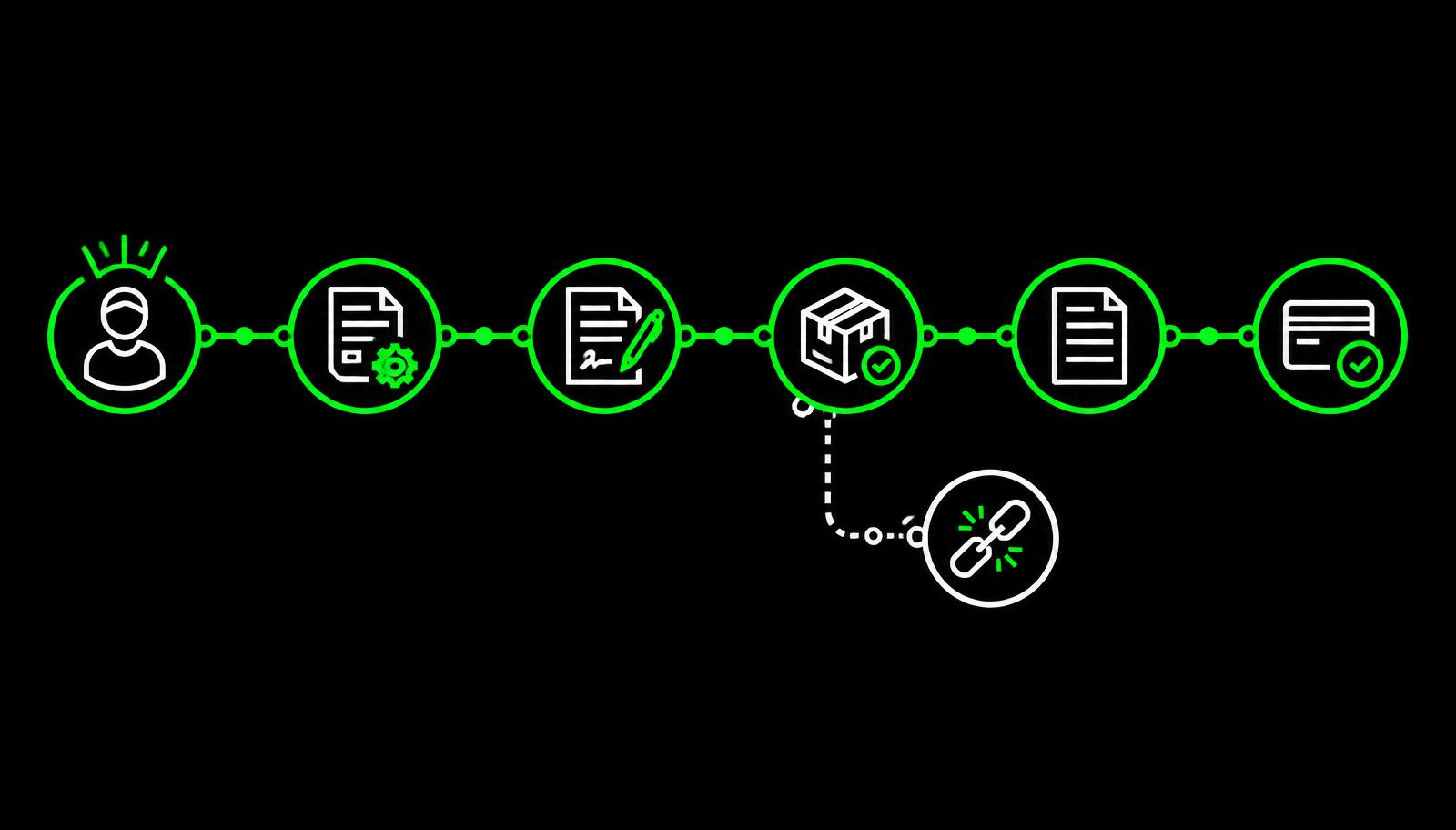
Lead-to-cash is supposed to be a straight line. Prospect becomes lead, lead becomes opportunity, opportunity becomes quote, quote becomes contract, contract becomes invoice, invoice becomes revenue. In most $300M enterprises, it is anything but.
Each stage of that journey lives in a different system. Marketing owns the lead in one platform. Sales owns the opportunity in another. Quoting happens in CPQ. Contracts go through a separate CLM tool. Billing sits in ERP. Revenue recognition runs in finance systems. Every transition between stages requires a handoff, and every handoff is a potential failure point.
The data does not move cleanly. A rep closes a deal in CRM with custom pricing agreed verbally. That pricing does not automatically reach the CPQ. The CPQ does not automatically push the final configuration to the contract tool. The contract tool does not automatically trigger billing. Someone, usually in sales ops or finance, manually bridges each gap. They copy data between systems, reconcile discrepancies and chase approvals that should have been automated weeks ago.
At $300M in revenue, this is not a small team problem anymore. It is a structural breakdown happening across hundreds of deals simultaneously, and most of it is invisible until something goes wrong.
Where revenue quietly leaks
Disconnected lead-to-cash systems do not just create operational friction. They create measurable revenue risk across four areas.
Revenue delays
When billing cannot trigger automatically because quoting data lives in a separate system, invoices get delayed. At $300M in ARR, even a one-week average invoicing delay across the book of business creates a significant cash flow impact, and in enterprise deals, delayed invoices often push revenue recognition into the next quarter.
Deal loss at the finish line
Buyers who have signed a contract expect a seamless handoff to onboarding and billing. When that handoff breaks, wrong SKU in the invoice, incorrect pricing or missing entitlements, it creates immediate post-sale friction. In competitive markets, a broken onboarding experience is enough to trigger buyer's remorse before the ink is dry.
Revenue leakage
Manual data re-entry between disconnected systems introduces errors at every stage. A discount approved in CPQ does not carry cleanly into the contract. A contract term does not reflect correctly in billing. A billing error does not get caught until the customer disputes the invoice. Each gap is small. Across hundreds of deals, the cumulative leakage is significant, and almost entirely invisible on any standard report.
Forecasting failure
When deal data lives across five disconnected systems, no single report tells the truth. Sales sees one pipeline number. Finance sees another. RevOps reconciles them manually every month. Leadership makes decisions based on data that is already two weeks old by the time it is assembled. At $300M, bad forecasting data is not just an inconvenience, it is a strategic liability.
Conservatively, disconnected lead-to-cash systems cost a $300M enterprise 8 to 12 per cent of addressable revenue every year. It never appears as a single line item. That is exactly why it persists.
Why legacy CPQ struggles here
Legacy CPQ was built to solve the quoting problem, not the connectivity problem. Tools like BigMachines, early Apttus, Cincom and on-premise SAP quoting modules were designed as standalone systems. They generated quotes. That was where their responsibility ended.
Connecting them to the rest of the revenue stack, CRM, CLM, ERP, billing, required custom middleware built by developers, maintained by IT and rebuilt every time either side updated. At $300M scale, that middleware infrastructure becomes a full-time maintenance burden. And when it breaks, which it does, the entire lead-to-cash flow stops with it.
The structural problem is not that legacy CPQ generated bad quotes. It is that it was never designed to be part of a connected revenue workflow. It was designed to be a destination, and modern business needs a throughway.
What good looks like
Fixing disconnected lead-to-cash is not about replacing every system. It is about building on a platform where the connections are native, not custom-built and constantly breaking.
ServiceNow is built for exactly this. As an enterprise workflow platform, it connects quoting, approvals, contracts, fulfilment and billing inside one unified environment. Data does not move between systems through middleware, it flows through the platform natively. A deal closed in CRM triggers the CPQ. The CPQ pushes the approved configuration to the contract. The signed contract triggers billing. The invoice generates automatically with the correct terms, pricing and entitlements.
- Invoicing cycles compress. Delays shrink from weeks to hours because the data never has to be re-entered.
- Pricing errors at billing collapse. Configuration, contract and invoice share the same source of truth.
- RevOps gets one number. Pipeline, bookings, billings and revenue reconcile against a single workflow record.
- AI sits across the flow. It flags deals where configuration and contract terms do not match before they reach billing, identifies revenue recognition risks early and surfaces where deals are slowing, dropping data or stalling approvals.
ServiceNow does not just connect the lead-to-cash process. It makes it auditable, reliable and fast at the scale a $300M business actually operates.