
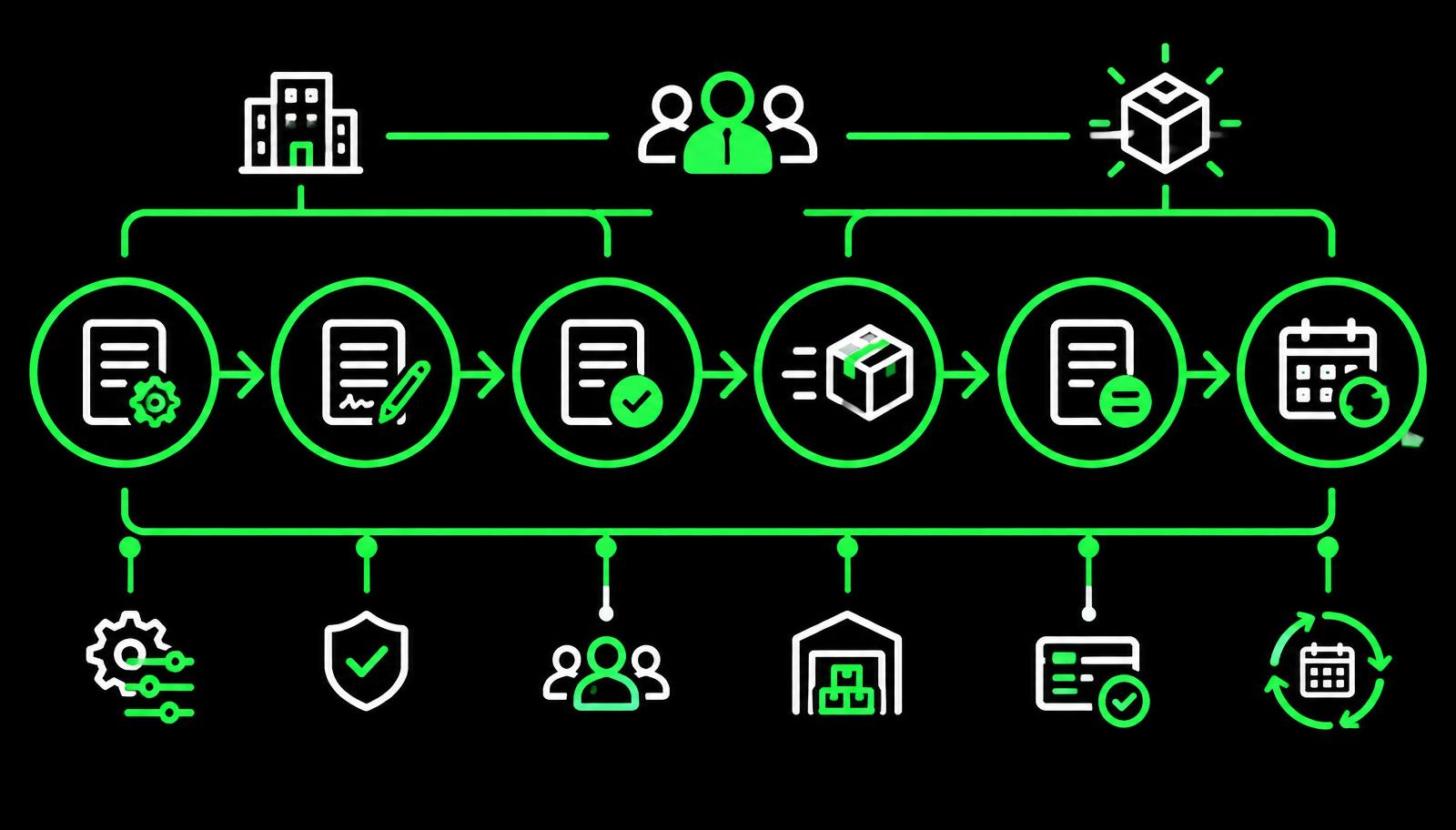
A customer says yes to the quote. But the deal is not finished.
The sales team may have spent weeks configuring the right products, working through pricing, negotiating discounts, getting approvals and presenting the final proposal. Once the customer agrees, another part of the process begins: turning that commercial agreement into a contract, getting it signed, creating the order, fulfilling it, billing the customer and eventually managing renewals or changes.
This is where CPQ and CLM meet. CPQ defines the commercial proposal: what is being sold, how it is configured and what the customer should pay. CLM manages the contractual agreement: what the parties have agreed to, the obligations involved and how the contract is managed throughout its lifecycle. Order Management then turns the accepted commercial agreement into something the business can execute. For the foundations, see our guides to ServiceNow CPQ and ServiceNow contract lifecycle management.
What is the relationship between CPQ and CLM?
CPQ and CLM solve different problems, but they need to work from the same commercial context. CPQ asks: what are we selling, how should it be configured and what should the customer pay? CLM asks: what have we agreed to, what obligations exist and how will the agreement be managed?
CPQ typically handles:
- Product configuration
- Pricing and discounts
- Quote creation and revision
- Commercial approvals
- Quote documents
CLM focuses on:
- Contract creation and negotiation
- Legal terms and conditions
- Approvals and signatures
- Contract dates and obligations
- Amendments and renewals
- Contract lifecycle tracking
The distinction matters because a quote is not a contract. A quote is a commercial proposal. A contract is the governed agreement between the parties. The contract may contain legal language, negotiated terms, obligations and exceptions that were not fully represented in the original quote. That means the transition from CPQ to CLM needs to preserve the commercial information rather than forcing legal or sales teams to reconstruct it manually.
Why does CPQ need to connect to CLM?
Consider a deal for 500 software licences, implementation services and premium support. The customer receives a three-year term, annual billing and a negotiated discount. CPQ captures the commercial structure of that deal and produces the quote.
The customer accepts the commercial proposal, but legal negotiations may still follow. Payment terms might change. Liability provisions may be negotiated. Specific service commitments could be added. If the contract process is disconnected from CPQ, someone may have to manually reconstruct the commercial agreement. That creates opportunities for errors:
- The quoted quantity may not match the contract.
- A negotiated discount may be missed.
- Contract dates may differ from the quoted term.
- Special commercial conditions may be lost.
- The order may ultimately be created from outdated information.
A connected process reduces this duplication. In ServiceNow, a completed quote can be used to initiate a contract request, allowing the commercial process to move into contracting without treating the contract as an entirely separate transaction. The exact implementation depends on the products and workflows being used.
The goal is not to make CPQ and CLM the same application or process. It is to make sure the commercial agreement remains traceable as it moves from one stage to the next.
What happens when a quote becomes a contract?
The transition from quote to contract is one of the most important points in the quote-to-cash process. At this point, the business needs to understand the commercial deal and the legal agreement together. The relevant information can include:
- Customer and account
- Products and services
- Quantities
- Pricing and discounts
- Contract term
- Billing and payment arrangements
- Approved exceptions
- Commercial commitments
- Contractual terms and obligations
CPQ provides much of the commercial context. CLM provides the contractual framework. The two should therefore remain connected even though they have different responsibilities.
This also creates traceability. If someone later asks why a customer has a particular price, quantity, commitment or term, the business should be able to understand how that information moved from the original commercial proposal into the agreement. That becomes especially important when contracts are negotiated heavily or remain active for several years.
What happens after the contract?
A signed contract still needs to be executed. The business now needs to translate the agreement into operational work: provision licences, deliver hardware, schedule implementation services, activate support or perform whatever the customer purchased. This is where Sales and Order Management becomes important.
ServiceNow supports creating an order from an approved or completed quote, using quote header and line information as part of the order creation process. This helps reduce the need to manually recreate the transaction when moving from quoting into order execution.
The order represents what needs to be fulfilled. The contract represents what the parties have agreed to. Those are related, but they are not identical. A contract might establish a three-year commitment, while an order represents the specific products or services being fulfilled at a particular point in time. For more background, see order orchestration in ServiceNow and the difference between CPQ and Sales and Order Management.
How does this fit into quote-to-cash?
Quote-to-cash is broader than CPQ alone. A simplified lifecycle looks like this:
Configure → Price → Quote → Approve → Contract → Order → Fulfil → Bill → Collect → Renew
CPQ is heavily involved in the commercial front end. CLM manages the agreement and its lifecycle. Order Management connects the accepted transaction to fulfilment and downstream execution. ServiceNow describes quote-to-cash as beginning with activities such as configuration, quote creation and negotiation, and extending through order processing, fulfilment, invoicing, payment and reporting.
That distinction is useful because quote-to-cash is not simply another name for order-to-cash. Order-to-cash generally begins once an order exists. Quote-to-cash includes the commercial work that happens before the order: configuration, pricing, quoting, negotiation and contracting. The business value comes from connecting these stages rather than treating each one as an isolated workflow.
Why is the shared data model important?
"One data model" does not necessarily mean that every process must use one physical database. The more important idea is a connected commercial data model. Customer, product, quantity, price, term, commitment and transaction information should remain identifiable as the deal moves through the lifecycle.
Consider the earlier example of 500 licences. The quote establishes the commercial proposal. The contract records the agreed commitment. The order represents what must be fulfilled. Later, the customer may add another 200 licences. If those stages are disconnected, the business may know that the customer currently has 700 licences without having a clear understanding of how that commercial relationship evolved.
With connected data, the organisation can maintain the relationship between the original transaction, the contract, the order, subsequent changes and the current customer position. That is the join nobody explains publicly: not simply joining tables or applications, but maintaining the commercial meaning of the transaction across its lifecycle.
What happens when the customer changes the deal?
Customer relationships rarely remain static. A customer might:
- Add products or licences
- Reduce quantities
- Upgrade a service
- Change the term
- Add a business unit
- Change commercial requirements
- Renew an existing agreement
These changes need to be handled in context. CLM provides the contractual history and establishes what agreement is currently in force. CPQ can then be used to create a new commercial proposal where pricing or configuration needs to change. Depending on the situation, the change may result in an amendment, a new quote, a new order or another contractual action.
The important point is that the new transaction should not be treated as an unrelated sale. The business should be able to understand what the customer originally purchased, what has changed and what the current agreement requires.
How do renewals connect CPQ and CLM?
Renewal is where the value of connected commercial history becomes particularly visible. A renewal should not have to start with a blank customer record. The business may need to know:
- What the customer purchased
- Current quantities and entitlements
- Contract expiry dates
- Original pricing
- Negotiated discounts
- Previous amendments
- Products currently in use
- Existing contractual commitments
CLM provides the contractual history and lifecycle context, which is exactly what renewal and obligation tracking is built around. CPQ can use that context to build the next commercial proposal. This creates a continuous lifecycle rather than treating every renewal as a new sales transaction.
How should CPQ, CLM and Order Management work together?
The handoffs between these capabilities matter as much as the individual capabilities themselves. CPQ should not have to manage the entire legal lifecycle. CLM should not have to recreate the commercial quote. Order Management should not have to reinterpret what the customer agreed to.
Instead, each stage should receive the information it needs while preserving the relationship to the original transaction. That is what makes the overall quote-to-cash process easier to trace, automate and manage.
The bottom line
CPQ and CLM are not interchangeable systems. CPQ manages the commercial proposal. CLM manages the contractual agreement. Order Management turns the accepted transaction into executable work. The important connection is the commercial context that moves between them.
When customer, product, pricing, quantity, term, commitment and approval information remain connected from quote through contract, order, fulfilment and renewal, the organisation gets a much clearer view of the customer lifecycle. The result is not simply fewer manual handoffs. It is a more continuous commercial process in which sales, legal, operations, finance and customer teams can understand how the transaction evolved.
Frequently asked questions
Is CLM part of CPQ?
No. CPQ and CLM have different responsibilities. CPQ focuses on configuration, pricing and quoting, while CLM manages contracts and their lifecycle. They work together when commercial information needs to move from a quote into a contractual agreement.
Does CPQ create the contract?
CPQ can initiate or support the contracting process, depending on the platform and implementation. In ServiceNow, a completed quote can initiate a contract request through the relevant contract management capabilities.
Does a contract automatically become an order?
Not necessarily. The process and configuration determine how contracting and ordering are connected. ServiceNow supports creating an order from an approved or completed quote, with quote information mapped into the order process.
Why should quote and contract data remain connected?
Because the contract should remain traceable to the commercial deal that created it. This helps reduce duplicate data entry and makes it easier to understand quantities, pricing, terms, discounts and subsequent changes.
How does CLM help with renewals?
CLM maintains contractual lifecycle information such as dates, obligations, amendments and agreements. That context can then support the next commercial transaction in CPQ rather than forcing the renewal process to start from scratch.
Is quote-to-cash the same as order-to-cash?
No. Quote-to-cash starts earlier, covering activities such as configuration, pricing, quoting, negotiation and contracting before moving into ordering, fulfilment, billing and payment.