
A customer contacts support about a product they purchased last month.
The support agent can see the case, but not the order. Sales can see the opportunity, but not the latest support history. Finance has the invoice, but not the conversation that led to the customer's complaint. Everyone is looking at the same customer, but nobody is looking at the same customer record.
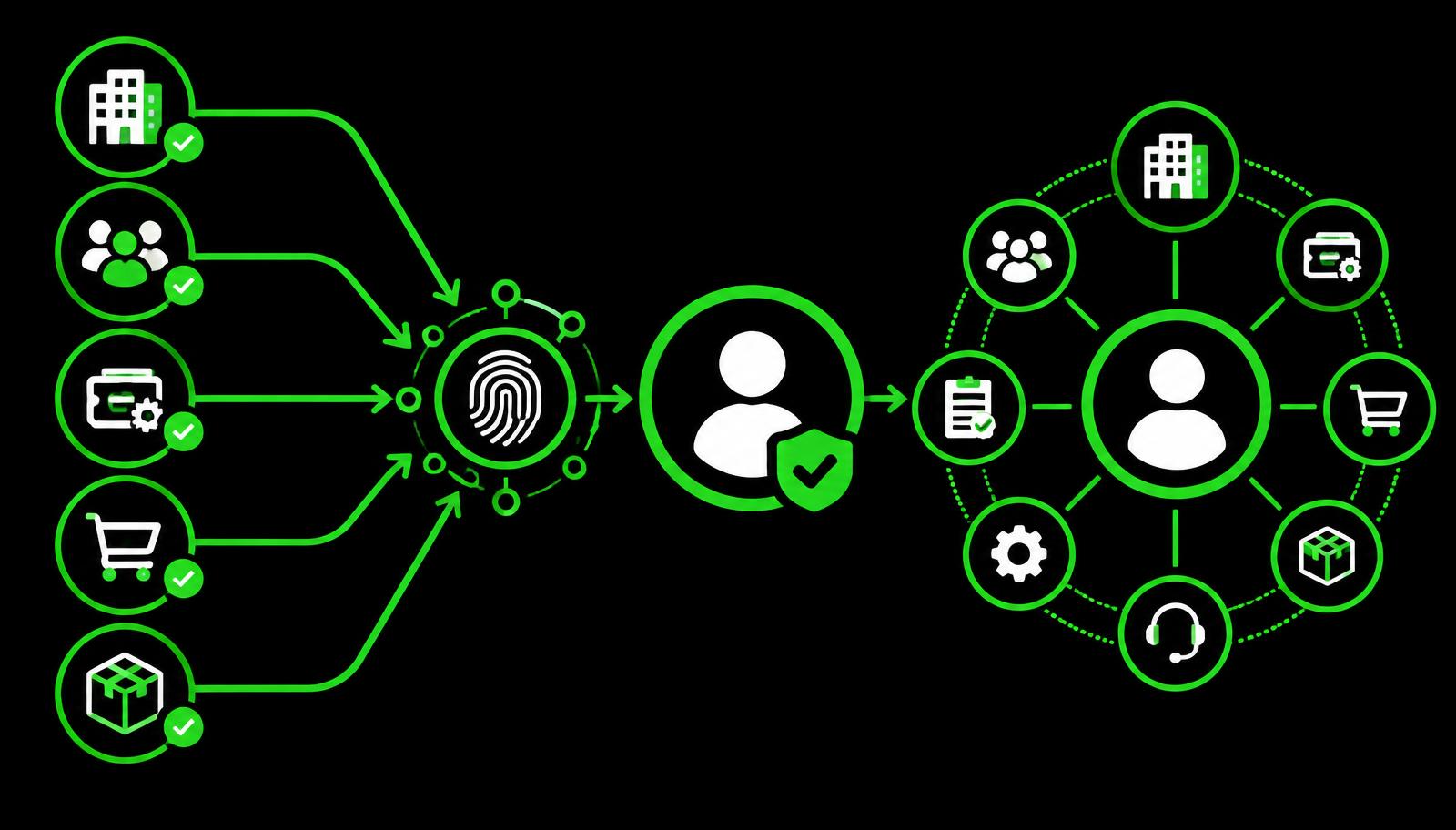
This is why a true 360-degree customer view is harder to achieve than simply putting more information onto a dashboard. A 360-degree view depends on connecting the customer's identity, relationships, interactions, transactions, products, cases, orders, contracts and other relevant information into a consistent customer context. That is where the idea of a single customer record becomes important.
In ServiceNow, this concept can span capabilities such as Customer Service Management (CSM), Customer Data Management, Sales and Order Management, CPQ and other customer workflows. The exact implementation varies, but the principle is the same: customer information needs to be connected, governed and available across the workflows that interact with the customer.
What is a single customer record?
A single customer record is a consistent representation of a customer that can be used across business processes. It is more than a contact database. Depending on the organisation, it can connect:
- Customer or account identity
- Contacts and relationships
- Products and services
- Orders and transactions
- Contracts and entitlements
- Support cases
- Customer interactions
- Sales opportunities
- Renewals and amendments
The important word is connect. Imagine a company purchases 500 software licences. Sales creates the opportunity and quote, the order is submitted, the customer receives the licences, and later a user opens a support case. A connected customer record should make it possible to understand that these activities belong to the same customer relationship. That is much more useful than several systems that each happen to contain the customer's name.
Is a single customer record the same as a 360-degree view?
Not exactly. The single customer record is the foundation. The 360-degree view is the broader understanding built around it. A 360-degree view might bring together:
- Who the customer is
- What they purchased
- What they currently use
- What contracts are active
- What orders are in progress
- What issues they have reported
- What services they are entitled to
- What opportunities are being discussed
- What interactions have occurred
The goal is not to display every piece of information the organisation owns. It is to give each team the right customer context for the work they are performing. A support agent may need cases, products and entitlements. A sales representative may need opportunities, orders, products and contracts. Both should start from the same underlying customer identity.
Why is customer identity so important?
The first question a 360-degree strategy needs to answer is: who is this customer?
Organisations often accumulate customer data across applications over many years. One system may contain "ABC Technologies Ltd.", another "ABC Technology", and a third "ABC Technologies". If those records cannot reliably be connected, the organisation does not really have one customer view. It has several records that may or may not represent the same customer.
This is why customer data management is more fundamental than simply building dashboards. A dashboard can present information, but it cannot solve an underlying identity problem. The customer model needs reliable relationships between customers, contacts, accounts, products, transactions and interactions, which is exactly what the ServiceNow CRM data model provides.
What information belongs in a customer 360 view?
There is no universal list. The useful scope depends on the customer's relationship with the business. A practical 360-degree view can include:
Customer and account information
- Account information
- Locations
- Parent and subsidiary relationships
- Contacts
- Account teams
Commercial information
- Opportunities
- Quotes
- Orders
- Products purchased
- Contracts
- Renewals
- Amendments
Service information
- Cases
- Service requests
- Entitlements
- Service agreements
- Installed products
- Customer interactions
Operational information
Depending on the business, this may include fulfilment status, work orders, installations, assets and delivery information.
Together, these layers provide considerably more context than a basic customer profile.
Why do disconnected customer records create problems?
Consider a customer contacting support about a product that is not working. The agent may need to determine: does the customer own the product? When was it purchased? Which order was it part of? Is it covered by support? Has the customer already reported the issue?
If this information exists in disconnected systems, the agent may have to search across multiple applications. That creates several problems:
- Interactions take longer because employees spend time finding information.
- Context is lost because a support agent may not know about an active sales opportunity or renewal.
- Information becomes inconsistent because different teams may maintain different versions of the customer's information.
A 360-degree approach reduces this fragmentation by connecting the information around the customer.
How does ServiceNow support a customer 360 approach?
ServiceNow is relevant because customer information can participate in multiple workflows rather than being limited to one customer-facing application. Customer Service Management can use customer and account information while handling cases and service interactions. Sales and Order Management can connect commercial activities such as quoting, contracting, ordering, fulfilment and renewals. CPQ provides context around product configuration, pricing and quotes.
The important point is that a customer 360 strategy in ServiceNow should not simply mean "put all customer data on one screen". It is better understood as connecting customer information to the workflows where employees actually need it. A dashboard with disconnected data is not necessarily a 360-degree customer view. A connected customer model that allows employees to understand accounts, contacts, products, orders, contracts, cases and related activities can be much more valuable.
What is the role of Customer Data Management?
The quality of a 360-degree experience depends on the quality of the underlying customer data. A customer data management approach needs to answer questions such as:
- How is a customer uniquely identified?
- Which information is authoritative?
- How are duplicate records identified?
- How are account relationships represented?
- Which systems create or update customer information?
This is where governance becomes as important as technology. A single customer record is not created simply by integrating applications. Organisations also need rules for how customer data is created, matched, updated and maintained.
Does a single customer record mean one database?
No. An enterprise can have multiple applications and specialised systems while maintaining a connected customer model. The objective is not necessarily to force every piece of customer information into one physical database. The goal is to establish a consistent and connected view of the customer.
Finance, fulfilment, marketing and operational systems may each manage different information. The key question is not "where does every piece of customer data physically live?" It is: "can the organisation reliably understand that these pieces of information belong to the same customer relationship?"
How does it improve customer service, sales and renewals?
Without connected customer context, a support agent may have to ask: which product do you have? When did you purchase it? Are you covered by support? Have you contacted us about this before? When the relevant information is connected, the agent can begin with context instead of reconstructing the customer's history.
The same principle applies to sales. A sales representative may need to understand existing products, orders, contracts, open service issues, upcoming renewals and opportunities before speaking with an account. A renewal discussion is different when an account has an unresolved service issue than when the customer has recently expanded successfully. The 360-degree view does not make the decision automatically. It makes the relevant customer context available to the people making the decision. For the commercial side of that picture, see the difference between CPQ and Sales and Order Management.
What does a connected customer journey look like?
A typical customer relationship might involve:
Prospect → Quote → Contract → Order → Fulfilment → Service → Renewal
The business process changes at each stage, but the underlying customer relationship remains. Sales works with the opportunity and quote. Legal manages the contract. Operations manages fulfilment. Customer service manages cases and entitlements. Renewal teams prepare the next commercial transaction.
A 360-degree approach connects these experiences around the customer rather than allowing each department to create its own isolated version of the relationship. This is also why customer 360 is closely related to quote-to-cash: the commercial transaction creates customer history, which becomes part of the customer's ongoing relationship with the organisation.
Where should organisations start?
A customer 360 initiative does not need to begin by connecting every possible data source. Start with the customer journeys that matter most:
- Define the customer and account model.
- Identify systems that create or update customer records.
- Establish reliable customer identifiers.
- Identify duplicate and inconsistent records.
- Define which data is authoritative.
- Connect important commercial and service relationships.
- Make relevant information available within employee workflows.
- Establish governance for maintaining data quality.
The most useful question is not simply "how can we build a 360-degree dashboard?" It is: "what information does each team need to understand and act on the customer's relationship with us?" That question leads to a much more practical architecture.
The bottom line
A 360-degree customer view is not created simply by collecting more customer data. It starts with a consistent customer identity and connected relationships. The single customer record provides the foundation. Around it, organisations can connect products, orders, contracts, cases, entitlements, interactions, opportunities and renewals.
In a ServiceNow environment, this becomes particularly valuable when customer service, sales, CPQ, order management and other workflows need to work from the same customer context. The goal is not necessarily one database or one giant screen. The goal is one coherent understanding of the customer, available across the workflows where employees need it. That is what turns customer data into a usable 360-degree view.
Frequently asked questions
What is a single customer record?
It is a consistent representation of a customer that connects their identity, relationships, transactions, products, services and interactions across relevant business processes.
Is customer 360 the same as a customer database?
No. A database stores information. Customer 360 connects relevant information so employees can understand the customer's broader relationship with the organisation.
Does a single customer record require one database?
No. Multiple systems can contribute information. What matters is that customer identities, identifiers and relationships can be reliably connected.
How does ServiceNow support customer 360?
ServiceNow can connect customer information across workflows such as Customer Service Management, Sales and Order Management, CPQ and related processes. The exact architecture depends on the organisation's implementation and data sources.
Why is data quality important?
If customer records are duplicated, incomplete or inconsistent, the resulting 360-degree view will also be unreliable. Data governance and identity management are therefore fundamental.