
I once worked with a manufacturing client whose pricing was a moving target. It shifted with regions, raw material costs, and a constant stream of tariff changes. One week, steel, copper and silver prices surged while new international tariffs landed overnight, and the system's rigid architecture simply hit a wall. It could not handle the logic those variables demanded, and the quoting process effectively froze.
Managing highly volatile pricing is a fundamental challenge where execution has to be flawless. When a system lacks the architectural agility to absorb constant market shifts, every update becomes a high-risk operation. Teams get pushed into a cycle of manual firefighting, where a small oversight can lead to serious revenue leakage or lost deals.
After more than a decade in the CPQ space, I have seen this pattern repeat across industries. And I have come to believe it is rarely a "system" problem. It is an architecture problem.
The trap: static logic in a dynamic world
Salesforce CPQ pricing rules are powerful, but they become a liability the moment they get used without a clear structure behind them and as complexity increases.
In manufacturing, pricing is not a fixed value sitting on a shelf. It is a living thing influenced by geography, customer agreements, logistics, and volatile external factors like metal costs. These inputs change frequently, sometimes daily.
Most teams try to capture this variability inside pricing rules. They layer region-based logic, material adjustments and tariff overrides on top of each other. At first it works. But over time the rules begin to overlap, conflict, and trigger each other in ways no one intended.
We are trying to solve a dynamic pricing problem with static rule structures, and then wondering why the system feels fragile.
The real business impact
This is not just a technical headache. It hits the bottom line in three very recognisable ways.
- Loss of momentum. When the system cannot adapt to market shifts, everything slows down. Sales teams stop trusting the tool and start waiting on manual approvals.
- The rise of "shadow CPQ". When reps lose faith in the system, they fall back on spreadsheets and best-guess pricing. At that point, an expensive CPQ tool is not an enabler, it is a blocker.
- Operational burnout. Every pricing change should not feel like a project. If updating a material cost requires modifying rules, testing scenarios and validating outcomes, the team is firefighting instead of strategising.
Why legacy approaches fail
Salesforce CPQ is genuinely good at structured logic. It struggles when there is no clean separation between data and logic.
If a small metal-cost fluctuation forces the team into the Price Action or Lookup Query to change metadata, the architecture is already in trouble. Even a tiny change then requires a full system deployment. Add dozens of rules firing at once, and it becomes nearly impossible to trace why a final price is what it is.
The issue is not that CPQ cannot handle the math. It is that the platform does not stop a team from building a system that is too fragile to scale.
A modern approach: designing for change
The fix is not to add more rules. It is to design for agility from the start. Four moves separate brittle pricing architectures from durable ones.
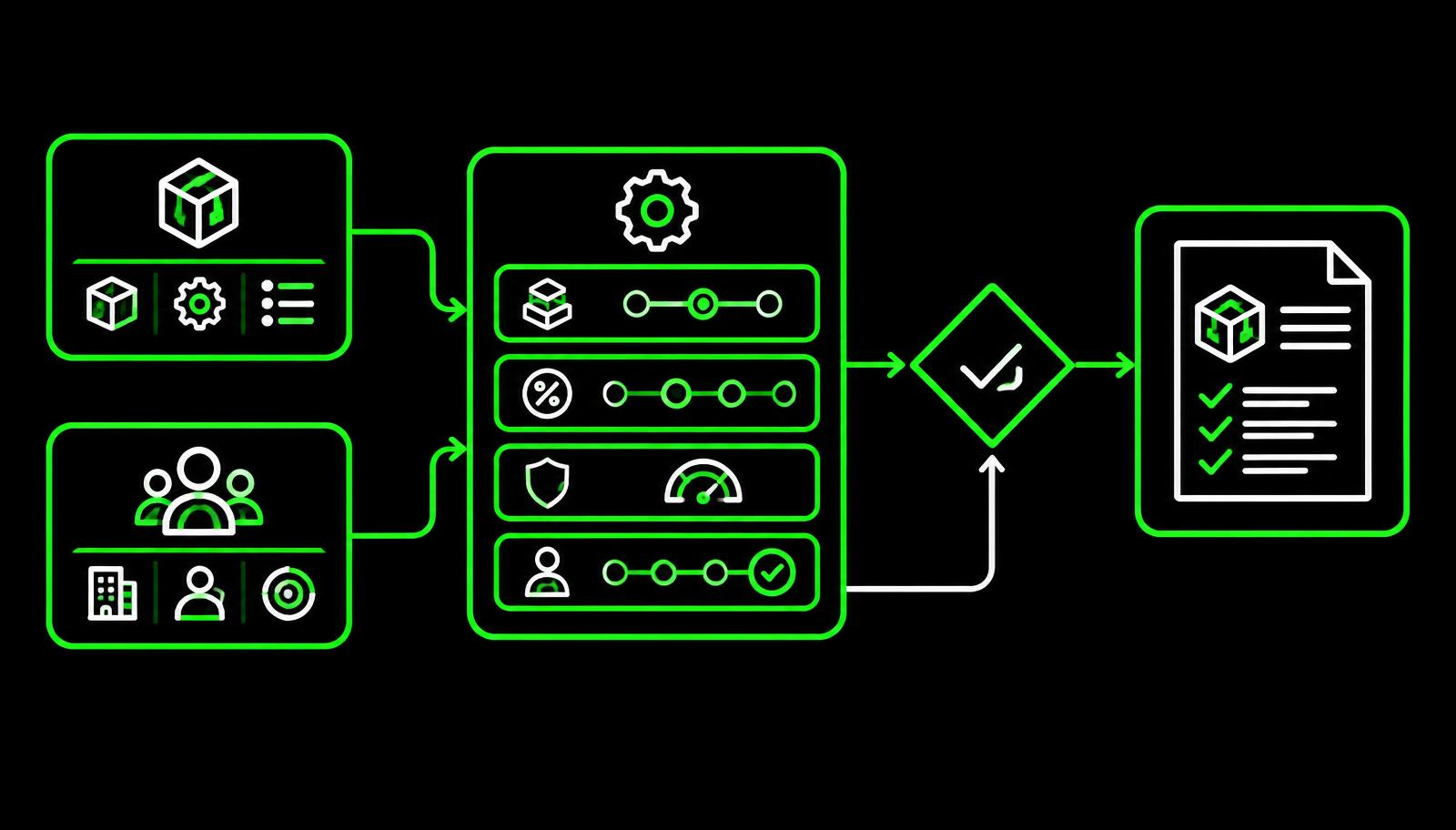
- Decouple data from logic. Volatile inputs like metal prices and tariffs should not live inside a rule. They belong in data tables that can be updated in near real time. The rules define the "how", and the data carries the "what".
- Expect volatility. When pricing is known to be unstable, do not hardcode it. Build structures that absorb market shifts without needing a developer to rewrite the logic.
- Simplify the toolset. A complex Price Rule is not always the right answer. Sometimes a discount schedule or a price dimension is the cleaner path.
- Prioritise visibility. The team should always be able to explain why a price changed. A transparent system is a trusted system.
Where ServiceNow CPQ on Logik.ai changes the picture
The cleanest answer to volatile pricing is not more rules, it is a platform that keeps data and logic in their own lanes by design. ServiceNow CPQ on Logik.ai does exactly that. Pricing is fast, explainable and decoupled from configuration, so commodity costs, tariffs and regional adjustments can flow in as data without touching the rule engine. When a price moves, the team can trace why, not guess.