
In the modern sales landscape, speed is not just an advantage, it is a survival trait. Yet many enterprises find themselves tethered to a heavyweight champion that has quietly started to feel like an anchor.
Oracle CPQ is robust, but the very architecture designed to bring order to complex selling is often the primary culprit behind business stagnation. If your strategy is moving at the speed of light while execution is stuck in a validation cycle, you are not facing a tooling gap, you are facing the CPQ agility trap.
The six-week "two-week" project
A London-based fintech was ready to disrupt its market with a new pricing model: monthly subscriptions, usage-based add-ons and a flexible onboarding offer designed to land logos quickly.
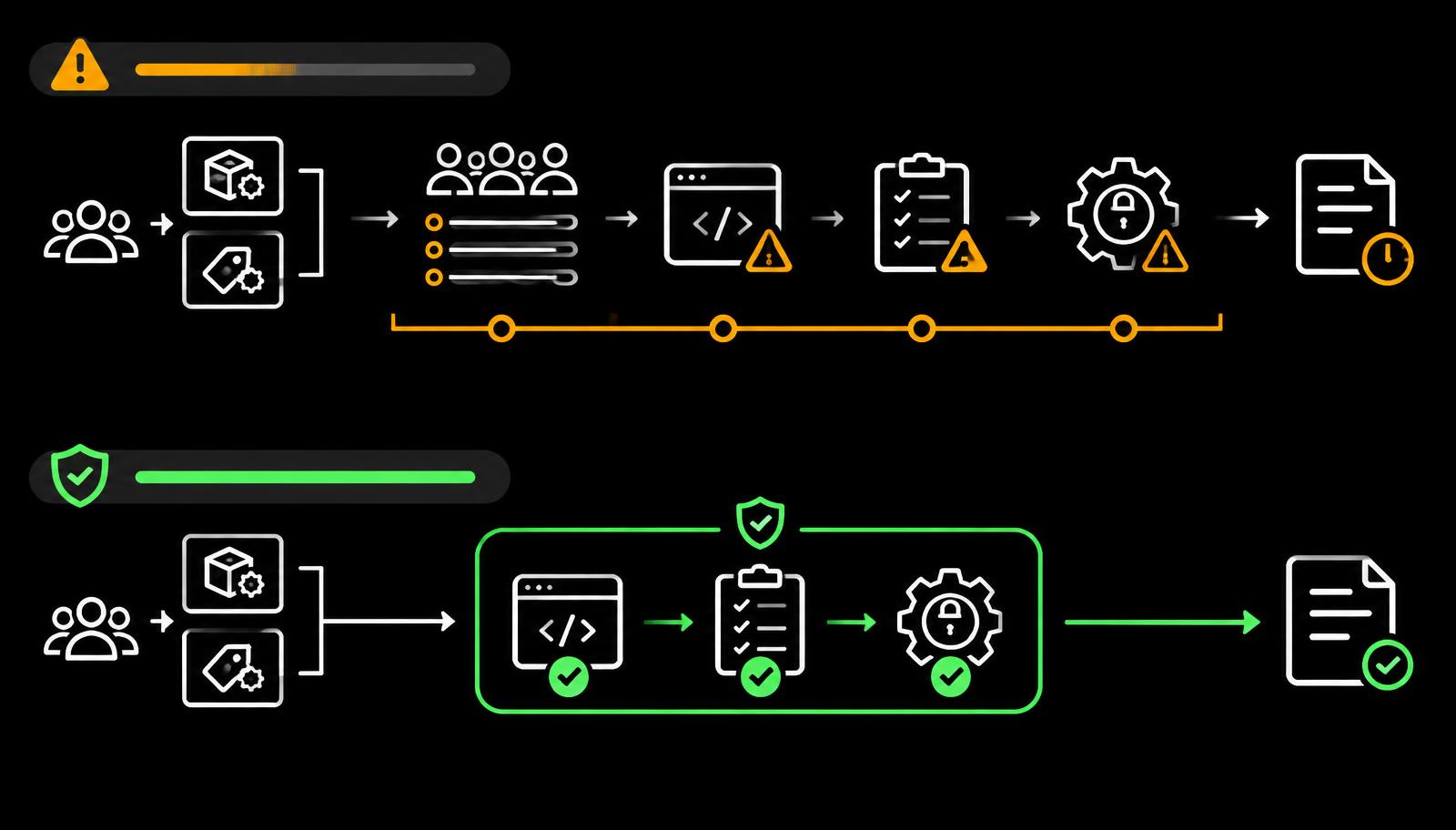
The goal was to go live in two weeks. The reality was six weeks of "the system says no". Because Oracle CPQ leans on rigid rule-based logic, every pricing tweak triggered a domino effect of validation errors. Rules had to be rewritten, dependencies retraced and regression cycles extended.
By the time the Save button was finally pressed, the competition had already absorbed the early adopters. The strategy was right. The system was the bottleneck.
The strategy was perfect. The system was the bottleneck. That sentence, in some form, ends up written across most Oracle CPQ post-mortems.
Where agility actually breaks down
Oracle CPQ does what it was built to do: configure, price and quote. The friction arrives the moment you need to change those parameters. In a world of constant pivots, Oracle's structural DNA imposes a quiet tax on change, and every quarter that tax compounds.
Rule bloat
Every new discount, bundle or market-specific exception layers more logic onto an already crowded foundation. Nobody removes the old rules, because nobody is fully sure what depends on them, so the rulebase only grows.
The dependency web
Changing a single price point often requires a small search-and-rescue mission to confirm it does not silently break a configuration elsewhere in the catalogue. Confidence drops, and with it, the team's willingness to ship anything quickly.
Risk-averse deployment
Because the system is so interconnected, testing becomes a marathon designed to avoid catastrophic pricing errors. Sensible governance turns into a permanent handbrake, and business flexibility gets sacrificed at the altar of system complexity.
The real-world cost of slowness
When your CPQ cannot keep up, the damage shows up in pipeline and margin, not just in Jira tickets. Four patterns recur across Oracle CPQ estates.
- Missed market windows. In fast-moving sectors, being three weeks late to a new pricing motion is the same as being irrelevant. Competitors capture the early adopters and set the reference price.
- Friction-filled sales cycles. If a rep needs backend support just to tweak a quote during a live negotiation, momentum dies and the buyer's confidence with it.
- An innovation chill. When changing a pricing structure feels like dental surgery, teams stop suggesting new ideas. They stick to "what works", even when it is suboptimal for growth.
- IT as the gatekeeper. What should be a routine business decision becomes a technical ticket, creating internal queues, escalations and frustration on both sides.
Why legacy systems struggle with the new normal
Oracle CPQ is a product of its era, a time when pricing was largely static and planning cycles were annual. Today's needs, such as usage-based billing, hybrid subscription models and partner-specific bundles, simply do not fit naturally into its logic.
- Tightly coupled components. Pricing, configuration and workflow are so intertwined that you cannot move one without shaking the others.
- Technical heavy-lifting. Business users cannot make changes independently. You stay perpetually reliant on high-cost technical experts for even minor updates.
- The safety paradox. Because the risk of a break is so high, the platform itself mandates slow, cautious change cycles, and calls that prudence.
A platform that defaults to "wait" cannot support a business whose customers default to "now".
From control to adaptability
Modern CPQ platforms have shifted the philosophy from managing complexity to actively reducing it. Next-generation solutions use decoupled architectures where pricing and configuration can evolve independently, without dragging the rest of the stack into every change.
In practice, that unlocks three things teams running Oracle CPQ struggle to do reliably: real-time adjustments during live sales conversations, no-code updates that let business teams bypass the IT queue, and intelligent assistance that guides decisions rather than just enforcing rigid rules.
Where ServiceNow CPQ on Logik.ai changes the picture
ServiceNow CPQ, powered by Logik.ai, was designed for exactly the conditions Oracle CPQ struggles with. It separates pricing logic from platform plumbing, gives business owners a visual surface to manage rules, and treats AI as a first-class part of the quoting experience rather than a bolted-on feature.
- Business-owned change. Pricing tiers, discount thresholds and bundle logic are configured in a clear visual model that pricing and sales ops can manage themselves.
- Decoupled architecture. CPQ sits cleanly between CRM and ERP instead of becoming the bottleneck between them, with native integration across the wider ServiceNow workflow fabric.
- AI-guided selling. Logik.ai brings configuration recommendations, pricing assistance and margin guardrails directly into the rep's flow, so the system supports "yes" instead of defaulting to "wait".
- Predictable evolution. Configuration is separated from the platform core, so upgrades stop breaking custom logic and stop triggering another consulting cycle every release.
The practical effect is the one sales leadership and finance both feel. New pricing motions ship in days, not quarters. Reps quote at the pace the buyer expects. And the QBR conversation moves from "why is CPQ slowing us down" back to "where do we want to go next".