
Every ambitious enterprise eventually hits a point where its internal systems are put to the real test. The product is sharp, the sales team is hungry, the market is asking for more, and yet expansion starts to feel like wading through wet concrete. More often than not, the resistance is not coming from the market. It is coming from Oracle CPQ.
What once looked like a robust engine for handling complex quotes can quietly become a ceiling on the business. When growing starts to feel like grinding, you have usually hit the limit of legacy logic, not the limit of the opportunity.
The expansion that never quite landed
A global manufacturing firm decided to move from selling hardware to a hybrid model: physical equipment bundled with predictive maintenance sensors and a recurring software subscription. On the strategy slide, it was a multi-million-pound expansion. Inside Oracle CPQ, it was a six-month exercise in workarounds.
The legacy architecture struggled to handle recurring revenue logic alongside one-time hardware pricing. To make it function at all, the team layered hacks on top of hacks. A process that should have unlocked a new revenue stream became a manual data-entry exercise spread across CPQ, spreadsheets and ERP.
Instead of scaling a new motion, the company spent half a year just trying to get a clean invoice out of the system. Growth did not just slow down. It stalled.
How the "system of record" becomes a barrier
At a certain scale, the very features that give Oracle CPQ its stability turn into the handcuffs that prevent it from evolving. Growth needs fluidity. Legacy CPQ is poured in concrete.
The scaling tax
Every new product line, region or pricing model adds to the rule base. Complexity does not grow linearly, it compounds. After a few years, the engine spends more time resolving rule collisions than it does generating quotes, and small changes need disproportionately large regression cycles.
The global headache
Managing different currencies, tax regimes and regional discounting on top of a rigid framework turns a country launch into a multi-quarter IT project. The platform does not say no, it just makes the path long enough that the business loses patience.
Data silos
When CPQ cannot talk cleanly to a modern CRM or ERP, growth gets paid for in manual reconciliations. Finance closes the books with spreadsheets. Sales ops rebuilds pipeline numbers by hand. The system is technically connected, but the people around it are doing the integration work.
When the cost of adding a new product line in your system exceeds the revenue it will bring in the first quarter, that system has stopped being an asset.
The invisible costs of limited growth
A system that limits growth rarely shows up in a crash report. It shows up in the opportunities the business quietly stops chasing.
- Market hesitation. Leadership stops asking "what should we do" and starts asking "what can the system handle". That subtle shift is where innovation dies.
- Talent burnout. The best sales ops and engineering people do not want to spend their careers debugging a decade-old script layer. They leave for companies running modern, agile stacks.
- Customer friction. Enterprise buyers now expect consumer-grade speed. If a complex quote takes 48 hours because of "backend validation", a more nimble competitor has already moved into the conversation.
- Forecasting that no one trusts. Once workarounds become the norm, data integrity decays. You cannot grow what you cannot measure with confidence.
Why legacy logic cannot keep up with modern scale
Oracle CPQ was designed for a world of standard units and stable price books. Modern growth looks nothing like that.
- Non-linear pricing is the new normal. Usage-based, tiered and consumption models are now standard. Forcing them into a "quantity times price" framework is like running a 4K stream through a VCR.
- The technical debt wall. Years of customisations create a spaghetti effect, where a small change to support one branch office can ripple through the global quoting engine.
- The expert dependency. When only two people in the company truly understand how the original BigMachines-era logic was wired, growth runs at the pace of their calendar, not the market.
Breaking the ceiling: moving toward elastic CPQ
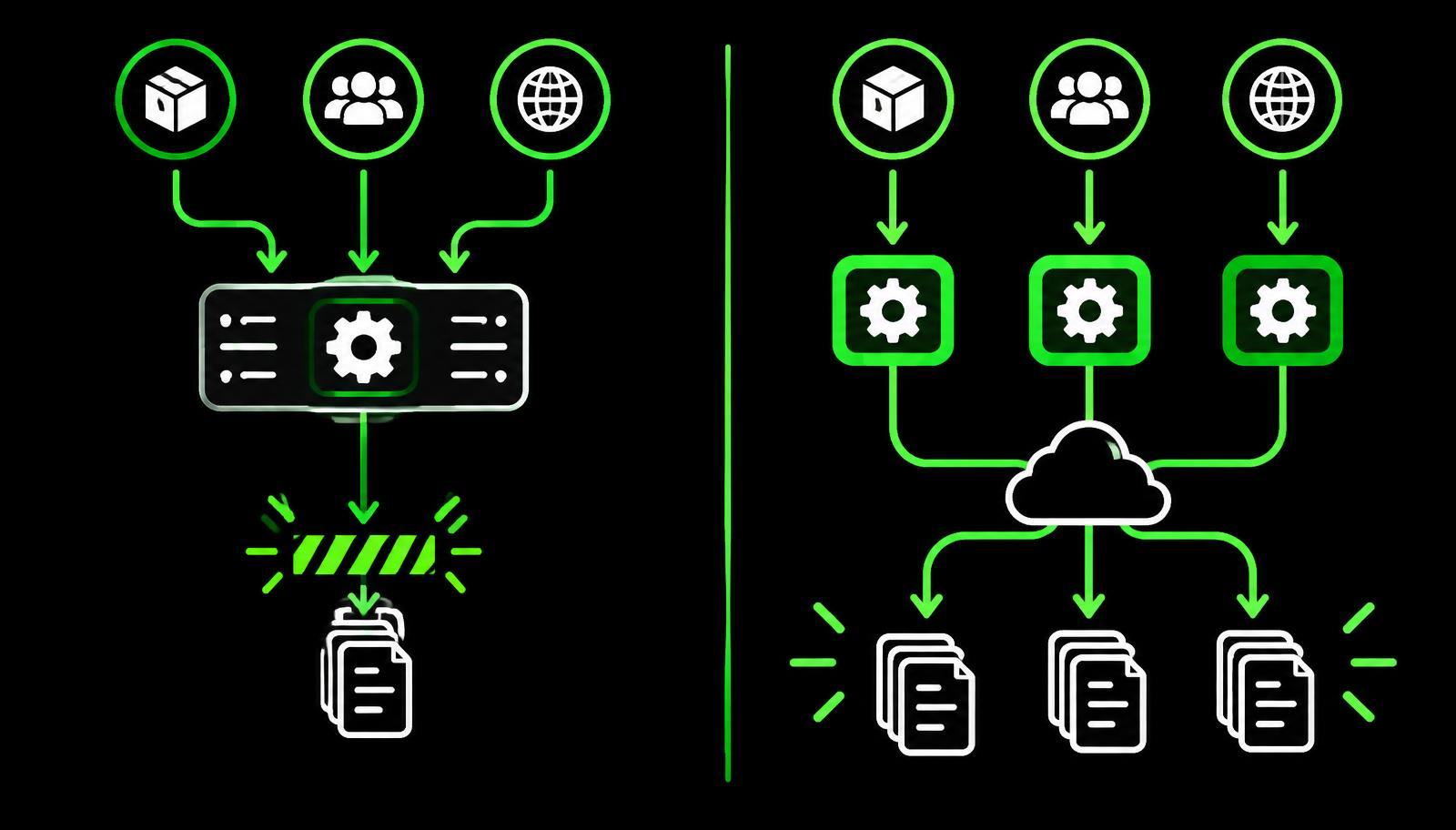
Growth-oriented companies are walking away from monolithic, rule-heavy systems and toward what is best described as elastic CPQ. The goal is simple: a system that grows with the business, not one the business has to grow around.
- Modular architecture. New business units and product types can be added without rewriting core logic.
- API-first design. The quoting engine plugs into every other part of the stack, so the business runs on a single source of truth instead of stitched reports.
- Self-service for the business. Pricing, promotions and bundles can be updated by the people accountable for them, in minutes rather than months.
The transition off Oracle CPQ is not really an IT upgrade. It is a strategic move to take the ceiling off future revenue.
Where ServiceNow CPQ on Logik.ai changes the picture
Most of what makes Oracle CPQ feel limiting at scale, rigid rules, slow change cycles, weak observability, painful integration with modern commercial models, is architectural. So the more useful question is not "how do we extend Oracle CPQ for the next product launch", it is "what would a CPQ designed for the way we sell now actually look like". ServiceNow CPQ, powered by Logik.ai, is one of the clearest answers in the market right now.
- Built for elastic growth. Adding a new product line, region or commercial model is a configuration exercise, not a rebuild. The platform expects change.
- Modern pricing as a first-class citizen. Subscriptions, usage-based pricing, hybrid bundles and renewals are native concepts, not workarounds layered onto a legacy catalogue.
- One workflow fabric. Because CPQ lives inside ServiceNow, quote-to-cash, service, fulfilment and approvals share the same platform. The brittle handoffs between Oracle CPQ, CRM and ERP largely disappear.
- Business-led change. Pricing, discount thresholds and product rules can be safely managed by the teams accountable for them, without queueing behind a release train.
- AI is native. Guided selling, configuration recommendations and pricing assistance are built in, so the experience keeps improving without another integration project.
The practical effect is the one the business actually feels. New revenue motions launch in weeks. Reps quote at the pace the buyer expects. Finance gets numbers it can trust. Growth stops being a negotiation with the system.