
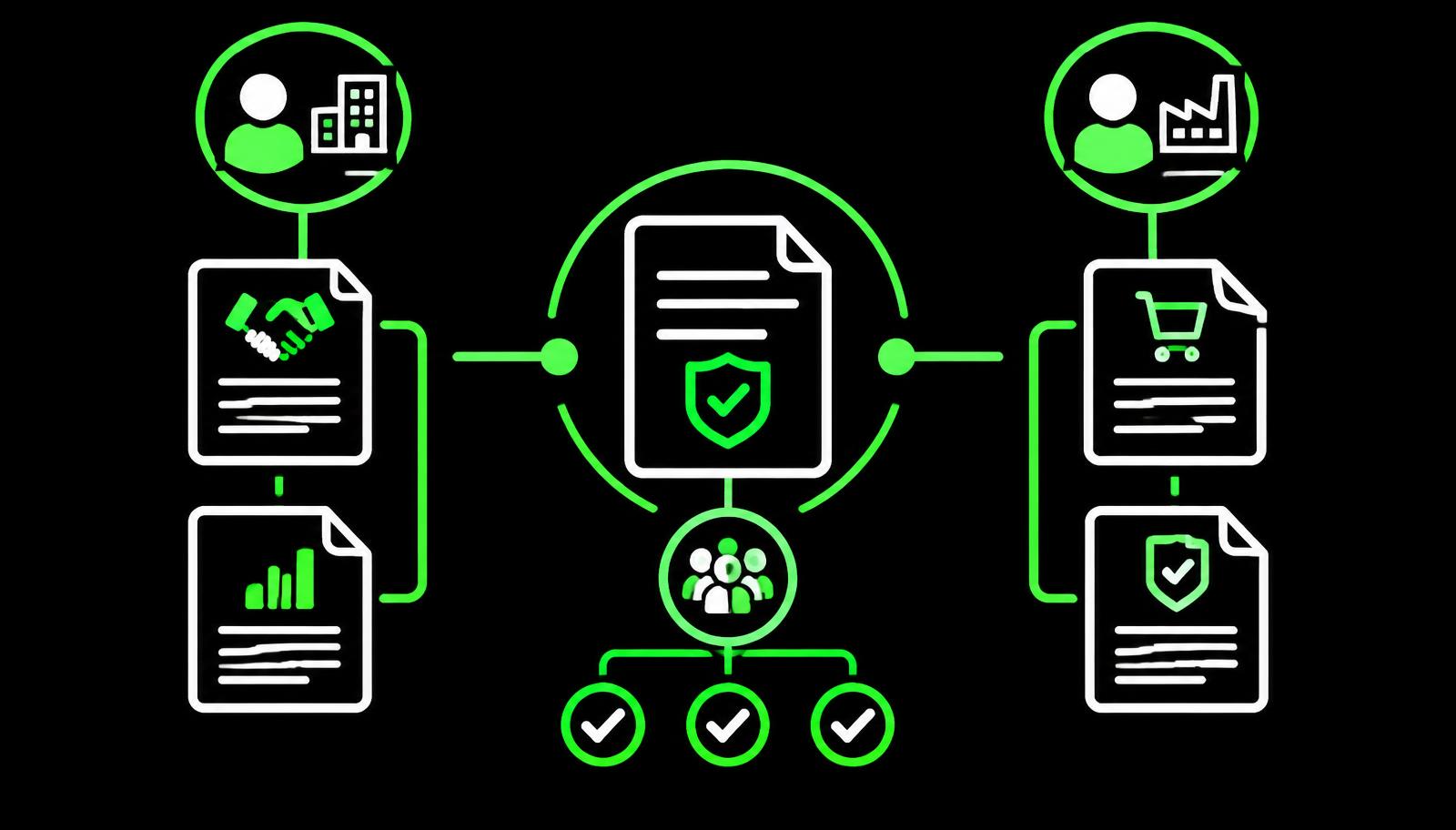
Contract lifecycle management can become confusing because the word "contract" covers very different business relationships. A company may create a contract with a customer to sell products or services. The same company may also sign contracts with suppliers for software, equipment, consulting, logistics or other services.
Both are contracts. Both may involve negotiation, approvals, signatures, renewals and obligations. The key difference is who your organisation is contracting with and what the contract is supporting.
Sell-side contract management focuses on contracts where the organisation is selling products or services to a customer. Buy-side contract management focuses on contracts where the organisation is purchasing goods or services from a supplier. This distinction also explains why ServiceNow CLM can appear in both Lead-to-Cash and Source-to-Pay discussions.
What is sell-side contract management?
Sell-side contract management manages agreements where your organisation is the seller and another organisation or person is the customer. For example, imagine a technology company selling a three-year software subscription to an enterprise customer. The commercial process may involve:
- Customer requirements
- Opportunity management
- Product configuration
- Pricing
- Discounts
- Quote creation
- Customer negotiation
- Contract drafting
- Legal review
- Approval
- Signature
- Order creation
- Delivery or provisioning
- Renewal
The contract is therefore closely connected to the company's revenue process. This is why sell-side contracting often connects with CRM, CPQ, Sales and Order Management, and other Lead-to-Cash capabilities.
A simple sell-side example
Suppose a manufacturer sells equipment with installation and ongoing maintenance. The sales team creates a quote. The customer negotiates pricing and service terms. Legal reviews the agreement. Once approved and signed, the commercial information may need to move into downstream order and fulfilment processes.
The contract therefore should not become an isolated PDF after signature. Its terms may be needed by sales, operations, finance, customer service and renewal teams.
What is buy-side contract management?
Buy-side contract management works from the opposite perspective. Here, your organisation is the buyer, and another organisation is the supplier. For example, a company may need a new cloud platform. Procurement identifies potential suppliers, runs a sourcing process, negotiates commercial terms and enters into an agreement with the selected supplier. The process may involve:
- Procurement intake
- Sourcing
- Supplier selection
- Supplier risk assessment
- Commercial negotiation
- Contract drafting
- Legal review
- Approval
- Signature
- Purchase orders
- Supplier performance
- Renewal or termination
The contract is closely connected to procurement and supplier management. This is why buy-side contract management is commonly associated with Source-to-Pay (S2P). For organisations looking at this from a procurement perspective, Impactron's Source-to-Pay Transformation covers how ServiceNow can connect sourcing, procurement, supplier lifecycle, accounts payable and related workflows.
Why does CLM appear in Source-to-Pay?
This is where much of the confusion comes from. Procurement does not stop when a supplier is selected. Consider a company selecting a supplier for outsourced IT services. The sourcing team may negotiate:
- Price
- Service levels
- Payment terms
- Contract duration
- Termination rights
- Data protection
- Security requirements
- Performance commitments
Those terms need to become a contract. After signature, the organisation still needs to know what it agreed to purchase, what the supplier must deliver, when the agreement expires and what conditions apply to renewal. So contract management is an important part of the source-to-pay lifecycle. The important point is that CLM does not belong exclusively to sales or legal. It can support procurement contracts as well.
Sell-side vs buy-side: what is the difference?
The easiest way to understand the distinction is to look at the commercial relationship.
| Area | Sell-side | Buy-side |
|---|---|---|
| Your role | Seller | Buyer |
| Other party | Customer | Supplier |
| Primary objective | Manage revenue and customer commitments | Manage spend and supplier commitments |
| Common process | Lead-to-Cash | Source-to-Pay |
| Commercial focus | Quotes, pricing, orders and customer delivery | Sourcing, purchasing and supplier value |
| Post-signature focus | Customer delivery and commercial obligations | Supplier performance and purchasing compliance |
| Renewal concern | Customer renewal or expansion | Supplier renewal, renegotiation or replacement |
The distinction is not that one side has contracts and the other does not. Both sides have a contract lifecycle. The difference is the business transaction that the contract supports.
How does sell-side CLM connect to Lead-to-Cash?
On the sell side, contracts are usually part of a broader revenue journey. A customer may start with an opportunity. Sales develops it, CPQ helps configure and price the offering, and the customer receives a quote. Once commercial terms are agreed, the contract becomes the formal representation of that agreement.
After signature, the organisation may need to create an order, provision services, deliver products, manage entitlements, invoice the customer and eventually manage renewals or amendments. This is why sell-side CLM can connect with:
- CRM
- CPQ
- Sales and Order Management
- Order orchestration
- Billing
- Customer service
- Renewals
The contract remains relevant throughout the customer relationship rather than ending when the document is signed. Our guide to how disconnected systems break lead-to-cash shows what happens when these stages are not joined up.
How does buy-side CLM connect to Source-to-Pay?
The buy-side process has a similar lifecycle, but the commercial direction is reversed. A business employee may request a new service. Procurement evaluates the requirement, identifies potential suppliers and conducts sourcing. Once a supplier is selected, the organisation negotiates and executes a contract, then manages purchase orders, invoices, supplier performance and eventual renewal or renegotiation.
An important point is that sell-side and buy-side are not competing CLM models. Most large organisations have both. A manufacturer may sell equipment and maintenance contracts to customers while purchasing raw materials, logistics services, software and professional services from suppliers. The legal department may support both. The same CLM platform may manage both. But the workflows, stakeholders, data and business outcomes can be different.
Some capabilities can be shared, including:
- Contract templates
- Clause libraries
- Approval workflows
- Electronic signatures
- Version control
- Contract repositories
- Obligation tracking
- Renewal management
- Reporting
The surrounding workflow can then be tailored to the type of commercial relationship.
Why the distinction matters in ServiceNow
The distinction becomes especially useful when designing ServiceNow workflows. A sell-side process may connect contract management with:
Opportunity, quote, contract, order, fulfilment, renewal
A buy-side process may connect contract management with:
Request, sourcing, supplier, contract, purchase, invoice, supplier performance
These are different business journeys even though both produce and manage contracts. Trying to force them into one identical workflow can create unnecessary complexity. Instead, organisations can use shared contract capabilities while tailoring intake, approvals, integrations and downstream processes to each side.
What happens after the contract is signed?
Signing the contract is not the end of contract management. On the sell side, teams may need to ensure the organisation delivers what was promised to the customer. Commercial teams may also manage amendments, renewals, expansions or changes to pricing. On the buy side, procurement may monitor supplier performance, ensure purchases follow negotiated terms, manage obligations and prepare for renewal or renegotiation.
This is why CLM is a lifecycle discipline, rather than simply a document-signing activity. Our guide to contract renewals and obligation tracking in ServiceNow covers the post-signature side in detail.
Can one CLM platform support both?
Yes. A CLM platform can support both sell-side and buy-side contracts when the workflows and integrations are designed around the organisation's requirements. The underlying contract capabilities can be shared, while different intake, approval, negotiation and downstream processes support each commercial journey.
For example, a sell-side workflow may connect contracts with CRM, CPQ, orders, fulfilment and renewals. A buy-side workflow may connect contracts with sourcing, supplier management, purchasing and accounts payable. The result is one contract management capability supporting different business processes, rather than one identical process for every contract.
A practical way to remember the difference
If you are unsure whether a contract is sell-side or buy-side, ask one question:
Is our organisation selling something under this agreement, or buying something?
If your organisation is purchasing products or services from a supplier, it is buy-side contract management. The surrounding process then becomes easier to identify. Sell-side generally connects with Lead-to-Cash. Buy-side generally connects with Source-to-Pay.
CLM sits across both because both journeys require organisations to create, negotiate, execute, manage, renew and eventually close contractual relationships.
The bottom line
Sell-side and buy-side contract management use many of the same CLM capabilities, but they support different commercial relationships. Sell-side CLM manages customer-facing contracts and supports the revenue lifecycle. Buy-side CLM manages supplier-facing contracts and supports the procurement lifecycle.
The distinction matters because a contract should remain connected to the business process that depends on it. A customer contract may need to connect to quoting, orders, fulfilment and renewals. A supplier contract may need to connect to sourcing, purchasing, supplier performance and renewals. So while the contract lifecycle may look similar, the business context around the contract is different. Understanding that difference is essential when designing CLM workflows in ServiceNow and deciding how contract management should connect with Lead-to-Cash and Source-to-Pay. For the full picture, see our guide to ServiceNow contract lifecycle management.
Frequently asked questions
Is CLM only for the legal department?
No. CLM can support legal, sales, procurement, finance and other teams involved in creating, approving, executing and managing contracts.
Is buy-side contract management part of Source-to-Pay?
Yes. Supplier contracting is an important part of the source-to-contract side of Source-to-Pay.
Is sell-side contract management part of Lead-to-Cash?
It can be. Sell-side contracts are typically connected to the commercial process of selling products or services, including quoting, ordering, fulfilment and renewals.
Can the same CLM platform manage both?
Yes. Shared CLM capabilities can support both sides, while workflows and integrations can be tailored for customer-facing and supplier-facing contracts.
What is the simplest difference?
Sell-side means your organisation is selling. Buy-side means your organisation is buying. Both involve a contract lifecycle, but the commercial objectives and surrounding workflows are different.