
A few years ago, I was sitting in a boardroom with the leadership team of a global manufacturing firm. The atmosphere was tense. The VP of Sales leaned forward, sighed, and said something I'll never forget.
We've reached a point where we've lost all confidence in our own quotes.
On paper, they had a "fully implemented" Salesforce CPQ system. But in reality? Their sales reps were spending hours double-checking system-generated prices against messy Excel sheets before they dared to hit Send.
High-stakes deals were dying in approval bottlenecks because nobody trusted the automation.
After a decade in the CPQ trenches, I've realised that these systems rarely break overnight. Instead, they undergo a slow, painful decay. We call it technical debt, but to your sales team it just feels like a system that's actively working against them.
Sign 1 of 7
The Excel shadow system
If your reps are still using spreadsheets to verify what CPQ says, your implementation has failed its primary mission. A CPQ should be the single source of truth.
In SaaS, I see this when the system can't handle complex ramp deals, so reps track the real numbers on the side.
When the system is too rigid to handle reality, the real work moves back to Excel, and CPQ becomes just a frustrating data-entry chore at the end of the sales cycle.
Sign 2 of 7
The price-rule paradox
Do you have price rules that exist solely to fix the errors created by other price rules?
I often see Franken-systems where layers of logic are piled on top of each other like a high-stakes game of Jenga. You change a discount in one region and suddenly the tax calculation in a different region breaks.
If your admins are afraid to touch the logic for fear of a domino effect, your architecture isn't just old, it's dangerous.
Sign 3 of 7
Approval fatigue and constant overrides
A healthy CPQ system should automate 80 to 90% of your approvals. If every second quote is being manually overridden or escalated to a manager because the system price doesn't look right, your guardrails are broken.
In fast-moving industries, where promotions change by the week, a poorly designed CPQ often forces everything into a manual queue.
This doesn't just frustrate the team; it kills your speed-to-market and lets competitors swoop in while you're stuck in Pending.
Sign 4 of 7
The guru problem: a single point of failure
Does your entire CPQ ecosystem rely on one person? If Steve from IT is the only human on earth who understands how your product bundles are structured, you have a massive business risk.
Modern CPQ architecture should be modular and understandable. If the logic is so clever and custom that a certified architect can't make sense of it in an afternoon, you don't have a system. You have a riddle that's holding your revenue hostage.
Sign 5 of 7
Pricing changes take weeks, not hours
In today's economy, agility is your greatest competitive advantage. Whether it's an annual price book update or a flash sale, you should be able to pivot fast.
If a simple price change requires a two-week sprint, heavy developer involvement and exhaustive regression testing, your CPQ is an anchor, not a sail.
Sign 6 of 7
The disconnected experience
If your CPQ generates a quote for £5,000, but your billing system thinks it's £5,100, and the customer's signed contract says £4,900, you have a data integrity crisis.
This is lethal for SaaS renewals and telecom MACD (Moves, Adds, Changes, Deletes). If the as-sold doesn't match the as-billed, your rebuild isn't just about sales. It's about protecting your bottom line from massive revenue leakage.
Sign 7 of 7
High quote-to-order friction
Here's a simple test: ask a rep to build a standard quote from scratch. If it takes more than 15 minutes, the system is too complex.
I've seen implementations where reps have to click through ten nested bundles just to add a basic service. CPQ should guide the user through a sale, not interrogate them. If your reps feel like they're fighting the interface, they'll eventually stop using it.
The architect's perspective: why CPQ patches won't be enough
When a house has a cracked foundation, you don't keep painting the walls. Many companies try to patch these signs by adding more custom code or more validation rules. But this actually accelerates the decay.
A modern rebuild isn't about starting over for the sake of it. It's about decoupling and modularising.
- It is about moving from a static to a dynamic world where scenarios aren't hardcoded and the flexibility supports the business needs.
- It is about rethinking your bundles and using attribute-based configuration so the system does the heavy lifting, not the user.
- It is about externalising complexity. Sometimes the best architecture involves offloading heavy math to a specialised engine rather than clogging up an ailing CPQ with thousands of lines of script.
Where ServiceNow CPQ on Logik.ai changes the picture
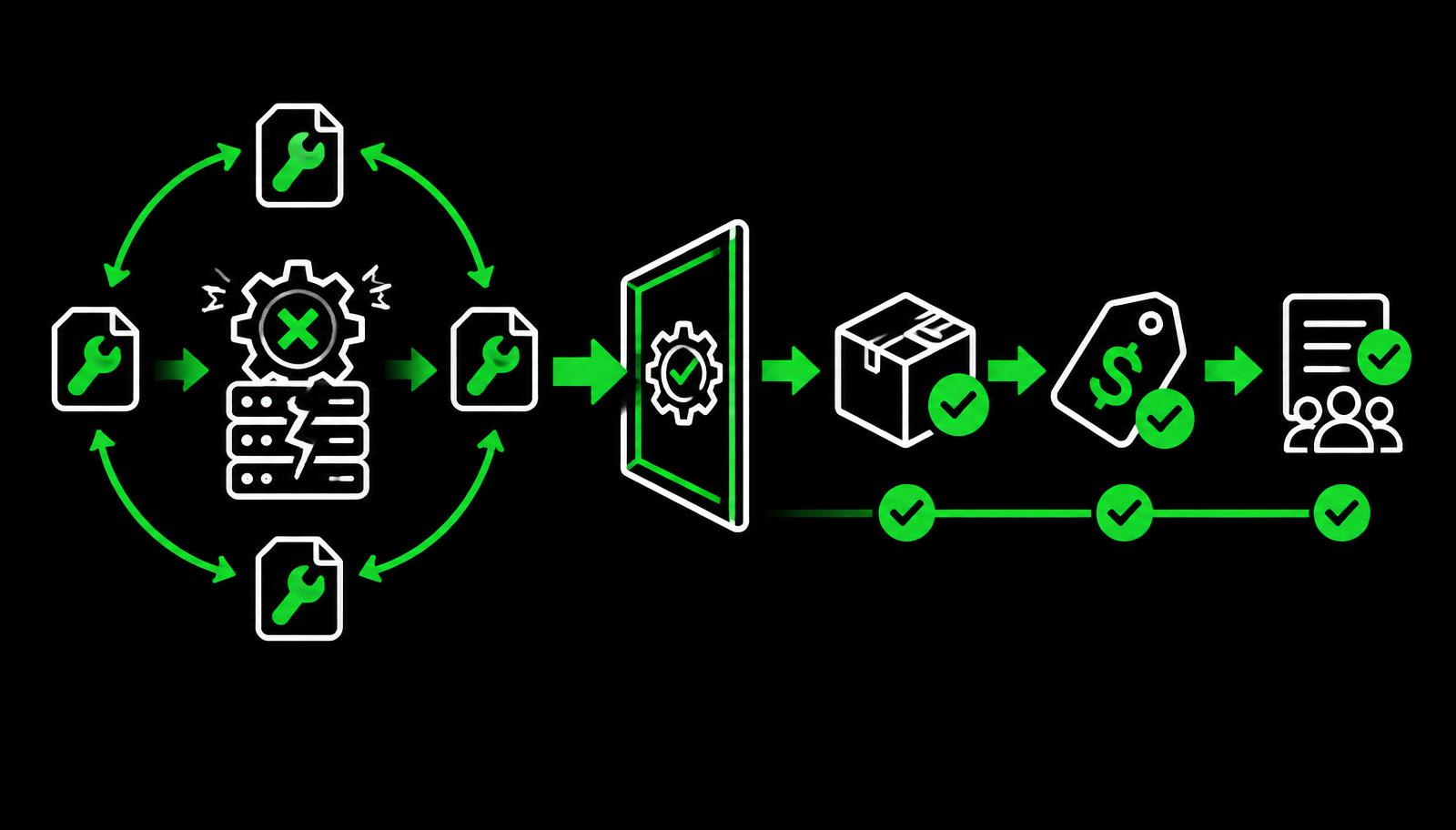
Most teams we work with do not need another patch. They need a platform that was designed for the world they sell in today. ServiceNow CPQ, powered by Logik.ai, takes the exact pressure points behind these seven signs (tangled pricing, fragile bundles, slow approvals, opaque logic) and treats them as first-class design problems.
Pricing, configuration and approvals are kept modular, the engine is fast and explainable, and quote-to-cash sits on the same platform as service and fulfilment so the handoffs that quietly create errors largely disappear.