
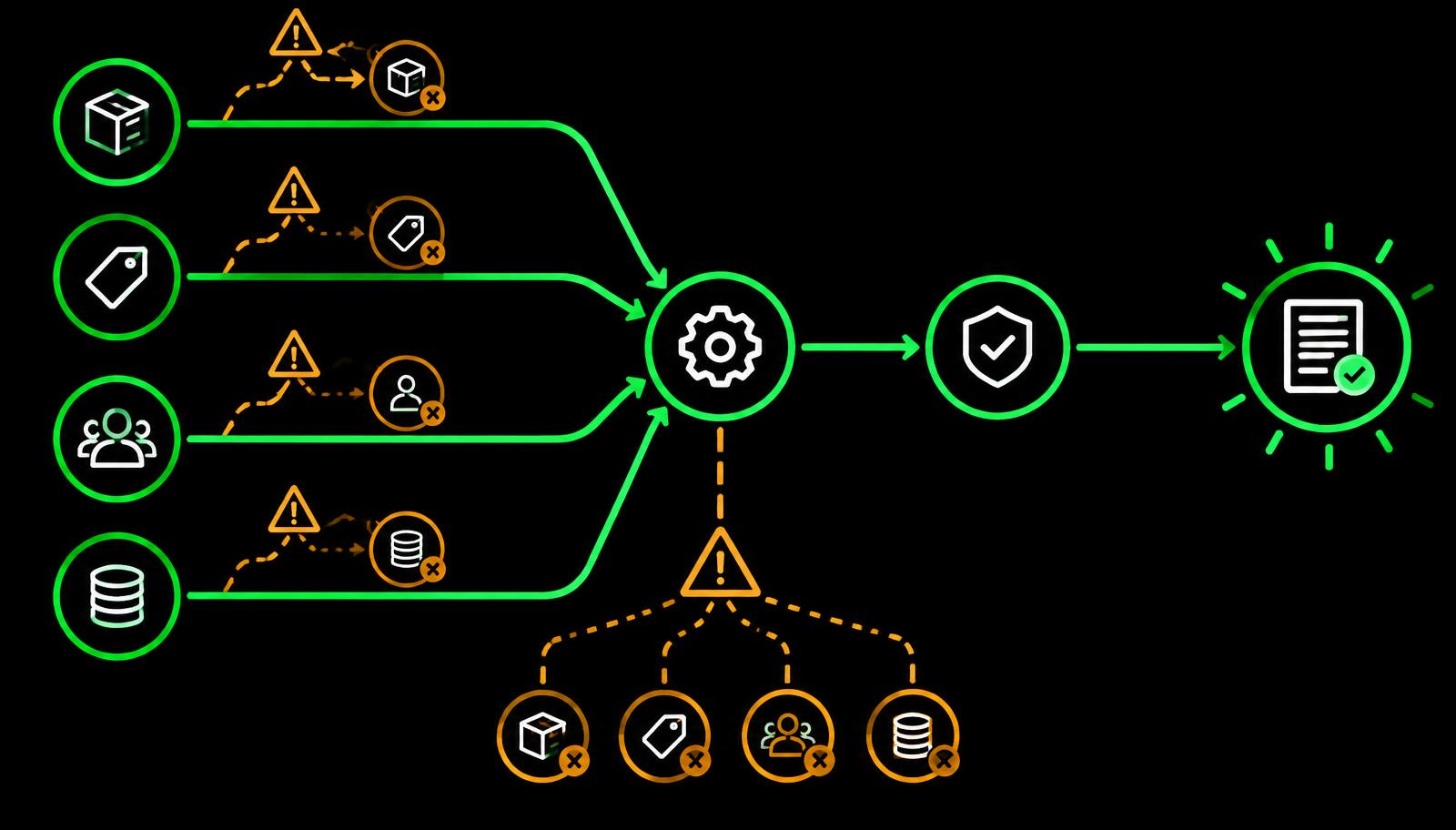
The five mistakes that quietly turn a CPQ programme from accelerator to anchor, regardless of the platform underneath.
The sales rep had been on the phone for forty minutes. A £280,000 enterprise deal, the kind that makes a quarter, was sitting right there. The quote would not generate. The product bundle the customer wanted existed in the catalogue, but the configuration rules had not been mapped to the new pricing tier rolled out three weeks earlier. IT said it would take a week to fix. The customer went with a competitor who sent a clean PDF in twenty minutes.
That is not a horror story from a botched implementation. That is Tuesday for companies running any major CPQ platform without the right foundation, and it is far more common than most CXOs realise until the damage is already done.
What is actually going wrong
CPQ, done well, compresses quote cycles from days to minutes, eliminates pricing errors, and gives reps the confidence to sell complex bundles without routing every deal past a solutions architect. Done poorly, it is worse than no CPQ at all. It creates a false sense of automation while hiding fragile, manual dependencies underneath.
Teams compensate with spreadsheets, side workflows and tribal knowledge, until someone leaves, a product line changes, or a prospect asks for something slightly outside the norm. The root causes almost always trace back to the same five mistakes, made early, that feel like shortcuts at the time and compound into serious operational debt.
What this actually costs
Before getting into the mistakes themselves, it helps to put numbers on them. These are not theoretical risks. They show up in pipeline reviews, renewal audits and Finance variance reports.
of enterprise deals experience quote delays that directly affect close rate.
longer quote cycles at companies with broken CPQ configuration logic.
of CPQ support tickets caused by pricing rules that were never fully migrated.
average annual revenue leakage from manual CPQ workarounds in mid-market companies.
Every mistake below maps onto one of those numbers. The fix is rarely expensive. Ignoring it always is.
Mistake 1: Treating CPQ as a quoting tool, not a revenue system
Most teams scope the CPQ implementation around quote generation and stop there. Configuration focuses on getting a PDF out the door, and it works, until it does not. What is missed is the upstream and downstream wiring: CRM opportunity syncing, ERP pricing feeds, approval routing, contract lifecycle and renewal triggers.
When CPQ lives in isolation, every change to pricing, product catalogue or discount policy needs manual reconciliation across three or four systems. That is not just slow, it is a compliance and audit risk in regulated industries. On a ServiceNow CPQ programme this is one of the early gains, because CPQ, contract management, order management and fulfilment all share the same workflow fabric. The scope still has to be defined that way on day one. The platform does not save you from a narrow brief.
Mistake 2: Migrating complexity instead of rethinking it
Legacy quoting processes carry years of accumulated workarounds: special discount tiers for specific customers, legacy bundles that exist for historical contracts, one-off approval chains created for deals that closed four years ago. A CPQ implementation is the single best moment to clean this up.
Most teams default to lift and shift instead, replicating every existing rule into the new system. The new platform is now burdened with the same complexity it was meant to replace, encoded in a different rule language. With Logik.ai's declarative, attribute-based modelling, the temptation is even higher, because almost anything can be modelled. The question to keep asking is not "can we recreate this rule?", it is "should this rule still exist at all?".
Lift and shift protects today and penalises tomorrow. Simplification takes longer upfront and pays back every quarter after go-live.
Mistake 3: Under-investing in product catalogue architecture
The product catalogue is the foundation of CPQ. If it is structured poorly, every configuration rule, every pricing table and every quote template built on top of it will inherit that structural debt. Catalogue architecture is consistently where implementation budgets get cut first.
The usual symptoms: flat catalogues that do not model product relationships, missing attribute hierarchies that force workaround rules, and duplicate SKUs created for every pricing variation rather than using the platform's native configuration model. On Logik.ai, where configuration is attribute-driven and constraint-based, a clean catalogue is the difference between a model that scales for a decade and one that needs to be re-platformed in three years. Spend the time at the start. There is no cheap way to fix this later.
Mistake 4: Ignoring the user adoption problem
A CPQ system is only as good as the reps who use it. Reps are relentlessly pragmatic. If the system slows them down, they will find a way around it. Shadow quoting, building quotes outside CPQ and copy-pasting them back in, is shockingly common, even at companies with mature implementations.
The failure mode is rarely technical. It is UI flows that require fourteen clicks to configure a standard bundle, error messages that do not explain what went wrong, and training that covers features instead of workflows. Implementation teams hand over a technically correct system that real salespeople quietly refuse to use. Guided selling done well, on ServiceNow CPQ with Logik.ai, is one of the better antidotes here, but only if the team designs flows around how reps actually sell, not around how the catalogue happens to be modelled.
Mistake 5: No governance model for ongoing changes
Perhaps the most dangerous mistake, because it is invisible until something breaks. CPQ requires active governance: a defined process for how pricing changes get tested before going live, who owns configuration rule changes, and how new product launches get staged into the system.
Without it, product managers update pricing in ERP, the sync fails silently, and reps quote at last quarter's rates for three weeks before anyone notices. Or a new product gets added to the catalogue without the necessary constraints, leading to invalid quotes that waste everyone's time. A platform like ServiceNow makes staging, change request and approval governance easier to operate because it is native to the workflow layer. The discipline still has to be designed in. Tooling is not a governance model.
The architectural reality of CPQ technical debt
Legacy CPQ implementations, on any platform, often reflect the constraints of how the system was thought about at the time of deployment. CPQ was positioned as a quoting tool, not a revenue operations platform. That framing shaped architectural decisions that are now expensive to undo.
Specifically: configuration rules written as procedural code rather than declarative logic are hard to audit and harder to modify without regression risk. Pricing models that hardcode customer-specific terms rather than using a pricing dimension engine create a long tail of one-off rules. And integrations built point-to-point rather than through a workflow or middleware layer mean every change ripples unpredictably into CPQ.
None of those are the platform's fault. They are implementation choices made when speed beat architecture. Unwinding them requires a clear-eyed assessment of what is actually there, not what was documented in the original design specs.
What a modern approach looks like
The shift in how high-performing RevOps teams think about CPQ is significant. Rather than treating it as a configure-and-forget deployment, leading organisations treat CPQ as a living system with three continuous workstreams.
Catalogue hygiene
Quarterly reviews of the product catalogue to prune dead SKUs, consolidate attribute hierarchies, and align catalogue structure with how products are actually sold. On Logik.ai, this is where the attribute model earns its keep, but only if someone owns it.
Rules governance
A change management process with staging environments, impact testing and clear ownership of configuration rule changes before anything reaches production. On ServiceNow, this sits naturally on top of the platform's existing change and release workflow, which is one of the practical advantages of running CPQ on the same fabric as the rest of the operating system.
Sales experience audits
Periodic shadowing of real quoting sessions to identify where reps experience friction, feeding those findings back into the configuration backlog. The companies getting the most out of CPQ are not the ones with the most sophisticated configurations. They are the ones who keep the system clean, tested and aligned with how sales actually operates.