
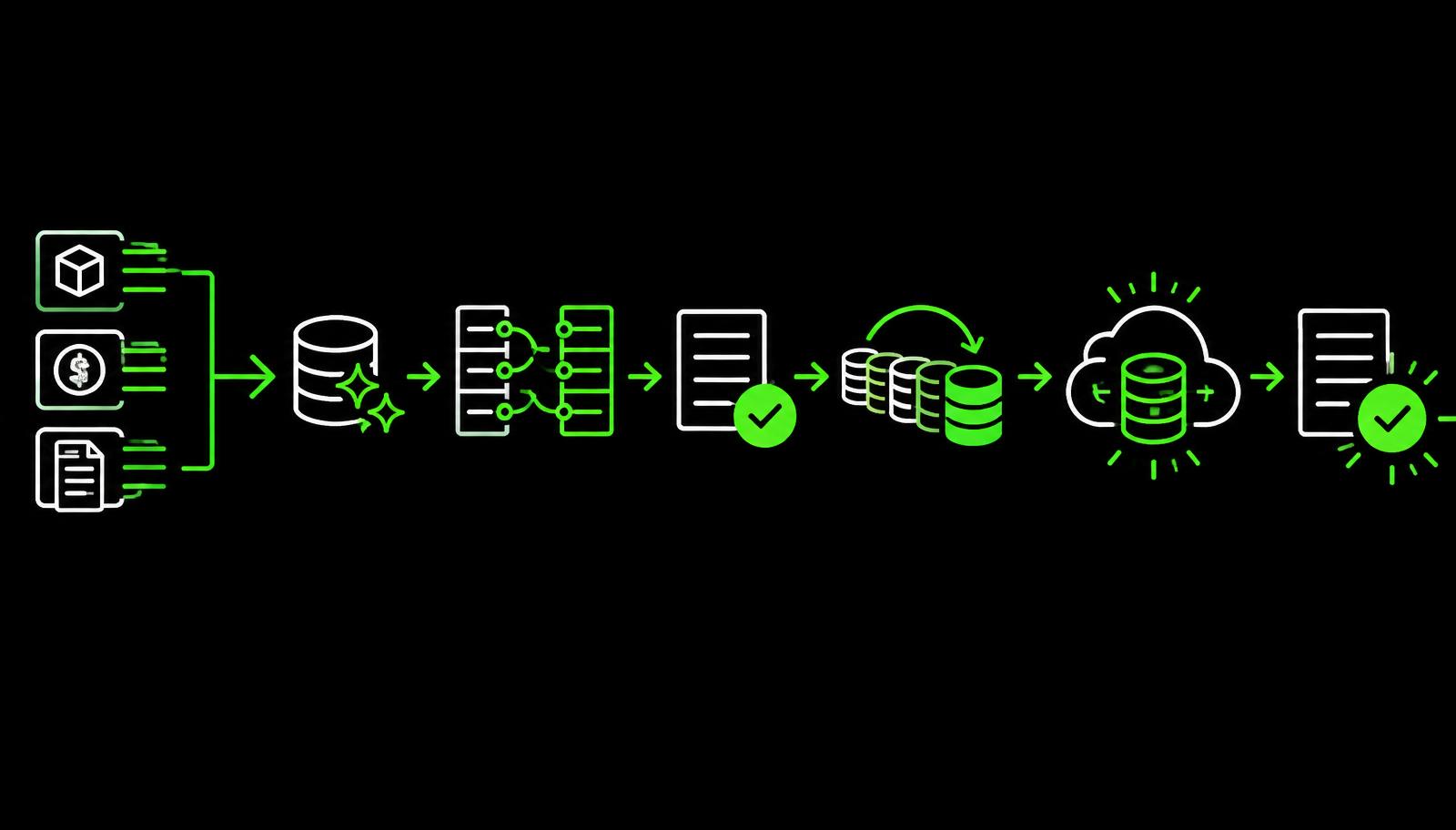
Most companies know they need to migrate. Few know what getting it right on ServiceNow CPQ and Logik.ai actually looks like.
A $250M enterprise had been running a homegrown CPQ for six years. Leadership knew it needed to change. Sales ops knew it needed to change. Engineering knew it needed to change. What stopped them was not budget or willingness, it was fear. Fear of disrupting live deals. Fear of data loss. Fear of a 12-month implementation that would consume three departments and deliver something the sales team would work around anyway. They ran a structured migration onto ServiceNow CPQ on Logik.ai. Eight weeks to pilot. Twelve weeks to full deployment. Quote turnaround dropped from four days to under two hours in the first week of go-live. That is not a best case. That is what a well-executed migration to ServiceNow CPQ delivers when the framework is right.
Where the process usually breaks down
Most CPQ migrations fail before they start, not because the technology is wrong, but because the approach is.
Treating migration as a software installation
A CPQ migration is a revenue operations transformation. It touches pricing logic, approval workflows, product configuration, contract generation, CRM integration and billing connectivity, simultaneously. Approached without structure, it creates more disruption than the system it replaces. ServiceNow CPQ shortens the integration surface because CPQ, contracts, fulfilment and case management share one data model, but the transformation work still has to be sequenced as a programme, not a deployment.
Trying to migrate everything at once
Legacy systems and homegrown CPQs accumulate years of pricing rules, product configurations and workflow logic, much of it undocumented, some of it contradictory, all of it load-bearing in ways no one fully understands until something breaks. Migrating everything in one go means inheriting every problem from the old system and introducing new ones in the same motion. Logik.ai's declarative rules engine makes it possible to retire 30 to 40 per cent of legacy logic during discovery, before it ever touches the new platform.
Under-involving the people who actually use the system
Sales ops knows where the pricing exceptions live. Finance knows which contract terms create downstream reconciliation problems. RevOps knows which data fields matter for forecasting. A migration built without their input produces a technically correct system that does not reflect how the business actually operates. The advantage of moving to ServiceNow and Logik.ai is that configuration is no longer a developer-only activity, those same business owners can validate logic directly during the pilot.
Getting a CPQ migration right means treating it as a phased, people-first process, not a one-time technical event.
Where revenue quietly leaks during a bad migration
A poorly executed CPQ migration does not just fail to fix problems, it creates new ones at the worst possible moment.
Pipeline disruption
Deals in flight during a migration are at risk. If the new system is not configured correctly before go-live, quotes generated during the transition period carry errors, wrong pricing, missing approvals, incorrect configurations. In a $250M business, even two weeks of quoting disruption during a busy quarter is a material revenue event.
Data loss
Historical quote data, deal structures, discount approvals and product configurations, is the institutional memory of the revenue operation. A migration that does not preserve and map this data correctly leaves RevOps blind. Forecasting breaks. Reporting breaks. Comparative analysis becomes impossible.
Rep adoption failure
The best CPQ in the world fails if the sales team does not use it. Migrations that drop a new system on reps without training, without change management and without a feedback loop produce the same outcome every time, the system gets bypassed and the old workarounds come back.
Integration gaps
A new CPQ that does not connect cleanly to the existing CRM, billing system and contract tool creates the same disconnected lead-to-cash problem the migration was supposed to solve. This is exactly the category of risk ServiceNow CPQ removes structurally, CPQ, contracts, billing and CRM run on one platform, so integration gaps discovered post go-live, the most expensive kind, become rare by design rather than by effort.
A failed migration does not just cost the implementation budget. It costs the organisation's appetite for change, making the next attempt harder to fund and harder to execute.
Why migrations to legacy CPQ systems used to fail
Companies that migrated to legacy CPQ platforms, BigMachines, early Apttus, Cincom, on-premise SAP quoting modules, often found that the migration itself became the problem.
Implementation timelines of 9 to 18 months meant the business had changed significantly by go-live. Pricing models had evolved. Products were added. Sales motions shifted. The system being deployed had been designed for a business that no longer existed.
Rigid, developer-dependent architecture meant that any deviation from the original configuration required a change request. Customisations built during implementation became technical debt immediately. The monolithic design meant that fixing one thing risked breaking everything else.
Legacy CPQ migrations did not fail because the platforms were inherently bad. They failed because the platforms were not built for the pace at which modern businesses operate, and a migration onto an inflexible foundation just locked the problem in place at higher cost. The shift that makes ServiceNow CPQ on Logik.ai a different conversation is structural: declarative configuration, phased cutover and native connectivity remove the three architectural traits that made legacy migrations so fragile.
What good looks like on ServiceNow CPQ and Logik.ai
A successful CPQ migration has four characteristics: it is phased, it is people-first, it is data-preserving and it is built on a platform that will not need replacing in three years.
ServiceNow CPQ, configured with Logik.ai, is where all four converge, and as a ServiceNow implementation partner, this is the migration framework we bring to every engagement.
Phase 1. Discovery and mapping
Before any configuration begins, every pricing rule, approval workflow, product bundle and integration dependency gets documented and validated. The goal is to understand what the current system actually does, not what the documentation says it does. This phase surfaces the undocumented exceptions, the contradictory rules and the workarounds that have become load-bearing over time. It is also where the 30 to 40 per cent of legacy logic that no longer reflects how the business sells gets retired, before it ever reaches the new platform.
Phase 2. Pilot deployment
A defined subset of the product catalogue and pricing logic gets configured on ServiceNow CPQ with Logik.ai and tested with a controlled group of reps on live deals. This is not a sandbox exercise, it is a real-world validation that catches gaps before they affect the full sales team. Because configuration is declarative, business owners in pricing and sales ops validate the logic themselves, not via an engineering backlog. Feedback from the pilot directly shapes the full deployment configuration.
Phase 3. Full deployment with parallel running
The full system goes live while the old system remains available for a defined transition period. Reps have a safety net. Data flows into both systems simultaneously. Integration points to CRM, contracts and billing are validated in production, not in testing. The transition period ends when confidence is established, not when a calendar date arrives. Phased cutover by product line, region or business unit slices risk into pieces small enough to learn from before the next slice goes live.
Phase 4. Optimisation
Post go-live, AI capabilities are activated: guided selling recommendations, margin risk flagging, configuration validation and pricing intelligence built from historical deal data. The system gets smarter as it processes more deals. What started as a quoting tool becomes a revenue intelligence platform connected natively to the rest of the ServiceNow estate.
This is what a successful CPQ migration to ServiceNow CPQ and Logik.ai delivers, not a better version of what you had, but a fundamentally different capability for how your business sells.