
ServiceNow World Forum London · Breakfast, 20 October, 7.30 to 9.00 · Beside ExCeLWorld Forum London breakfast · 20 October→
    Impactron - ServiceNow Consulting & Implementation Partner
    • Experience
    Book Consultation
    • /servicenow
    • /servicenow-consulting
    • /servicenow-implementation
    • /servicenow-support
    • /servicenow-staff-augmentation
    • /solutions/challenges/disconnected-customer-journeys
    • /solutions/challenges/slow-service-operations
    • /solutions/challenges/manual-workflows
    • /solutions/challenges/visibility-forecasting
    • /solutions/challenges/scaling-operations
    • /solutions/challenges/supplier-procurement-operations
    • /solutions/customer-workflows/sales-order-management
    • /solutions/customer-workflows/cpq
    • /solutions/customer-workflows/csm
    • /solutions/customer-workflows/fsm
    • /industries/insurance-london-market
    • /industries/manufacturing
    • /industries/technology-saas
    • /case-study/tru-consulting
    • /gcc-success-stories
    • /resources
    • /resources/cpq
    • /resources/crm
    • /resources/insurance
    • /resources/insurance/glossary
    • /resources/events
    • /resources/gcc-best-practices-ebook
    • /whitepaper/gcc-vs-outsourcing
    • /blog
    • /about-us
    • /our-team
    • /careers
    Resources/CPQ Insights/The Risks of Running Legacy CPQ Systems in 2026
    Migration

    The Risks of Running Legacy CPQ Systems in 2026

    Legacy CPQ rarely fails outright, it just quietly stops keeping up. A leadership view of the competitive, financial, security and integration risks of running a monolithic CPQ in 2026, and why ServiceNow CPQ is where teams are landing when they finally move.

    Suhasini K V
    Suhasini K V
    CPQ Specialist
    Published 19 May 2026Updated 28 July 2026 7 min read Share
    The Risks of Running Legacy CPQ Systems in 2026

    Legacy CPQ rarely fails outright. It just quietly stops keeping up with how your business sells, and by 2026 that gap has crossed from inconvenience into measurable risk.

    A $200M company had been running the same CPQ system for eleven years. It worked, until it didn't. When they tried to add a new subscription pricing model, the change took four months, two developers and a full regression test cycle. By the time it went live, the competitor they were losing deals to had already launched two more pricing tiers. The system was not broken. It was just built for a world that no longer exists.

    The shape of the problem

    Legacy CPQ does not show up on the risk register because nothing has fallen over. The damage is cumulative: slower deals, eroded margin, mounting integration cost and a sales team that has quietly stopped trusting the system.

    Where the process breaks down

    Legacy CPQ systems were not designed for how business moves in 2026. They were built for stability: fixed product catalogues, predictable pricing, slow-moving markets. That world is gone.

    Today's revenue teams operate in environments where pricing changes quarterly, product bundles evolve constantly, and buyers expect a quote in hours rather than days. Legacy CPQ was not architected for any of this. The pricing engine is hard-coded. Configuration logic is locked inside developer-dependent systems. Every change, no matter how small, requires a formal request, a development cycle and a deployment window.

    The result is predictable. The business moves faster than the system can follow. Sales teams build workarounds. RevOps loses confidence in the data. And the CPQ that was supposed to bring order becomes another source of friction.

    Where revenue quietly leaks

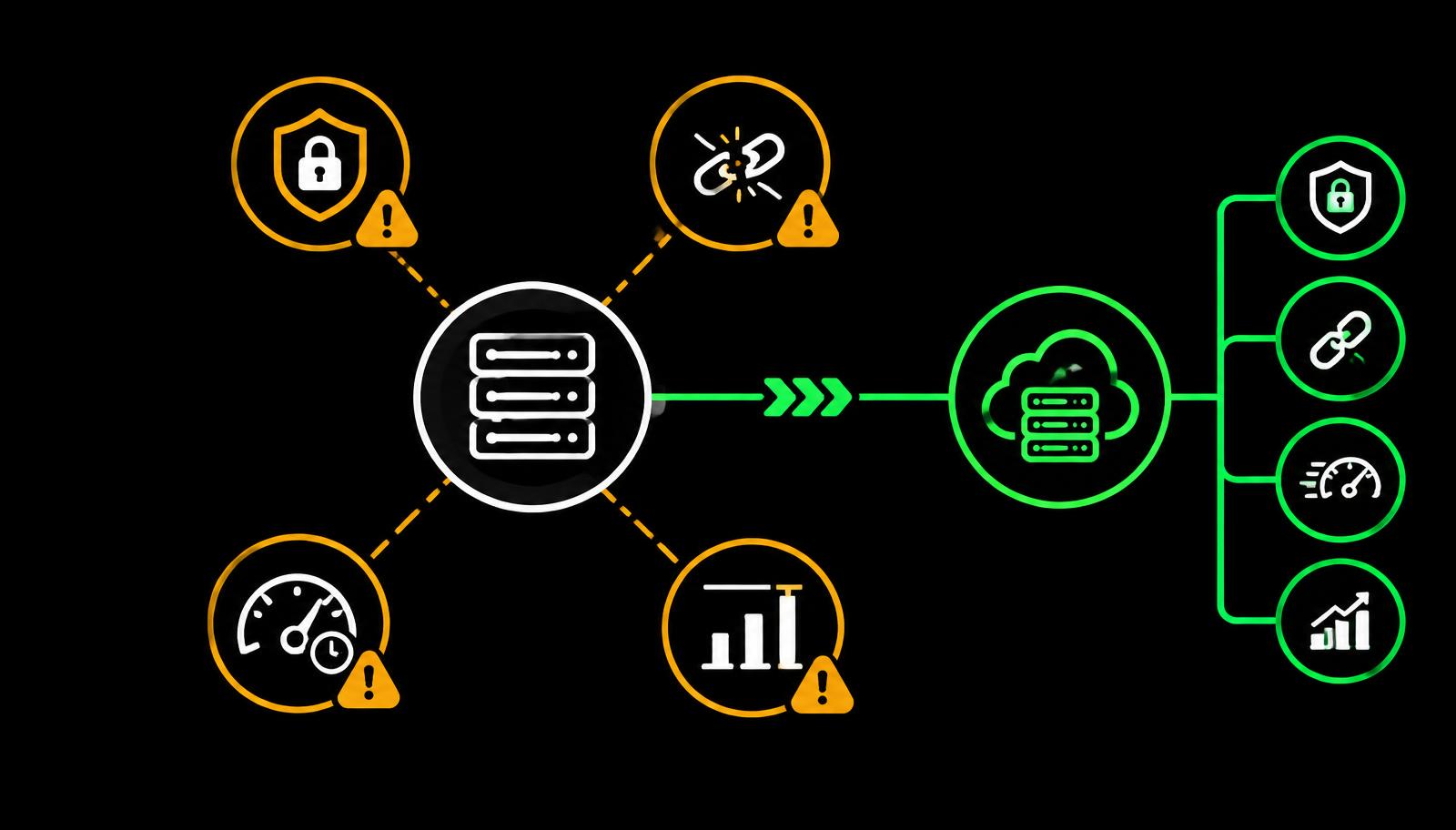
    Running a legacy CPQ in 2026 is not just an operational inconvenience. It carries measurable business risk across four areas.

    Competitive exposure

    AI-powered competitors are generating accurate, personalised quotes in minutes. If your system takes days to reflect a pricing change, you are showing up to every deal already behind. Speed is no longer a nice to have, it is a competitive differentiator.

    Revenue leakage

    Legacy systems cannot enforce complex discount logic in real time. Reps work around rigid rules with manual overrides, applying discounts outside approved bands and configuring deals the system cannot validate. The margin erosion is invisible deal by deal. Across a full year, it is significant.

    Security and compliance risk

    Legacy CPQ systems rarely receive meaningful security updates. In 2026, with data privacy regulations tightening across markets, running an outdated quoting system connected to customer and pricing data is an active compliance liability, not a theoretical one.

    Integration debt

    Modern revenue stacks, CRM, billing, e-signature, revenue recognition, are built API-first. Legacy CPQ was not. Every integration requires custom middleware that is expensive to build and fragile to maintain. When one side updates, something breaks. The cost of keeping a legacy system connected to a modern stack compounds every year.

    The longer a legacy CPQ stays in place, the more expensive it becomes, not just to maintain, but to eventually replace.

    Why legacy CPQ struggles here

    The core problem is not age. It is architecture.

    Systems like BigMachines, early Apttus, Cincom and on-premise SAP quoting modules were built monolithic by design. The pricing engine, document generator, approval workflow and product catalogue are one bundled system. You cannot upgrade one piece without risking everything else.

    • No API-first layer. Every integration becomes a bespoke project rather than a configuration choice.
    • No business-user configurability. Even small changes queue behind engineering, so the platform moves at IT's cadence, not the market's.
    • No real-time validation. Errors surface in legal review or post-signature, not at the point of quote.
    • No incremental modernisation path. The architecture does not allow it, so teams either commit to a replacement or keep paying the tax.

    Companies end up in a trap. Too expensive to replace immediately, too rigid to keep up with the business. So they stay. And every quarter they stay, the gap between what the system can do and what the business needs widens. In 2026, that gap has become a risk, not just an inconvenience.

    What good looks like

    The shift away from legacy CPQ is not just a technology upgrade. It is a strategic decision to stop letting your quoting infrastructure limit your revenue potential.

    ServiceNow CPQ is built for exactly this transition. Pricing logic, approval workflows, product configuration and contract generation run inside one unified platform, the same environment your teams already use for enterprise workflows and service delivery. When pricing changes, it updates across the system instantly. No developer. No deployment cycle. No lag.

    • For IT and operations leaders, ServiceNow connects natively to CRM, billing and fulfilment, eliminating the custom middleware that makes legacy integrations so fragile. Security and compliance are built into the platform, not bolted on afterwards.
    • For sales and revenue leaders, reps configure accurate, approved quotes in real time without workarounds, without routing through three departments and without waiting. AI validates configurations, flags margin risk and surfaces what pricing closes fastest.
    • For the business, the move retires integration debt, developer dependency and rigid configuration in one step, and replaces them with infrastructure that can keep pace with how you actually sell.
    The businesses moving off legacy CPQ onto ServiceNow are not just solving a quoting problem. They are rebuilding the revenue layer underneath it.

    Key takeaways

    • 1Legacy CPQ was built for a stable, slow-moving world. In 2026, that world no longer exists, and the mismatch is now a measurable business risk.
    • 2The risks are not just operational, they are competitive, financial and compliance-related. Every quarter on a legacy system widens the gap.
    • 3Monolithic architecture is the core problem. You cannot patch your way to flexibility when the system was never designed for it.
    • 4ServiceNow CPQ replaces integration debt, developer dependency and rigid configuration with a unified, business-user-controlled platform.
    • 5AI built into the quoting workflow catches errors, enforces margins and closes the performance gap between your best and average reps.
    • 6The question is not whether to move off legacy CPQ. It is how much longer you can afford not to.

    Make the legacy CPQ risk visible

    If your CPQ has been in place for more than five years, the risk is already on your P&L. It is just spread across slower deals, eroded margin and rising integration spend.

    Book a 30-minute legacy CPQ risk review → We will help you size the competitive, financial and compliance exposure in your current environment, and show what a move to ServiceNow CPQ would change.

    About the author

    Suhasini K V, CPQ Specialist, Impactron

    Suhasini K V

    CPQ Specialist, Impactron

    Strategic CPQ Specialist with a unique blend of CRM migration expertise and modern configuration platform experience including Logik.io. Delivers end-to-end quote-to-cash transformations that streamline sales operations and improve revenue forecasting accuracy for enterprise clients.

    Focus areas

    CPQ & Quote-to-CashLogik.io ConfigurationCRM Migration & TransformationApprovals & Workflow AutomationServiceNow CPQ Enablement

    Continue reading

    Related reading

    CPQ Insights

    7 Signs Your CPQ Implementation Needs a Rebuild (Not a Patch)

    Check whether your current CPQ needs a rebuild rather than a patch.

    Read article
    CPQ Insights

    Why Oracle CPQ Becomes Expensive to Maintain

    See why legacy Oracle CPQ maintenance costs keep climbing.

    Read article
    CPQ Insights

    Why Salesforce CPQ Breaks at Scale: The Technical and Business Reality

    Understand where Salesforce CPQ struggles as volumes grow.

    Read article
    CPQ Insights

    How to Build a Business Case for CPQ Migration

    Build the case for replacing an ageing platform.

    Read article
    CPQ Insights

    How to De-Risk Your CPQ Migration to ServiceNow CPQ and Logik.ai

    Plan a lower-risk route off legacy CPQ.

    Read article

    Modernising CPQ? Let's talk.

    Our CPQ practice has led configuration-heavy programmes across manufacturing, technology and services. We know how to land ServiceNow CPQ on Logik.ai.

    Book a CPQ consultationExplore our CPQ capability
    Back to CPQ Insights

    ServiceNow

    • Consulting
    • Implementation
    • Support
    • Staff Augmentation

    GCC

    • Strategy
    • Setup
    • Success Stories
    • The GCC Blueprint

    Problems We Solve

    • Disconnected Journeys
    • Slow Service Ops
    • Manual Workflows
    • Visibility & Forecasting
    • Scaling Ops
    • Supplier & Procurement
    • Explore all →

    Customer Workflows

    • Sales & Order Management
    • Configure Price Quote (CPQ)
    • CPQ Insights
    • CRM Insights
    • Customer Service Management (CSM)
    • Field Service Management (FSM)
    • CRM Transformation
    • Source to Pay

    Industries

    • All Industries
    • London Insurance Market
    • Manufacturing
    • Technology & SaaS
    • Across Industries

    Company

    • Why Impactron
    • Leadership & Team
    • Proven Outcomes
    • Careers

    Office Locations

    London, UK office location
    London, UK
    Jodhpur, India office location
    Jodhpur, India
    Jaipur, India office location
    Jaipur, India
    Bengaluru, India office location
    Bengaluru, India

    © 2026 Impactron. All rights reserved.

    Review Whitepaper
    LinkedInEmail