
ServiceNow World Forum London · Breakfast, 20 October, 7.30 to 9.00 · Beside ExCeLWorld Forum London breakfast · 20 October→
    Impactron - ServiceNow Consulting & Implementation Partner
    • Experience
    Book Consultation
    • /servicenow
    • /servicenow-consulting
    • /servicenow-implementation
    • /servicenow-support
    • /servicenow-staff-augmentation
    • /solutions/challenges/disconnected-customer-journeys
    • /solutions/challenges/slow-service-operations
    • /solutions/challenges/manual-workflows
    • /solutions/challenges/visibility-forecasting
    • /solutions/challenges/scaling-operations
    • /solutions/challenges/supplier-procurement-operations
    • /solutions/customer-workflows/sales-order-management
    • /solutions/customer-workflows/cpq
    • /solutions/customer-workflows/csm
    • /solutions/customer-workflows/fsm
    • /industries/insurance-london-market
    • /industries/manufacturing
    • /industries/technology-saas
    • /case-study/tru-consulting
    • /gcc-success-stories
    • /resources
    • /resources/cpq
    • /resources/crm
    • /resources/insurance
    • /resources/insurance/glossary
    • /resources/events
    • /resources/gcc-best-practices-ebook
    • /whitepaper/gcc-vs-outsourcing
    • /blog
    • /about-us
    • /our-team
    • /careers
    Resources/CPQ Insights/How to Prepare Your Data for a Successful CPQ Migration
    Migration

    How to Prepare Your Data for a Successful CPQ Migration

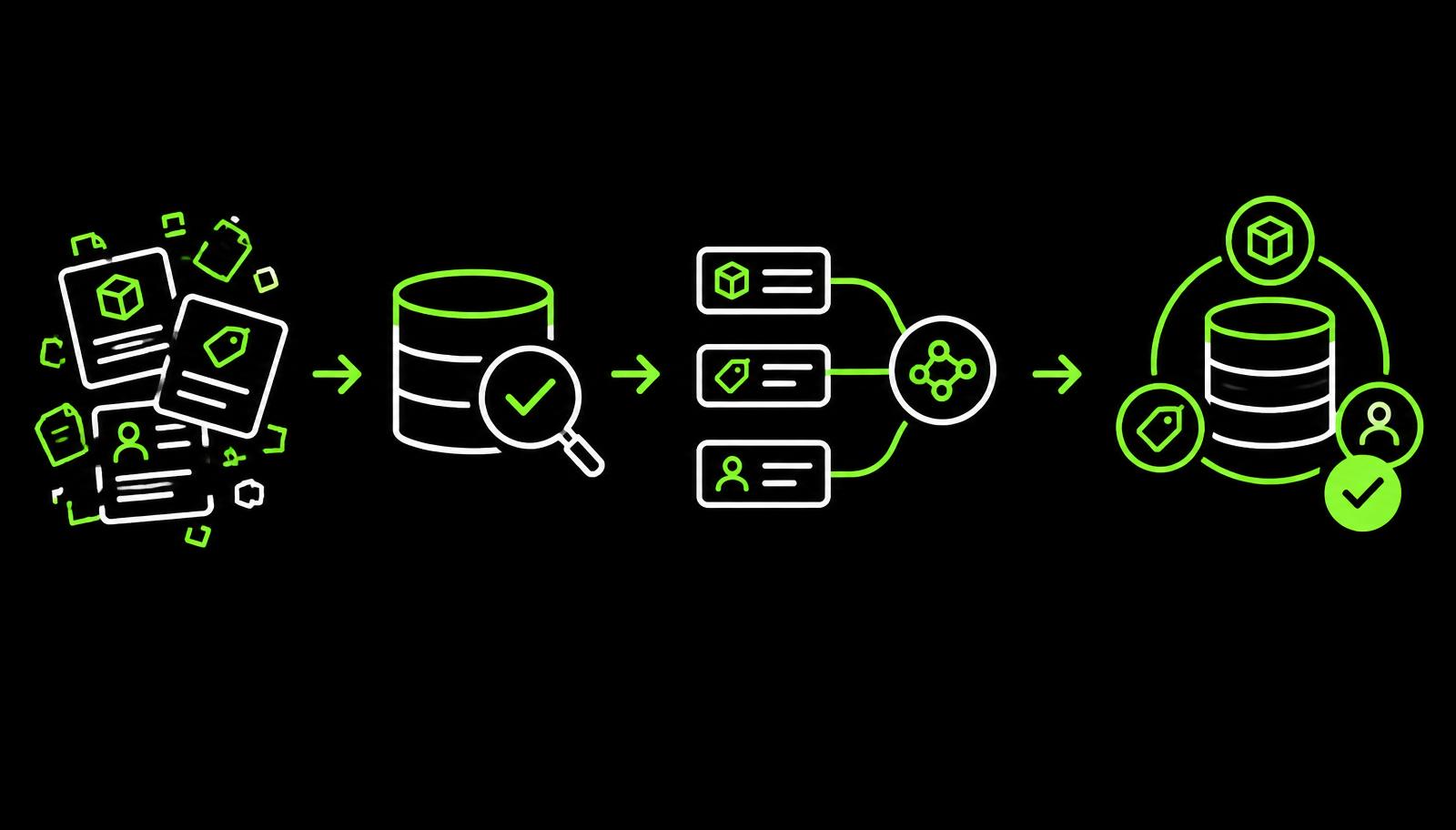
    An ops-led checklist for getting CPQ data migration-ready: how to audit what you have, set quality standards, map fields cleanly, pilot ruthlessly and document for the people who will actually live in the system.

    Akhil Sachan
    Akhil Sachan
    CPQ Consultant
    Published 5 May 2026Updated 15 July 2026 6 min read Share
    How to Prepare Your Data for a Successful CPQ Migration

    Migrating to a new CPQ platform is one of the highest-leverage moves a revenue operations team can make, and one of the easiest to botch. Most projects do not fail because of bad software. They fail because the data moving into the new system was never ready to begin with.

    What this article gives you

    A practical, ops-led checklist for preparing CPQ data before migration: how to audit what you have, set quality standards, map fields cleanly, pilot rigorously and document for the people who will actually live in the system.

    Audit your existing data before anything else

    Before you even open a migration plan, you need an honest picture of what you have. Pull a full export from your current CPQ, CRM and ERP. Look at product catalogues, pricing rules, discount matrices, quote templates, customer accounts and historical orders.

    The key question is rarely how much data you have. It is whether the data is actually being used, or has accumulated over years of "we might need it someday" thinking. Dead records slow migrations down and pollute your new environment from day one.

    Define your data quality standards upfront

    A migration is a forcing function. Use it. Establish clear standards for what "clean" means before you start transforming anything: acceptable field formats, required versus optional fields, naming conventions, and how duplicates will be resolved.

    • Standardise product SKU formats across all sources so the new system has one consistent identifier.
    • Consolidate duplicate customer records using a golden-record strategy your sales and finance teams agree on.
    • Normalise currency and unit-of-measure values so pricing logic does not have to apologise for legacy quirks.
    • Validate that every pricing rule has a corresponding product. Orphan rules are silent troublemakers.
    • Ensure account hierarchies are intact and accurate, especially for enterprise accounts with multiple buying entities.
    Never migrate dirty data hoping to clean it up later. Once garbage is in the new system, it is far harder to find and fix.

    Map fields between old and new systems

    Field mapping is where migrations go quietly off the rails. Every system has its own schema. What your legacy tool calls "Product Family", your new CPQ might call "Category Group". Document every mapping in a master spreadsheet, including fields with no direct equivalent.

    Architect's note

    Flag fields that require transformation logic, not just a rename. If a discount percentage is stored as a decimal in one system and an integer in another, that needs a transformation rule, not a column map. These are the small details that decide whether migrated quotes calculate correctly on day one.

    Clean and deduplicate before you migrate

    Run deduplication logic on accounts and contacts, archive obsolete products, and expire pricing rules that are no longer active. Treat this as its own workstream with its own owner, not a side task.

    • Remove products discontinued more than 12 months ago.
    • Merge duplicate account records using a single golden-record strategy.
    • Archive quotes older than your defined retention period.
    • Validate all active pricing configurations against current business rules, not against what was true two years ago.

    Run a pilot migration and validate ruthlessly

    Migrate a representative sample, not all records, but a cross-section that covers your most complex scenarios. Recreate your top 20 quotes from scratch in the new system using migrated data. If they look wrong or behave unexpectedly, the data is not ready.

    The validation bar is simple. Three questions, every time:

    • Can sales reps recreate any existing quote without workarounds?
    • Do pricing rules produce the same output as the legacy system, or a deliberately improved one?
    • Are approval workflows triggering correctly for the same deal shapes as before?

    If the answer to all three is yes, you are in good shape. If not, fix the data before you fix the configuration.

    Document everything, for the team and not just IT

    Data prep documentation is often written by engineers, for engineers. That is a mistake. The people who will live in this system every day, sales reps, deal desk and operations, need to understand what changed, what was archived, and where to find things that moved. Write for them.

    • A changelog of removed or renamed products and price books.
    • A short guide to the new account and product naming conventions.
    • A map of old quote templates to their new equivalents.
    • A clear point of contact for data issues in the first weeks after go-live.

    Key takeaways

    • 1Treat data prep as a first-class workstream, with its own owner, not a technical afterthought.
    • 2Use the migration as a forcing function to retire dead products, prices and accounts that should have gone years ago.
    • 3Validate with real business scenarios, not record counts. If your top 20 quotes do not behave correctly, the data is not ready.

    Why this matters even more on ServiceNow CPQ with Logik.ai

    Modern platforms like ServiceNow CPQ on Logik.ai give you speed, explainability and modular pricing on day one. None of that protects you from messy data carried forward from a legacy world. The teams that get the most out of Logik.ai are the ones that treated migration as a chance to retire dead products, clean pricing, and rebuild the catalogue around how the business sells today, not how it sold five years ago.

    Planning a CPQ migration?

    Data prep is where most CPQ programmes are quietly won or lost. Our CPQ practice runs this workstream end to end for enterprises moving onto ServiceNow CPQ with Logik.ai, so go-live lands on a foundation you actually trust.

    Book a 30-minute CPQ data readiness review → We will look at your current product, pricing and account data and map the cleanest path into a modern CPQ.

    About the author

    Akhil Sachan, CPQ Consultant, Impactron

    Akhil Sachan

    CPQ Consultant, Impactron

    Dynamic CPQ Consultant with more than six years of experience delivering quote-to-cash transformations for global enterprises across manufacturing, retail and professional services. Specialises in complex product configuration, dynamic pricing, contract management and building robust integrations between CPQ, CRM and ERP platforms that hold up at enterprise scale.

    Focus areas

    ServiceNow CPQ on Logik.aiGuided Selling & Product ConfigurationDynamic Pricing & Contract ManagementREST API & CRM/ERP IntegrationsCPQ Data Migration & Cleansing

    Continue reading

    Related reading

    CPQ Insights

    How to De-Risk Your CPQ Migration to ServiceNow CPQ and Logik.ai

    Fold data readiness into a wider migration risk plan.

    Read article
    CPQ Insights

    How Long Does a CPQ Migration Really Take?

    See how data quality drives migration timelines.

    Read article
    CRM Insights

    What Is the ServiceNow CRM Data Model?

    Map product and pricing data to the ServiceNow CRM data model.

    Read article
    CPQ Insights

    Common Mistakes in a CPQ Implementation Project

    Avoid the data mistakes that derail CPQ projects.

    Read article
    CPQ Insights

    What a Successful Migration to ServiceNow CPQ Looks Like

    Know what good looks like once the data has moved.

    Read article

    Modernising CPQ? Let's talk.

    Our CPQ practice has led configuration-heavy programmes across manufacturing, technology and services. We know how to land ServiceNow CPQ on Logik.ai.

    Book a CPQ consultationExplore our CPQ capability
    Back to CPQ Insights

    ServiceNow

    • Consulting
    • Implementation
    • Support
    • Staff Augmentation

    GCC

    • Strategy
    • Setup
    • Success Stories
    • The GCC Blueprint

    Problems We Solve

    • Disconnected Journeys
    • Slow Service Ops
    • Manual Workflows
    • Visibility & Forecasting
    • Scaling Ops
    • Supplier & Procurement
    • Explore all →

    Customer Workflows

    • Sales & Order Management
    • Configure Price Quote (CPQ)
    • CPQ Insights
    • CRM Insights
    • Customer Service Management (CSM)
    • Field Service Management (FSM)
    • CRM Transformation
    • Source to Pay

    Industries

    • All Industries
    • London Insurance Market
    • Manufacturing
    • Technology & SaaS
    • Across Industries

    Company

    • Why Impactron
    • Leadership & Team
    • Proven Outcomes
    • Careers

    Office Locations

    London, UK office location
    London, UK
    Jodhpur, India office location
    Jodhpur, India
    Jaipur, India office location
    Jaipur, India
    Bengaluru, India office location
    Bengaluru, India

    © 2026 Impactron. All rights reserved.

    Review Whitepaper
    LinkedInEmail