
The biggest risk in a CPQ migration is not the technology. It is everything that happens before you go live.
A $180M enterprise spent nine months migrating to a new CPQ. The implementation went technically live on schedule. Within three weeks, the sales team had stopped using it. Pricing rules were configured correctly, but the approval workflows did not match how deals actually got signed off. Reps could not generate quotes without hitting dead ends. Sales ops built spreadsheet workarounds within days. The migration was technically complete and operationally broken. The company spent the next six months rebuilding what should have been right the first time. The risk was not the platform. It was the approach.
Where the process breaks down
CPQ migrations carry risk at every stage, and most of it is invisible until go-live.
Scope underestimation
Companies look at their current CPQ and see a quoting tool. What they are actually migrating is years of accumulated business logic, pricing exceptions built for specific accounts, approval hierarchies that evolved organically, product configurations that were patched over time without documentation. Migrating the surface is straightforward. Migrating everything underneath it requires discovery work that most implementation plans do not budget for.
Data integrity
Quote history, deal structures, approved discount bands, contract terms, this data is the institutional memory of the revenue operation. A migration that does not map and validate this data correctly before cutover leaves the business flying blind post go-live. RevOps loses historical benchmarks. Finance loses audit trails. Sales loses visibility into what was offered to which accounts and when.
Change management
Technology migrations succeed or fail on adoption, and adoption is a people problem, not a technical one. A new CPQ that reps find confusing, slow or misaligned with their actual sales motion gets abandoned within weeks. Workarounds return. The old problems come back wearing new infrastructure.
Integration
A CPQ that does not connect cleanly to CRM, billing and contract tools on day one creates the disconnected lead-to-cash problem the migration was supposed to solve. Integration gaps discovered post go-live are expensive, disruptive and corrosive to confidence in the new system.
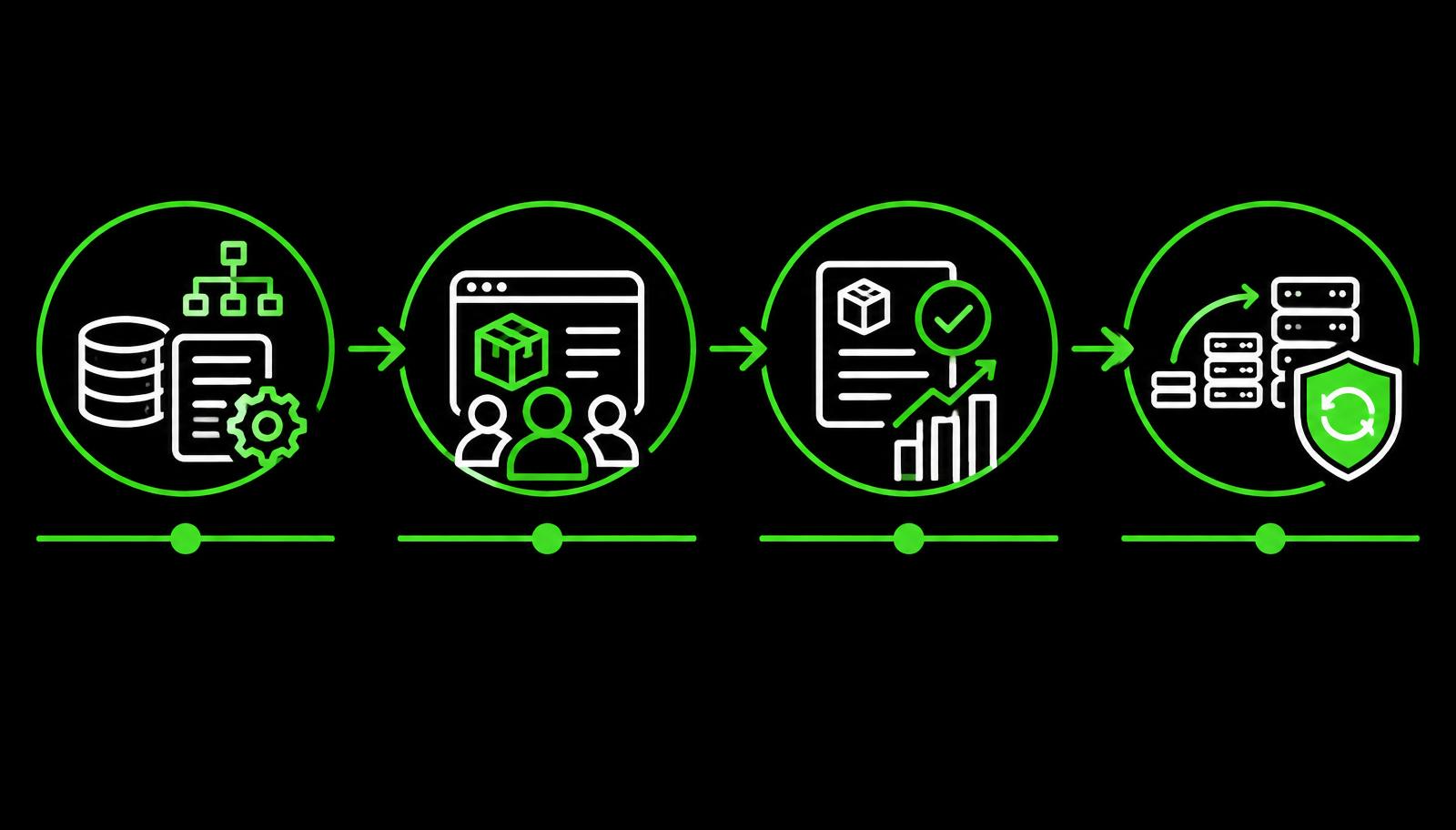
De-risking a CPQ migration means addressing all four, before a single line of configuration is written.
Where revenue quietly leaks when migration goes wrong
A poorly executed CPQ migration does not just waste the implementation budget. It creates compounding revenue damage across the business.
Quoting disruption during cutover
Deals in flight at the time of go-live are the most vulnerable. If the new system is not fully validated before cutover, quotes generated during the transition carry errors, incorrect pricing, missing approvals, invalid configurations. In a $180M business, two weeks of quoting disruption in a peak quarter is a material revenue event, one that does not show up as "migration cost" on any report.
Lost pipeline confidence
When a migration goes visibly wrong, sales leadership loses confidence in the system, and in the project. Deals get routed around the new CPQ. Managers approve quotes manually over email. The organisation reverts to the behaviour the migration was supposed to eliminate. Rebuilding that confidence takes longer than fixing the technical issues that caused it.
Margin exposure during transition
When reps revert to manual quoting during a failed migration, discount governance disappears with the system. Pricing exceptions get approved informally. Deals close outside approved margin bands. The revenue leakage that the new CPQ was supposed to prevent accelerates during the transition period.
Delayed ROI
Every week a migration is delayed or reworked post go-live is a week the business is not capturing the productivity, accuracy and speed gains that justified the investment. At scale, a six-month rework cycle following a failed go-live represents hundreds of thousands in deferred ROI, on top of the sunk cost of the implementation itself.
The cost of a poorly de-risked migration is always higher than the cost of doing it right the first time.
Why migrating off legacy CPQ is more manageable than it used to be
For years, the conventional wisdom was that migrating off a legacy CPQ, BigMachines, early Apttus, Cincom or an on-premise SAP quoting module, was a project to be feared. Monolithic architecture, developer-only configuration and tightly coupled modules made every change feel like defusing a bomb. That reputation is part of why so many teams have postponed the move.
That picture has changed. The risk has not disappeared, but it is now structurally addressable, and the moves that used to scare teams the most are the ones modern platforms are best at handling.
The architectural debt is contained, not inherited
You do not have to lift years of custom logic into the new system as-is. Migrating to ServiceNow CPQ on Logik.ai is, deliberately, a chance to retire the brittle parts. Most legacy implementations carry 30 to 40 per cent of rules that no longer reflect how the business actually sells. Discovery surfaces those, business owners confirm them, and they get retired before they ever touch the new platform. Far from carrying the debt forward, a well-run migration is the cleanest opportunity in years to put it down.
Configuration is no longer a developer bottleneck
The single biggest source of migration risk in legacy CPQ was developer dependency, every rule, every approval, every exception required engineering time. Logik.ai's declarative rules engine and ServiceNow's low-code configuration move that work back to the people who own the logic: pricing, sales ops and product. Validation cycles compress. Edge cases get caught by the people who recognise them. The migration stops being an engineering project gated by a backlog.
Native integration replaces brittle middleware
Most legacy migration horror stories trace back to integration. ServiceNow CPQ runs on the same platform as CRM, contracts, fulfilment and case management, which removes the largest single category of integration risk by default. There is no point-to-point middleware to maintain between CPQ and the rest of the revenue stack, because they share the same data model.
Phased cutover, not big bang
Legacy platforms forced big-bang migrations because their architecture could not support running new and old logic in parallel. Modern CPQ supports phased cutover by product line, region or business unit. Risk is sliced into pieces small enough to learn from before the next slice goes live.
What good looks like
De-risking a CPQ migration is not about being more careful. It is about using a framework and a platform that removes the structural sources of risk before they can materialise.
As a ServiceNow implementation partner, this is the de-risking framework we apply to every CPQ migration, and it is why our go-lives do not become rework projects.
Risk 1: Scope underestimation, addressed with deep discovery first
Before any configuration begins, we map every pricing rule, approval workflow, product configuration and integration dependency in the current system. Including the undocumented ones. Including the exceptions. Including the workarounds that became permanent. This discovery phase is non-negotiable, it is where the real migration scope is established, not estimated.
Risk 2: Data integrity, addressed with validated migration and parallel running
All historical quote data, deal structures and approved pricing bands are mapped, cleaned and validated before cutover. The new system runs in parallel with the old one for a defined transition period, so data accuracy can be confirmed in production, not assumed in testing.
Risk 3: Change management, addressed with rep-first design and structured rollout
The system is configured around how reps actually sell, not how the org chart says they should. Training is role-specific. A pilot group goes live first, provides feedback, and that feedback shapes the full deployment. Adoption is measured from day one, not assumed at go-live.
Risk 4: Integration gaps, addressed with native connectivity on ServiceNow
ServiceNow eliminates the integration risk that made legacy migrations so fragile. CPQ connects natively to CRM, billing, fulfilment and contract tools, no custom middleware, no brittle point-to-point connections. Integration is validated during the pilot, not discovered as a gap after full deployment.
Post go-live, AI capabilities activate, flagging configuration risks, surfacing margin exposure and identifying adoption gaps before they become revenue problems. The system does not just go live. It gets smarter with every deal that runs through it.
The result is a migration that the sales team actually uses, that finance can trust and that IT does not have to maintain with one hand tied behind its back. That is what de-risked looks like in practice.