
The question everyone asks, but rarely gets a straight answer to.
Ask a vendor how long a CPQ migration takes and you will hear "three months" more times than you can count. It is the answer everyone hopes is true, and almost no one experiences. After running migrations off Salesforce CPQ and SAP CPQ onto ServiceNow CPQ powered by Logik.ai, the honest answer looks different, and a great deal more useful if you are the executive sponsoring the programme.
It is rarely as quick as it sounds
Most CPQ migrations start with high spirits and an optimistic timeline. On a whiteboard, it looks easy: move the products, copy the pricing, reconnect the CRM, and pop the champagne in 90 days.
Then reality lands. What looked like a structured system turns out to be a black box of decade-old pricing logic, manual workarounds and temporary fixes that quietly became permanent. You are not just moving data, you are excavating years of business decisions. Three months very quickly starts to feel like a sprint no one was trained to run.
Why CPQ migrations take longer than expected
A CPQ migration is not a lift and shift. It is a reconstruction of the commercial DNA of the business. Four things consistently eat the calendar.
You are moving logic, not just data
Unlike a contact list, CPQ runs on layered if-this-then-that rules. Rebuilding undocumented approval workflows, region-based discount triggers and tiered ramp logic in a new environment takes precision, not just throughput.
Hidden complexity
You do not know what you do not know. Mid-project surprises, a pricing edge case only one person in Finance remembers, a customer-specific rebate buried in a managed package, a country-specific tax twist, can stall progress for weeks.
The integration spiderweb
CPQ does not live on an island. It is tethered to CRM, billing, ERP, entitlements and contract lifecycle management. Every time you move a wire in CPQ, you have to make sure the lights stay on in Accounting and Fulfilment.
Testing is a marathon
You cannot "sort of" get pricing right. Proper testing means running thousands of scenarios so that when a rep hits Generate quote, the number is right, every time, in every currency, for every approval path.
Underestimating a CPQ migration timeline does not just move the deadline. It ripples through the whole company, from Finance burnout to a sales floor that quietly loses faith in the new system before it has finished going live.
The business impact of getting the timeline wrong
The double-rent problem
You are paying for the new platform while still running the old one. Licences, hosting, partner retainers and internal admin time all double up until cutover.
Resource burnout
IT, Finance, Sales Ops and product marketing all have day jobs. When a three-month programme drifts into month six or seven, burnout stops being a risk and becomes a fact. The people who hold the most context are the first to disengage.
The temptation to cut corners
When pressure to go live mounts, testing is usually the first thing trimmed. That is how organisations end up with broken approval flows and frustrated reps on day one, then a six-month stabilisation tail no one budgeted for.
Why legacy CPQ makes migration harder
If you are coming off Salesforce CPQ, SAP CPQ, Oracle CPQ or an older platform like BigMachines or early Apttus, you are not just dealing with data. You are dealing with architectural debt.
Legacy systems are typically wrapped in years of custom code, managed packages, Apex extensions, BML scripts or SAP-specific configurators that no longer line up with how a modern platform expects to behave. You are faced with a choice: spend the migration replicating that mess in the new tool, or pause to simplify it.
Simplification is faster in the long run, but it requires more brainpower upfront, and the discipline to say no to "we have always done it this way".
What a realistic timeline actually looks like
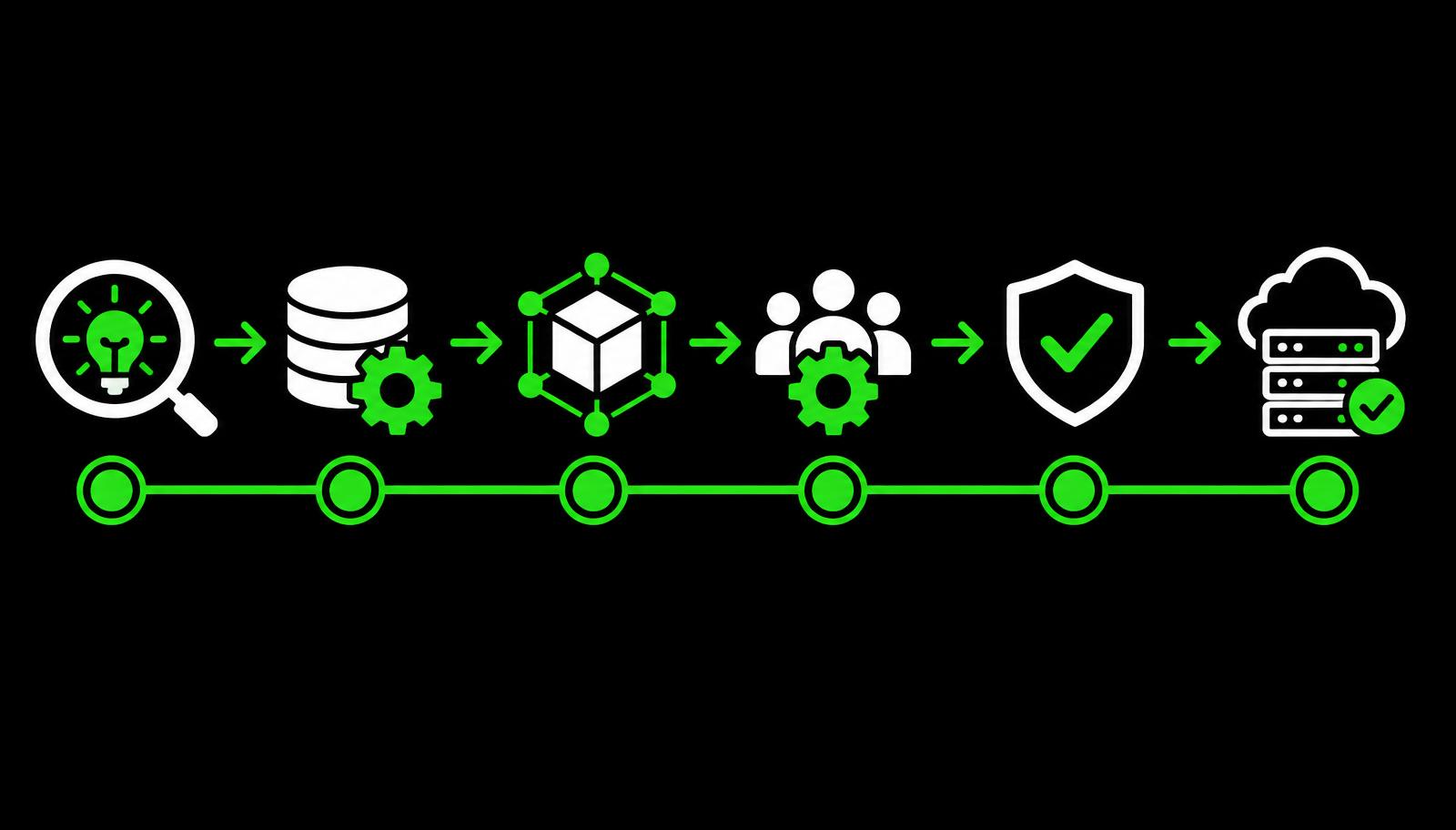
Instead of asking "how fast?", ask "how well?". For most mid-to-large enterprises moving off Salesforce CPQ or SAP CPQ onto ServiceNow CPQ on Logik.ai, this is the shape of a realistic programme.
| Phase | Duration | The goal |
|---|---|---|
| Discovery and audit | 2 to 4 weeks | Figuring out what you actually have, including the undocumented bits. |
| Design and simplification | 3 to 6 weeks | Deciding what to keep, what to retire and what to redesign on the new platform. |
| Build and configuration | 4 to 8 weeks | The heavy lifting in ServiceNow CPQ and Logik.ai: catalogue, pricing, configuration, approvals. |
| Integration and validation | 3 to 6 weeks | CRM, ERP, billing and CLM speaking cleanly to one another, with scenario-based testing. |
| Launch and iteration | Ongoing | Enablement, change management, and fast-cycle fixes once real deals start flowing. |
The verdict: most successful enterprise CPQ migrations land in the three to six month range. If your setup is genuinely complex (multi-ERP, multi-region, multi-brand, heavily customised legacy CPQ), do not be surprised if it pushes toward nine.
How ServiceNow CPQ on Logik.ai changes the migration story
ServiceNow acquired Logik.io in 2024, and the combined offering is now positioned as ServiceNow CPQ powered by Logik.ai. In the field, the practical effect on migration timelines is meaningful, particularly for teams coming off Salesforce CPQ or SAP CPQ.
Configuration moves out of code
Salesforce CPQ migrations often stall in the rule layer, price rules, product rules and Advanced Approvals that have accumulated for years. SAP CPQ migrations tend to stall in IPM scripts and the custom configurator. On Logik.ai, product modelling and constraint logic are declarative and attribute-based, which means the design and simplification phase has somewhere to land. You are not lifting Apex or BML into a new platform, you are redesigning the model the way it should have been built.
Quote-to-cash on a single platform
Because CPQ, contract management, order management, fulfilment and service all run on the ServiceNow platform, much of the integration spiderweb between CPQ and downstream systems is reduced to native handoffs rather than custom middleware. The integration and validation phase still matters, but the surface area is smaller.
Business-owned change
The single biggest reason legacy migrations drag is that every change still needs a developer. With Logik.ai's modelling tools and the ServiceNow workflow layer, pricing changes, new bundles and approval rule updates can be owned by Sales Ops and Revenue Operations after go-live. That is what shortens the long tail of "month seven to month twelve" stabilisation work that is rarely on the original plan.
The bottom line
A CPQ migration is a rare opportunity to rethink how you sell. If you rush it, you are just moving old problems into a newer, more expensive bucket. If you treat it as a redesign of pricing, configuration and approvals, on a platform that does not force you back into code for every change, you come out the other side with a system that compounds value for years.
The real goal is not to go live on a date. It is to leave the complexity behind. Accuracy today beats an on-time disaster tomorrow, every single time.