
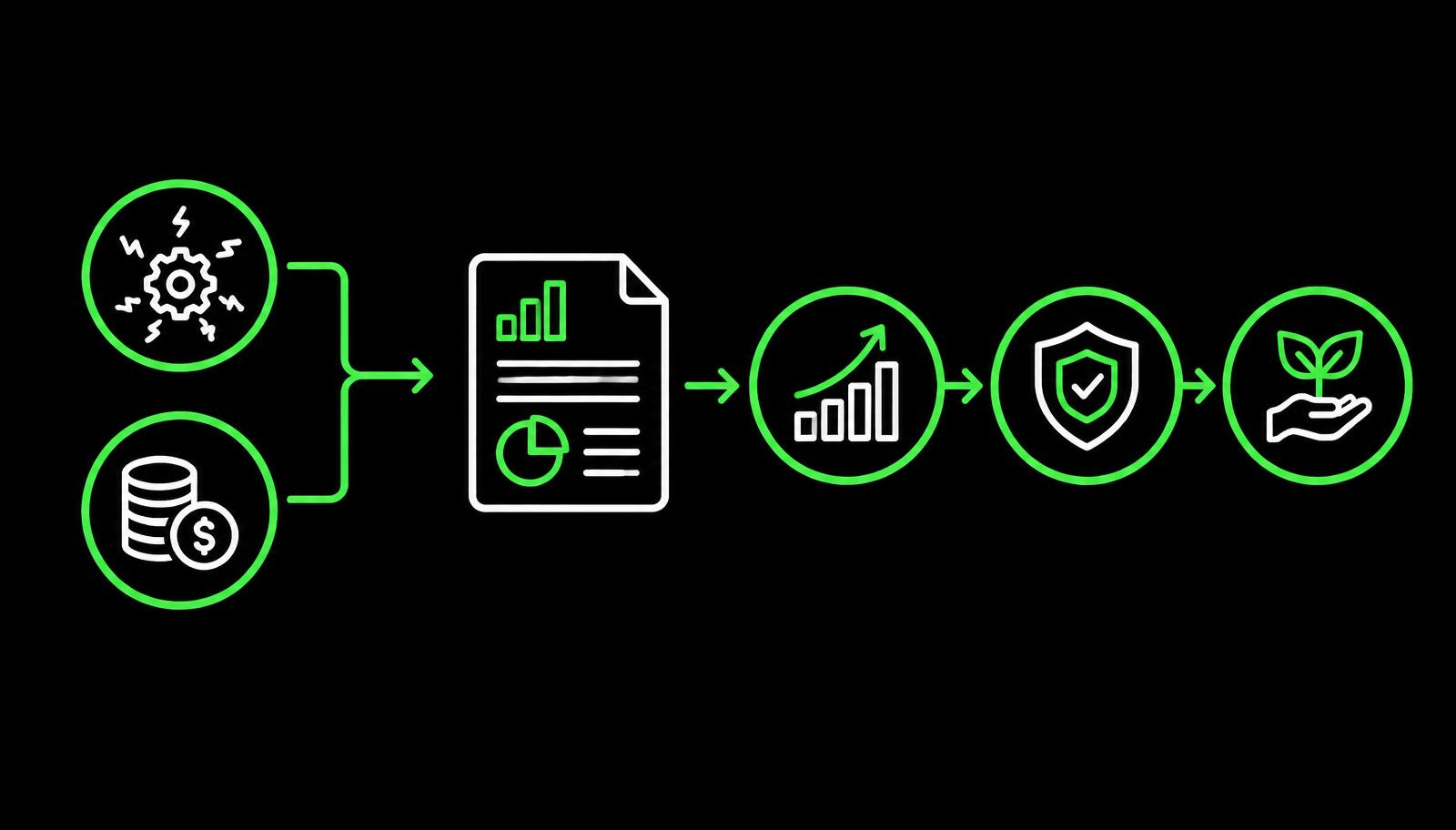
For a Chief Revenue Officer running a mid-size enterprise, CPQ migration is not an IT project. It is a revenue lever, and the business case has to be built on that footing or it will not survive the next budget cycle.
Most CPQ business cases I see land on the CRO's desk written in the wrong language. They lead with platform features, licence savings and integration architecture. They are accurate, they are well-intentioned, and they get politely deferred. The ones that get funded read very differently. They open with the revenue the organisation is leaving on the table every quarter, quantify the cost of doing nothing, and frame the migration as the fastest credible path to the sales KPIs the board is already holding the CRO to. This article is a framework for writing that second kind of business case.
Start where the board is already looking
Before a single line of the business case gets written, anchor it to the revenue commitments the executive team has already made. The annual operating plan, the three-year strategic plan and the board pack contain the numbers that matter. A CPQ business case that does not reference them is a wishlist. One that does becomes a delivery mechanism for commitments the CRO is already accountable for.
In a mid-size enterprise, the conversation typically centres on four levers: accelerating the sales cycle, lifting win rate on contested deals, expanding average contract value through better attach and bundling, and protecting margin against discount leakage. CPQ touches every one of them directly. The business case is the act of making that connection explicit, with numbers the CFO can defend.
The five-part framework
A business case that wins funding in a sales-led organisation has five sections, in this order. Each builds on the last. None can be skipped without the case losing weight in the room.
1. Quantify the cost of the status quo
The single most powerful number in any CPQ business case is the cost of doing nothing. In most mid-size enterprises running legacy or homegrown CPQ, that number sits between 5 and 12 per cent of annual revenue, leaked through quoting delays, margin erosion, deal slippage and rep productivity drag. At that magnitude, the CRO does not need to argue for the migration once the cost of inaction is on the table, the case argues itself.
Build this number from four inputs the sales operations team already has: average time to produce a quote, win rate on deals quoted within 48 hours versus beyond, discount variance against list across the top 100 deals of the last fiscal year, and rep hours per week consumed by manual quoting administration. Each of these maps to a defensible revenue figure. None of them require a consultant to estimate.
2. Tie benefits to KPIs the CRO already owns
The benefits section is where most CPQ business cases lose their audience. Lists of platform capabilities, however accurate, do not move a CRO. Movements in the KPIs on their scorecard do. Restructure the benefits around four metrics: sales cycle reduction, win rate improvement, average deal size expansion and quote-to-cash velocity. For each, project a conservative, expected and ambitious case, and tie each to a revenue outcome.
Field experience across European enterprise rollouts of ServiceNow CPQ on Logik.ai consistently shows quote turnaround dropping from days to under two hours, win rate on contested deals improving by 8 to 14 per cent through faster, more accurate responses, and discount leakage reducing by 2 to 4 percentage points through guided selling and approval automation. Translated to a mid-size enterprise at typical operating margin, even the conservative case clears tens of millions in incremental annual gross profit. That is the language a CFO signs.
3. Build a phased investment profile, not a single number
A single total cost of ownership figure invites the board to negotiate it downward. A phased investment profile invites them to fund the next phase against the results of the last. Structure the investment in three tranches: a 12-week discovery and pilot phase with a defined revenue outcome, a 12 to 16-week full deployment phase with measured KPI movement, and an ongoing optimisation phase funded from the value already realised. This shape converts the conversation from "is this worth £X" to "is the first £Y worth proving the next £Z".
4. Make the risk position explicit, then retire it
Senior executives do not fund certainty, they fund well-understood risk. List the four categories of migration risk explicitly: pipeline disruption during cutover, data integrity, rep adoption, and integration to CRM, contracts and billing. Then show, in one paragraph each, how the chosen approach retires that risk. Phased cutover by region or business unit retires pipeline risk. Discovery-led data mapping retires integrity risk. Pilot-first rollout with sales operations as co-owner retires adoption risk. A platform with native connectivity to the rest of the revenue stack retires integration risk by design. A CRO who walks into the boardroom with the risks named and mitigated is far harder to refuse than one who pretends they do not exist.
5. Define the success metrics before the project starts
The final section of the business case is the one that earns the CRO trust on the next investment. Commit to the metrics that will be measured at week 12, week 24 and 12 months post go-live: quote turnaround time, win rate on contested deals, average deal size, discount variance against list, and percentage of quotes produced inside CPQ versus outside it. Publishing these in the business case, before approval, signals operating discipline. Hitting them, in sequence, makes every subsequent investment proposal easier to fund.
Every CPQ migration business case I have seen approved by a board in the last decade has one thing in common. It opens with revenue at risk, not technology to be acquired.
The CRO's value equation
Strip every CPQ migration business case back to its core and it resolves to a single equation. Incremental revenue from faster, more accurate, more competitive quoting, plus protected margin from discount discipline and approval automation, minus the phased cost of the migration, divided by the time to first measurable KPI movement. The platforms that win the equation today are the ones where the numerator grows fastest and the denominator shrinks the most.
ServiceNow CPQ on Logik.ai compresses the denominator in three ways that matter to a sales leader. Declarative configuration means pricing logic, approval rules and product bundles can be changed by sales operations in days, not by engineering in quarters, so the system keeps pace with how the business actually sells. Native connectivity to CRM, contracts, fulfilment and billing on a single data model removes the integration work that historically consumed 30 to 40 per cent of CPQ programme budgets. And a phased, pilot-first deployment model means the first measurable KPI movement typically lands inside the first quarter of go-live, not the first year. For a CRO trying to fund the case from value already realised, that compression is the difference between an approved programme and a deferred one.
What to put in front of the board
The document that wins funding is short, executive in tone and structured around outcomes the board already cares about. Three pages is the right length. Page one carries the cost of doing nothing and the revenue at risk. Page two carries the benefits modelled against the CRO's KPI scorecard, with conservative, expected and ambitious cases. Page three carries the phased investment, the named risks with their mitigations, and the success metrics that will be reported back at 12, 24 and 52 weeks.
Appendices belong behind the document, not inside it. Platform comparisons, vendor evaluations, integration diagrams and detailed cost models all matter, and all earn their place as supporting material. None of them belong on the first three pages. The CRO's job in the room is to make the case for revenue. The platform discussion comes after the principle is agreed.