
A sequence firms can actually fund
- 1
Underwriting intake and referral
Measurable within a quarter, and it produces the clean submission data later work depends on.
- 2
Claims coordination
Tasks, evidence and hand-offs tracked around the claims platform, which keeps the financial record.
- 3
Reinsurance operations
Recoveries treated as cases with owners, evidence checklists and visible ageing.
- 4
Operational resilience
Incident capture, classification and remediation built into the workflows teams already use.
In March 2026, Lloyd's said it would step away from Blueprint Two, refocus Velonetic on incremental technology modernisation and give market participants more freedom to shape their own architecture. That changes the question for management teams. Rather than waiting for a single market-wide solution, each firm must decide which operational problems to fix itself, in what order and without creating avoidable risk.
For many managing agents, brokers and carriers, the sensible first step is not an immediate core-platform replacement. It is to improve the workflows around existing policy, claims, reinsurance and finance systems: how work enters, moves, stalls, escalates and is evidenced. That can release value sooner and provide hard evidence for the larger decision about whether a core platform should be integrated, upgraded or replaced.
What has actually changed in the London Market since Blueprint Two
Blueprint Two aimed to modernise central London Market processing and move ageing infrastructure towards a more digital model. It did not deliver the original vision, but it moved forward important work on digital capability and common data standards. Lloyd's is now taking a more incremental approach, while Velonetic continues to run the core processing services used across the London insurance and reinsurance market.
Common data still matters. The Core Data Record captures key transactional data at written line for downstream premium, claims, tax and regulatory processes, and aligns with ACORD standards and MRC v3. Firms should use those standards where they apply. A local data fix may appear quicker, but it often creates another reconciliation problem later.
Market-level modernisation and improvement within an individual firm can now move at different speeds.
External dependencies remain important, but they need not delay changes to workflows the firm already controls. The best candidates are the points where work crosses teams or systems but the core transaction remains sound. Four areas stand out.
Four areas where London Market modernisation pays back first
Priority 1 of 4
Underwriting intake and referral
Delays often begin before risk assessment. Submissions arrive in different formats, missing information has to be chased and referrals sit in personal queues. The cost is not just administration; it is lost underwriting time and fragmented attention when expert judgement matters most.
A better starting point is one controlled intake route that checks required information, records provenance where needed, applies agreed routing rules and gives every referral a clear owner. The underwriting platform should continue to price and bind. Begin with one repeatable class or channel: large enough to measure, but narrow enough to change safely.
The test is straightforward. Does the change return time to underwriting and shorten the path to a controlled decision? If it does not, it has digitised the process without improving it.
Priority 2 of 4
Claims coordination
Once a risk becomes a claim, the coordination problem widens. The claims platform should remain the authoritative financial record, while the surrounding work of evidence requests, expert appointments, supplier actions, customer communications and internal approvals is managed as one visible case.
Start with one claim type or one stage where delay is clear, such as first-notification triage, expert appointment or a complex-claim action plan. Measure the waiting time between steps, not only the total settlement duration. That shows whether the real constraint is ownership, an external response, authority, data or the core platform.
Automation should make accountability clearer, not weaker. Coverage decisions, reserves and payments must remain subject to established controls and delegated authorities. The workflow should make those controls easier to follow and to evidence.
Priority 3 of 4
Reinsurance operations
Reinsurance presents a similar coordination problem, but often over longer cycles and across underwriting, claims and finance. Small gaps in data, evidence or ownership can remain unresolved for months. Spreadsheets offer local flexibility, but they fragment status, version history and escalation.
Start with one well-understood recovery or premium-allocation process. A workflow can organise evidence, approvals, due dates, reconciliations and exceptions while specialist systems retain contract logic and financial records. Treaty interpretation, currency, aggregation and accounting still require specialist control, so finance, reinsurance and technology must own the design together.
Success is fewer aged exceptions, clearer recovery status and faster resolution, not simply fewer spreadsheets.
Priority 4 of 4
Operational resilience
The fourth area is not a transaction flow, but the firm's ability to keep important services running. Operational resilience is more than incident management or a continuity plan. UK rules require relevant firms to identify important business services, set impact tolerances and remain within them during severe but plausible disruption. The regulatory emphasis is on accurate mapping, scenario testing, remediation and evidence that supports informed board decisions.
A workflow can link each important business service to its owners, processes, technology, facilities and third parties; trigger response actions; capture decisions; and track progress against impact tolerances. But software cannot rescue an inaccurate service map or an untested plan. The value comes when accountable owners use it in exercises and live events, learn from the outcome and close the gaps.
Across all four areas, the pattern is consistent: keep authoritative decisions and records in the core, improve the movement of work around them, and measure what changes.
How to move from a modernisation idea to evidence in one quarter
That pattern suggests a practical delivery approach. Start with one workflow and prove both the value and the controls before scaling.
- 01
Baseline one value stream
Map demand, queues, hand-offs, rework, decision rights, data sources and current performance.
- 02
Set a board-relevant outcome
Choose a small set of measures tied to speed, service, control, cost or resilience.
- 03
Define the system boundaries
State explicitly which data and decisions remain in each system of record.
- 04
Deliver a bounded release
Limit the first scope by class, channel, claim type, treaty process or important business service.
- 05
Run in control
Test security, privacy, reconciliation, operational resilience, audit evidence and fallback procedures.
- 06
Compare with the baseline
Scale only where value is measurable and the operating model has adopted the change.
This keeps speed, value, investment and disruption in view at the same time. It also gives the firm better evidence for the harder choice: whether to integrate, upgrade or ultimately replace a core platform.
How to decide what to modernise next: a one-page decision matrix
Underwriting intake and referral
10 to 16 weeks- First move
- One controlled route for intake, completeness checks, triage, referrals and audit history.
- Choose first when
- Missing data and manual referrals consume expert time; value comes from faster, more consistent decisions.
- Principal risk and control
- Medium: poor source data or low broker adoption. Start with one class or channel and preserve human authority for risk decisions.
- Core-system position
- Keep pricing, rating, quote and bind in the underwriting or policy system.
Measures that should move
Claims coordination
12 to 20 weeks- First move
- A case layer for tasks, correspondence, supplier actions, dependencies and exceptions.
- Choose first when
- Status chasing and cross-party delays obscure performance; value comes from visible ownership and progression.
- Principal risk and control
- Medium: sensitive data and external access. Apply least-privilege access, clear ownership and staged onboarding.
- Core-system position
- Keep coverage, reserves, payments and the legal and financial record in the claims platform.
Measures that should move
Reinsurance operations
12 to 20 weeks- First move
- Structured recovery or premium-allocation cases with evidence, due dates, approvals, reconciliation and escalation.
- Choose first when
- Aged recoveries, hidden queues or reconciliation breaks weaken control; value comes from traceable exceptions and action.
- Principal risk and control
- Medium to high: contract complexity and reconciliation risk. Begin with one treaty or process and require finance and reinsurance sign-off.
- Core-system position
- Keep contract terms, calculations, postings and settlement records in specialist and finance systems.
Measures that should move
Operational resilience
8 to 14 weeks- First move
- Link important services to owners, dependencies, incidents, response actions, testing and evidence.
- Choose first when
- Mapping or response gaps threaten impact tolerances; value comes from tested coordination and board visibility.
- Principal risk and control
- Medium: an inaccurate service map creates false confidence. Validate it with service owners and test severe but plausible scenarios.
- Core-system position
- Keep monitoring and recovery tools; coordinate the service, people and evidence workflow across them.
Measures that should move
Indicative planning ranges apply to a tightly bounded first release, not a full rollout or a contractual commitment. Data quality, security approvals, integration readiness and operating-model change may extend them. Confirm the baseline before committing.
Where ServiceNow fits in London Market modernisation
Once the workflow and system boundaries are clear, platform selection becomes much simpler. ServiceNow is one option for this coordination layer, particularly for firms that can reuse an existing platform footprint, identity model, integrations and service-management capability. It can support role-based workspaces, case management, workflows across teams and technologies, service visibility, third-party integration and operational-resilience activity.
The choice should still be tested against the workflow, integration feasibility, security model and expected value. Moving every insurance function onto one platform would blur system boundaries and create unnecessary concentration risk.
How to take a modernisation decision into delivery
Technology choice is only part of the answer. The way the first release is framed and delivered determines whether it produces usable evidence or simply adds another layer of complexity.
A useful first engagement is deliberately narrow: choose one workflow, establish the baseline, set the architectural boundaries and release a controlled improvement. Impactron's London Market practice supports this work across discovery, architecture and ServiceNow delivery. That is enough to test value without committing the firm to a wider transformation before the evidence is there.
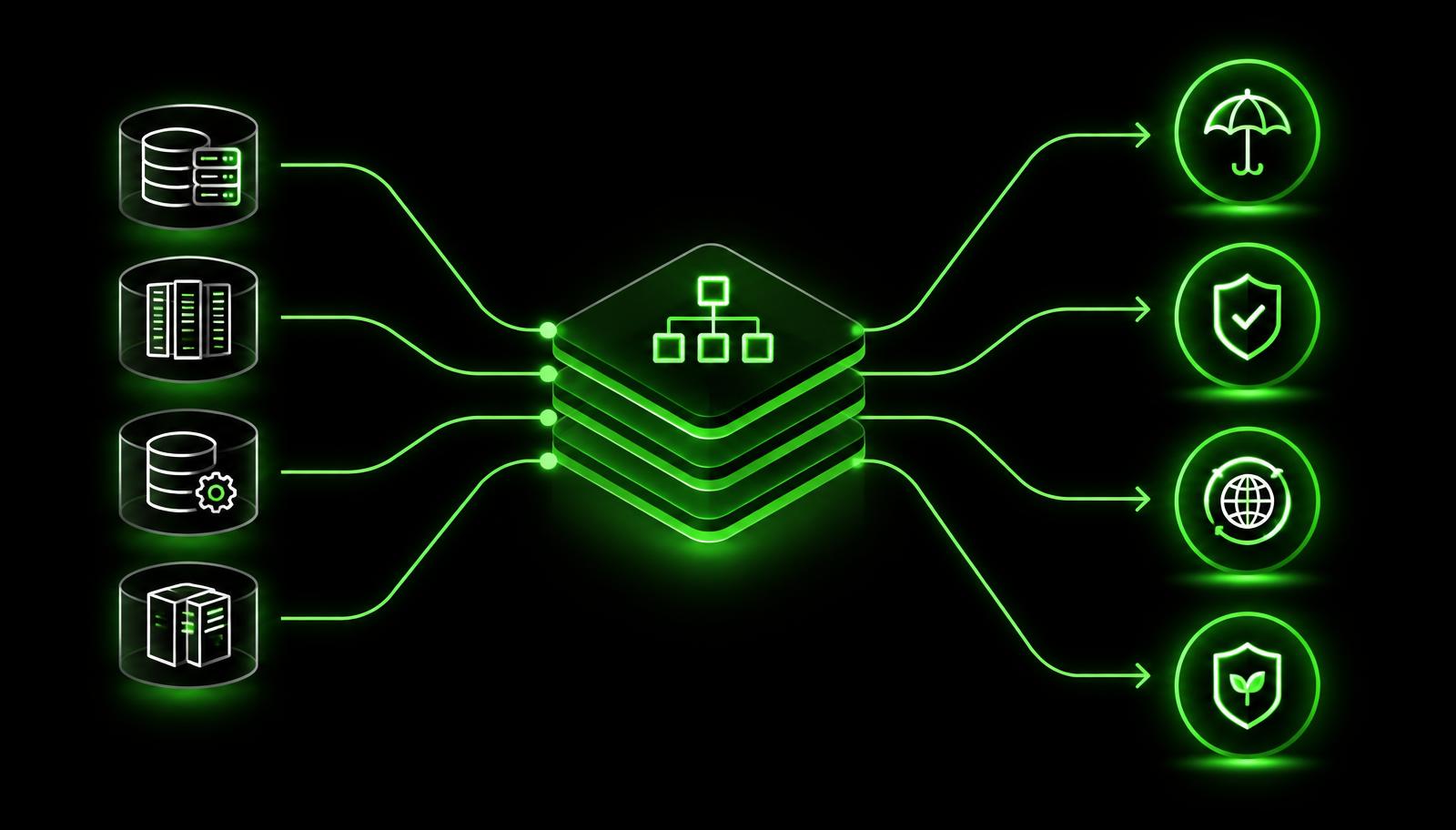
Where a post-Blueprint Two increment actually sits
Systems of record
- Underwriting and policy system
- Claims platform
- Finance and ledger
- Market data and CDR feeds
Orchestration layer
- Controlled intake and referral route
- Case coordination and hand-offs
- Ownership, SLA and exception tracking
- Evidence and audit trail
Measured outcome
- Submission completeness at first touch
- Referral turnaround time
- Aged and unowned cases
- Audit evidence produced without a project