
ServiceNow World Forum London · Breakfast, 20 October, 7.30 to 9.00 · Beside ExCeLWorld Forum London breakfast · 20 October→
    Impactron - ServiceNow Consulting & Implementation Partner
    • Experience
    Book Consultation
    • /servicenow
    • /servicenow-consulting
    • /servicenow-implementation
    • /servicenow-support
    • /servicenow-staff-augmentation
    • /solutions/challenges/disconnected-customer-journeys
    • /solutions/challenges/slow-service-operations
    • /solutions/challenges/manual-workflows
    • /solutions/challenges/visibility-forecasting
    • /solutions/challenges/scaling-operations
    • /solutions/challenges/supplier-procurement-operations
    • /solutions/customer-workflows/sales-order-management
    • /solutions/customer-workflows/cpq
    • /solutions/customer-workflows/csm
    • /solutions/customer-workflows/fsm
    • /industries/insurance-london-market
    • /industries/manufacturing
    • /industries/technology-saas
    • /case-study/tru-consulting
    • /gcc-success-stories
    • /resources
    • /resources/cpq
    • /resources/crm
    • /resources/insurance
    • /resources/insurance/glossary
    • /resources/events
    • /resources/gcc-best-practices-ebook
    • /whitepaper/gcc-vs-outsourcing
    • /blog
    • /about-us
    • /our-team
    • /careers
    Resources/Insurance Insights/Claims Orchestration Without Replacing the Claims Platform
    Claims Operations

    Claims Orchestration Without Replacing the Claims Platform

    The claims platform should remain the authoritative financial record. The coordination around it, evidence, experts, suppliers, approvals and communications, is where most of the delay actually lives.

    For claims directors, heads of claims operations and technology leaders in specialty and commercial insurance.

    Pratiksha Mathur, ServiceNow Technical Consultant at ImpactronPratiksha MathurServiceNow Technical Consultant · Published 15 July 2026 · Updated 14 August 2026 · 11 min readImpactron Insurance PracticeLondon Market and specialty insurance
    Reviewed August 2026 Share
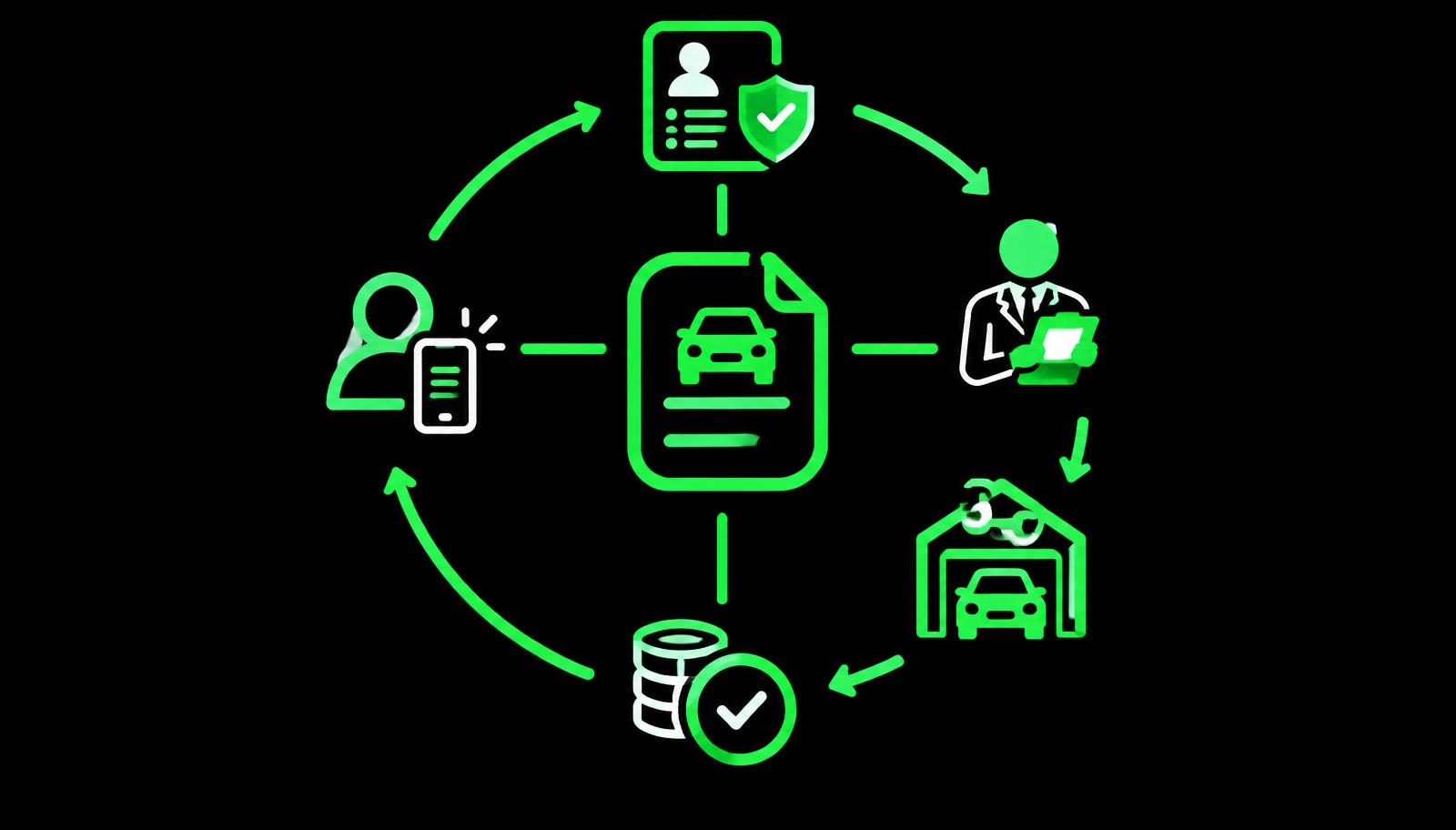
    Central claim record disc with task arms radiating to adjusters, experts and suppliers, representing claims orchestration around the claims platform

    The short answer

    Claims delay is rarely caused by the claims platform. It is caused by uncoordinated work around it: evidence chasing, expert instruction, supplier response, approvals and communications. A case layer that tracks those tasks, with the claims platform still holding coverage, reserves and payments, removes most of the dwell time.

    Where claims dwell time collects

    1. 1

      Notification and triage

      Complexity assessed and the right handler assigned rather than the next available one.

    2. 2

      Evidence gathering

      Documents requested, chased and logged, usually across email threads.

    3. 3

      Expert instruction

      Adjusters, surveyors and lawyers instructed, with response times nobody measures.

    4. 4

      Supplier coordination

      Work commissioned outside the firm, tracked outside the platform.

    5. 5

      Approvals

      Authority checks that stall when the approver is unavailable and unowned.

    6. 6

      Settlement and communication

      The claims platform pays, but the conversation happens elsewhere.

    None of these steps are claims platform functions. All of them decide how long a claim takes.

    Most insurers already have a specialist claims platform. It holds policy and claim information, calculates financial transactions, records reserves and supports the formal administration of the claim. Replacing such a platform is expensive, disruptive and rarely the first answer to an operational problem.

    The more immediate issue is usually everything that happens around it. Claims teams coordinate first notification of loss, evidence requests, adjuster appointments, medical reports, expert instructions, supplier activity, internal approvals, customer updates and communications with brokers, lawyers and reinsurers. Much of that work sits outside the core platform, in emails, spreadsheets and individual task lists.

    Claims orchestration addresses the gap. It does not seek to replace the specialist claims system. It creates a connected workflow around the claim so the organisation can see what needs to happen, who owns it, what evidence has been received and where a matter is waiting.

    A claim is not a sequence of transactions. It is a living case involving people, evidence, deadlines and judgement.

    Why the core claims platform should stay in place

    Claims platforms perform critical functions that should remain controlled within the system of record: recording claim details, managing financial transactions, maintaining reserves, capturing coverage information and preserving the formal claim history.

    The difficulty is that a claim is not simply a sequence of transactions. A claims handler may need to obtain a witness statement, appoint a loss adjuster, review a report, secure authority for a settlement, update the insured, notify reinsurers and track the completion of repair work. Those activities involve multiple systems and several external parties.

    Forcing all of that coordination into a legacy core platform is difficult, particularly where the platform was designed around claims administration rather than flexible workflow. Equally, allowing all coordination to happen outside the platform creates fragmentation. Claims orchestration offers an alternative: retain the claims platform as the authoritative financial and policy record, and use a workflow layer to coordinate the human and operational work around it.

    How to improve first notification of loss triage

    The first notification of loss is often the customer's first experience of the insurer at a point of stress. The person reporting the claim may be dealing with property damage, an injury, business interruption, professional allegations or the immediate consequences of a cyber event. Their primary concern is not the internal structure of the insurer's claims process. They want clarity about what happens next.

    An orchestrated FNOL process ensures the right information is collected, urgent cases are identified and appropriate tasks are triggered. A property claim may require emergency mitigation. A casualty claim may require immediate contact with an injured party. A cyber claim may need rapid involvement from legal, forensic and incident-response specialists.

    The workflow should recognise those differences without making the experience unnecessarily complex. It should guide the handler through the questions and actions required, while retaining flexibility to respond to the particular facts of the case.

    Most importantly, it should create visible ownership. The customer should not have to discover that one team has logged the claim, another is waiting for a document and a third party has not yet been instructed.

    How to coordinate loss adjusters, experts and suppliers

    Claims regularly involve external specialists: loss adjusters, repair networks, medical providers, engineers, lawyers, forensic accountants, salvage agents and third-party administrators. Those parties may be highly capable, but the insurer retains responsibility for oversight, service quality and the ultimate claims outcome.

    Without structured coordination, instructions can be unclear, reports arrive late and critical decisions are delayed because no one has visibility of the dependency. A handler may be waiting for an adjuster's report, the adjuster may be waiting for documents from the insured, and the insured may be unaware of what is required.

    An orchestration workflow makes the dependency visible. It records the instruction, the required deliverable, the due date, the responsible party and the escalation route. It can prompt the claims team when a task is overdue or when new evidence requires a decision.

    That has a commercial benefit as well as a control benefit. Better coordination reduces avoidable customer chasing, helps suppliers understand expectations and enables claims leaders to identify where service standards are not being met.

    How to make claims approval and authority visible

    Claims authority is a critical safeguard, particularly where settlement amounts are material, coverage is uncertain or legal and reputational considerations are involved. Yet approvals are frequently managed through email or informal discussion, making it difficult to establish precisely what was approved and on what basis.

    A controlled approval workflow links the request directly to the claim, includes relevant financial and coverage information and ensures the approver has appropriate authority. It also preserves the rationale behind a decision, including any conditions attached to it.

    A claim may be approved for settlement subject to a signed release, validation of a bank account or confirmation that recovery prospects have been considered. Those details matter. If they are not recorded clearly, the organisation may later struggle to show that the claim was settled with proper controls.

    Leakage is rarely one large failure

    Leakage more often arises from missed subrogation opportunities, duplicate payments, weak negotiation, delayed reserve review, unchallenged supplier invoices or settlement decisions that are insufficiently evidenced. Better workflow visibility helps identify and prevent those issues earlier.

    How to keep claims communication aligned to real progress

    Customers do not expect every claim to be resolved immediately, especially where liability is contested or a loss is complex. They do expect meaningful updates. Silence creates anxiety, repeat calls and declining trust.

    The most useful communications are linked to actual events in the claims journey. Rather than sending generic messages, the insurer can explain that an adjuster has been appointed, a report is under review, further information is required or a decision is expected by a specific date. That requires the workflow to reflect the real status of the claim.

    Communication should also be tailored to the product and customer. A commercial insured experiencing business interruption needs a different level of information from a personal-lines customer arranging a repair. Brokers may need a separate view of progress. Vulnerable customers may require specific support and more proactive contact.

    Orchestration does not make difficult claims easy. It does make the process more transparent, more consistent and more respectful of the people affected by it.

    How to get operational claims insight rather than retrospective reporting

    Claims leaders need more than monthly reports showing closure rates and incurred loss. They need early visibility of where work is building up and why.

    Questions an operational claims view should answer in near real time

    Which claims are waiting for customer evidence?
    Which adjusters have overdue reports?
    Which settlement approvals are taking too long?
    Which claim types generate repeated complaints or reopened cases?
    Where are tasks ageing, and against which supplier or team?
    Which high-value claims have been inactive for an extended period?

    The most valuable insight comes from connecting workflow data with financial and claims data. A high-value claim inactive for an extended period may require senior attention. A large number of low-value claims delayed at the same stage may indicate a process-design problem. Both can affect customer outcomes and expense performance, but they demand different responses.

    Where ServiceNow fits

    The claim identifier in the claims platform anchors the work. ServiceNow can coordinate evidence requests, adjuster appointments, supplier actions, customer updates, internal reviews and approval tasks around it. When a reserve or payment decision is made, the authorised transaction completes in the claims system and the outcome returns to the case. The claims platform remains the financial record; the workflow makes the surrounding obligations visible.

    What claims orchestration changes for the insurer

    Claims orchestration is not about replacing the claims platform or diminishing the role of claims professionals. It is about making the work around the claim easier to coordinate, more visible to manage and more reliable for customers.

    By connecting tasks, evidence, communications, approvals and external-party activity, insurers can improve claims cycle time, reduce leakage and strengthen control. The core claims platform remains the foundation. Orchestration makes the wider claims operation function as one coherent process rather than a collection of disconnected activities.

    Related reading

    • System of Record versus System of Action in InsuranceArchitecture & Platform Strategy
    • Why Reinsurance Recoveries Become a Working-Capital ProblemReinsurance & Finance
    • Modernising Insurance Operations Without Replacing the CoreArchitecture & Platform Strategy
    • All Insurance Insights
    • Impactron London Market practice

    Key takeaways

    • 1Keep coverage, reserves, payments and the legal record in the claims platform.
    • 2Coordinate FNOL, evidence, experts, suppliers, approvals and communications as one visible case.
    • 3Make external-party dependencies explicit, with deliverables, due dates and escalation routes.
    • 4Record approval rationale and conditions, not just the approval itself.
    • 5Measure waiting time between steps, not only total settlement duration.

    Claims coordination around the financial record

    Systems of record

    • Claims platform
    • Document and evidence store
    • Payments and finance
    • Reinsurance systems

    Orchestration layer

    • Case tasks and dependencies
    • Expert and supplier instruction
    • Approvals and authority limits
    • Correspondence and customer updates

    Measured outcome

    • Lower claim dwell time
    • Fewer unassigned or aged tasks
    • Faster supplier response
    • SLA exceptions traced to a cause
    The claims platform remains authoritative. The case layer coordinates the people, evidence and suppliers that determine how long the claim takes.

    Sources and further reading

    • Market oversight, including claims performance expectationsLloyd's
    • SYSC: senior management arrangements, systems and controlsFCA Handbook
    • Claims market practice guidanceLloyd's Market Association

    Reviewed by the Impactron Insurance Practice on 14 August 2026. Regulatory material changes over time, so check the source for the current position before acting on it.

    Questions we get asked

    Why not fix claims delay inside the claims platform?

    Because most of the delay happens between parties rather than inside a record. Claims platforms are built to hold financial truth, not to chase a loss adjuster, an expert and a supplier through a dependency chain.

    What stays in the claims platform?

    Coverage decisions, reserves, payments, recoveries posting and the legal and financial history of the claim. The orchestration layer never becomes the record of what was paid.

    How is progress measured?

    Unassigned tasks, hand-off delay between parties, supplier and expert response time, claim dwell time by segment and SLA exceptions by cause.

    About the author

    Pratiksha Mathur, ServiceNow Technical Consultant at Impactron

    Pratiksha Mathur

    ServiceNow Technical Consultant

    Pratiksha designs the workflow and integration layer that sits around policy, claims and finance systems, keeping the core as the authoritative record while coordination moves onto a controlled platform.

    Workflow architectureIntegration designClaims and case orchestration

    Part of the Impactron London Market practice.

    Continue reading

    More from Insurance Insights

    View all London Market glossary
    London Market

    After Blueprint Two: What Should London Market Firms Modernise Next?

    Lloyd's has stepped away from a single market-wide programme. Each firm now has to decide which operational problems to fix itself, in what order, and without creating avoidable risk.

    Underwriting Operations

    Seven Workflow Bottlenecks Slowing Specialty Underwriting

    Most specialty underwriting delay does not sit inside pricing. It sits in intake, allocation, appetite checks, referrals and subjectivities, where the work moves between people rather than through a system.

    Architecture & Platform Strategy

    Modernising Insurance Operations Without Replacing the Core

    Most insurers do not lack systems. They lack a dependable way to move work between them. A practical architecture for COOs, CIOs, enterprise architects and CFOs.

    Claims coordination taking longer than the claim?

    We look at your current claims hand-offs, supplier interactions and ageing, then scope an orchestration increment that leaves the claims platform as the financial record.

    Scope a claims incrementExplore our insurance practice
    Back to Insurance Insights

    ServiceNow

    • Consulting
    • Implementation
    • Support
    • Staff Augmentation

    GCC

    • Strategy
    • Setup
    • Success Stories
    • The GCC Blueprint

    Problems We Solve

    • Disconnected Journeys
    • Slow Service Ops
    • Manual Workflows
    • Visibility & Forecasting
    • Scaling Ops
    • Supplier & Procurement
    • Explore all →

    Customer Workflows

    • Sales & Order Management
    • Configure Price Quote (CPQ)
    • CPQ Insights
    • CRM Insights
    • Customer Service Management (CSM)
    • Field Service Management (FSM)
    • CRM Transformation
    • Source to Pay

    Industries

    • All Industries
    • London Insurance Market
    • Manufacturing
    • Technology & SaaS
    • Across Industries

    Company

    • Why Impactron
    • Leadership & Team
    • Proven Outcomes
    • Careers

    Office Locations

    London, UK office location
    London, UK
    Jodhpur, India office location
    Jodhpur, India
    Jaipur, India office location
    Jaipur, India
    Bengaluru, India office location
    Bengaluru, India

    © 2026 Impactron. All rights reserved.

    Review Whitepaper
    LinkedInEmail